 Mia Jones
Australian Prime Minister Anthony Albanese publicly called on Liberal Senator Jacinta Nampijinpa Price to apologise in 2026 after she claimed that large numbers of Indians were being allowed to migrate to Australia specifically to vote for the Labor government. Price refused, declaring she had "nothing to apologise for" and returning to the opposition frontbench in February 2026 as Shadow Minister for Small Business and Skills under new Liberal leadership.
The episode reignited a debate that sits at a complex intersection of Australian law, political privilege, and racial discrimination protections: when does a politician's public commentary cross from vigorous political speech into territory that could carry legal consequences?
What the Racial Discrimination Act Actually Says
Australia's Racial Discrimination Act 1975 (Cth) makes it unlawful to do an act that is reasonably likely to offend, insult, humiliate, or intimidate another person or group on the basis of their race, colour, or national or ethnic origin — under Section 18C.
However, Section 18D of the same Act creates a significant exemption for anything done "reasonably and in good faith" in the performance of artistic work, academic discussion, fair reporting, or — critically — "the making or publishing of a fair comment on any event or matter of public interest."
This balance between Section 18C and 18D is precisely what makes cases involving public figures so contested. Courts assessing such claims must determine whether a comment was made in good faith and constitutes genuine commentary on a matter of public interest, as opposed to a statement designed to demean or incite hostility toward people of a particular ethnicity or national origin.
Parliamentary Privilege: A Powerful Shield
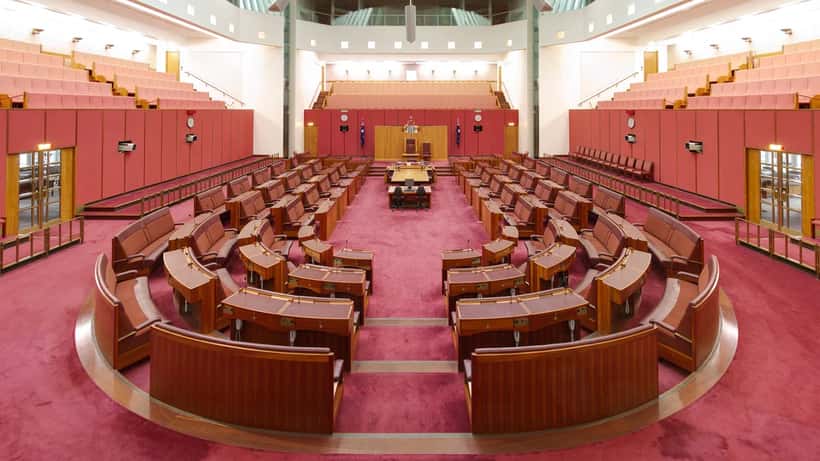
Senator Price made some of her comments in Senate settings, which adds another layer of legal complexity. Parliamentary privilege — one of the oldest protections in democratic legal systems — means that statements made in Parliament cannot be subject to civil or criminal proceedings outside Parliament.
This protection exists to ensure legislators can speak frankly without fear of litigation. It is not a moral endorsement of what is said, but a structural protection for the operation of democratic debate. Statements made in interviews, on radio, or at public events do not carry the same protection — which is why the source and location of particular comments matters legally when assessing any potential liability.
Is There a Case to Answer?
For any claim under the Racial Discrimination Act to succeed, several elements must be established. The comments must be about a person or group identifiable by race, colour, or national or ethnic origin. The act must be "reasonably likely" to have the prohibited effect on a reasonable member of the target group. And the Section 18D exemptions must not apply.
Legal practitioners familiar with racial discrimination complaints note that complaints against public figures who claim a political commentary exemption are among the hardest to win. The Australian Human Rights Commission, which receives and attempts to conciliate these complaints before they proceed to court, has previously noted that the fair comment exemption under Section 18D has been interpreted broadly by Australian courts.
This does not mean that harmful speech against people based on their ethnicity or national origin goes entirely without consequence — community organisations and affected individuals can still make complaints and seek conciliation through the Commission process. But a successful court outcome against a politician invoking the public interest exemption would face significant legal hurdles.
The Broader Pattern: What Discrimination Law Protects in Australia
The Price controversy is not isolated. It sits within a growing pattern of public discourse about migration, ethnicity, and national identity that affects how Australians of Indian, Chinese, Middle Eastern, and other backgrounds experience public life. As Australian workers covered in previous reporting on workplace discrimination law have experienced, the legal protections that exist on paper do not always translate smoothly into effective remedies.
What discrimination law does offer, in both racial and other contexts, is a framework for accountability outside of criminal prosecution. Complaints to the Australian Human Rights Commission are confidential, free to make, and designed to be accessible without legal representation. The Commission's conciliation process resolves a significant proportion of complaints without the need for court proceedings.
For individuals who believe they have been subjected to comments that vilify them based on their race or national origin, the pathway includes documenting the conduct, identifying whether it falls within the Act's definitions, and consulting a lawyer or the Commission before a complaint deadline passes. In most cases, complaints must be lodged within 12 months of the act complained of.
When to Seek Legal Advice
If you or your community has experienced what you believe to be racially discriminatory conduct — whether from a public figure, an employer, a service provider, or a member of the public — there are specific legal frameworks that may apply. A lawyer specialising in discrimination law can help assess whether a complaint is viable, advise on the conciliation process, and explain what remedies are realistically available.
The line between protected political commentary and unlawful discrimination is not always immediately clear, and the legal analysis of individual situations can be complex. What is clear is that Australian law does not treat racial vilification as a trivial matter, even when it is dressed in the language of political debate.
This article provides general legal information only and is not a substitute for qualified legal advice. If you have a specific legal concern about racial discrimination, consult a qualified Australian lawyer.
