 Chloe Wilson
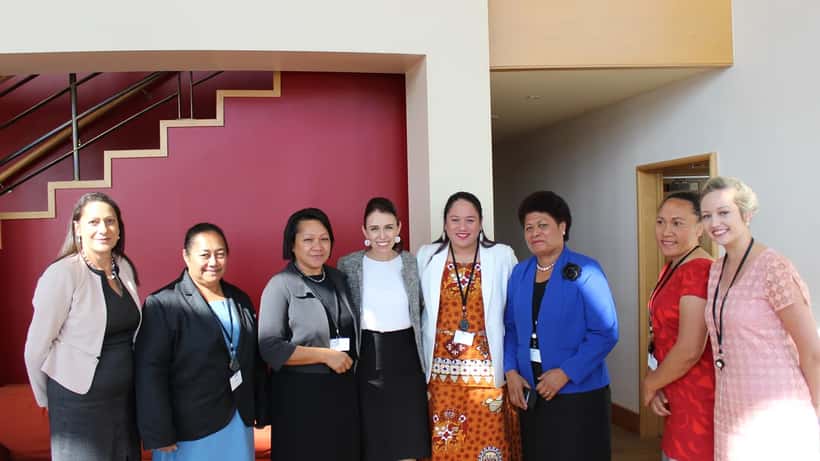
Dame Jacinda Ardern moved her family to Sydney's Northern Beaches in February 2026, and she has not stopped talking about burnout since. The former New Zealand prime minister — who resigned in January 2023 citing emotional exhaustion and a leadership tank running on empty — appeared at the Sydney Opera House in May 2026 to argue that Australia is at an inflection point: empathetic, high-performing workers are burning out at an accelerating rate, and most of them do not reach out for professional help until it is too late.
Why Ardern's Move to Australia Has Sparked a National Conversation
Since settling in Sydney, Ardern has been speaking at forums alongside workplace psychologists and leadership researchers. She was explicit with the ABC in July 2026 that her departure from the top of politics was not failure — it was recognition that she had reached a biological and psychological wall. "I knew I no longer had enough in the tank," she said. In a country where Safe Work Australia estimates that work-related psychological injuries account for approximately 9% of all serious compensation claims — and cost an average of $24,500 per case, roughly twice the physical injury average — her message resonates well beyond politics.
Ardern also noted that the empathetic leaders most committed to caring for their teams are precisely the ones most likely to miss their own warning signs. They are, in the language of clinical psychology, the last to self-refer. By the time their colleagues recognise what is happening, the window for early, cost-effective intervention is usually already closed.
This is not an abstract problem for Australian workplaces. Mental Health Australia's 2026 Workplace Mental Health Barometer reports that 1 in 3 Australian workers feels regularly overwhelmed by job demands — a figure that has not improved since 2023. The challenge is no longer awareness. It is timely action.
What Burnout Actually Looks Like — and Why It Is Often Missed
Burnout is not the same as being tired after a difficult week. According to the World Health Organisation's International Classification of Diseases (ICD-11), burnout is defined by three dimensions: feelings of energy depletion or exhaustion; increased mental distance from one's job, or feelings of negativism and cynicism; and reduced professional efficacy. The Maslach Burnout Inventory — the most widely validated clinical measure in use — scores individuals across emotional exhaustion (EE), depersonalisation (DP), and personal accomplishment (PA). An EE score above 27 is classified as high burnout risk.
Research consistently shows that empathetic, high-performing individuals — the ones who absorb others' stress as part of their professional identity — are disproportionately represented in the high-risk band. Ardern's story illustrates a pattern that workplace psychologists see frequently: the person most likely to miss their own burnout is the one most attuned to everyone else's wellbeing. They are also the most likely to normalise the deterioration until they cannot.
Warning signs that are distinct from ordinary workplace fatigue include:
- Persistent fatigue that sleep does not resolve — waking unrefreshed consistently over three or more weeks
- Emotional blunting — a reduced ability to feel genuinely engaged by positive news or outcomes
- Increasing cynicism about your work's value or its impact on others
- Physical symptoms: recurring headaches, disrupted sleep cycles, and an immune system that cannot keep up
- Cognitive slowing: difficulty concentrating on routine tasks and an increase in small errors
The critical distinction is that these signs are not just personal red flags — they are recognised under Australian workplace law. Under the Work Health and Safety Act 2011, employers have a legal duty to manage psychological hazards, including chronic job demands and poor work design, at the source. Safe Work Australia's framework for managing psychosocial hazards provides employers and workers with a structured pathway for doing exactly that. A registered psychologist can assist individuals in both recovering from burnout and in documenting the contributing workplace factors — documentation that has significant implications for any subsequent workers' compensation claim.
A Concrete Case: When Dedication Becomes a WorkCover Claim
Consider a 38-year-old project manager at a Sydney infrastructure firm who has been working an average of 55 hours per week since January 2026 as her team navigated a delayed government contract. By March she was sleeping fewer than five hours per night. By April she scored 31 on the Maslach Emotional Exhaustion subscale — well above the clinical high-risk threshold of 27, and above the 20-point level that typically warrants a first consultation with a psychologist.
She did not book an appointment because she believed the pressure was temporary. It was not. In June she submitted a medical certificate citing anxiety and work-related stress, triggering a three-month period of partial incapacity and a WorkCover claim. The total cost to her employer — lost productivity, return-to-work case management, and potential premium adjustment — exceeded $18,000 in the first quarter alone.
If she had sought an appointment with a registered psychologist when her EE score first crossed 20, the clinical picture would have been substantially different. Evidence-based interventions at the early stage — typically 6 to 8 sessions of Acceptance and Commitment Therapy (ACT) or Cognitive Behavioural Therapy (CBT) — carry a 60 to 70% full-recovery rate for early-stage burnout. That rate falls to under 40% once the individual has progressed to full clinical burnout. The intervention window is open for months before most Australians realise it exists.
The if/then threshold is clear: if you score above 20 on emotional exhaustion and have felt that way for more than four consecutive weeks, a consultation with a registered psychologist — not just a GP or a week of annual leave — is the evidence-based next step.
Practical Steps for Australian Workers in 2026
Ardern's advocacy gives Australian workers a useful framework for moving from recognition to action. Three steps apply broadly:
1. Self-assess with a validated tool. The Oldenburg Burnout Inventory — a freely available, nine-item scale — takes under five minutes to complete. A score above 35 warrants professional consultation. This is not a substitute for clinical assessment; it is a trigger for it.
2. Access your Employee Assistance Programme (EAP). Under Safe Work Australia guidance, businesses with 15 or more employees are strongly encouraged to offer confidential EAP services. Sessions are typically employer-funded, confidential, and can be initiated without informing a direct manager. Many Australians do not know they have access to this resource.
3. Consult a registered psychologist through Medicare. For workers without EAP access, or for whom EAP sessions have proved insufficient, Medicare's Better Access to Mental Health Care initiative covers up to 10 sessions per calendar year at a rebated rate of $137.05 per session in 2026. A GP mental health treatment plan, obtained in a standard appointment, is all that is required to access the rebate.
Ardern's public message — that "empathy is nothing without action" — applies as directly to individual wellbeing decisions as it does to national leadership. Recognising the five warning signs above and acting on them before crossing the clinical threshold is not weakness. It is the most consequential professional decision a high-performer can make in 2026.
For Australians looking for more on how workplace dynamics connect to professional health decisions, the intersection of leadership pressure and physical recovery has also been explored in the context of mental health advocacy in Australian media.
Connect With a Health Expert
If Ardern's story sounds uncomfortably close to your own, ExpertZoom connects Australians directly with registered psychologists and workplace health consultants who specialise in burnout assessment, prevention, and recovery. Whether you are a team leader wondering whether your exhaustion has become clinical, or an HR manager trying to identify early warning signs in your team, a 30-minute consultation with an expert provides clarity that a wellness app cannot.
The former prime minister built her political brand on the premise that strength and vulnerability can coexist. In 2026, she is living that principle from a suburb in northern Sydney. You do not need to wait until your tank is empty.
This article addresses health and mental wellbeing topics. The information provided is for general awareness only and does not constitute clinical advice. If you are experiencing symptoms of burnout or mental health distress, please consult a registered health professional.
