 Emily Turner
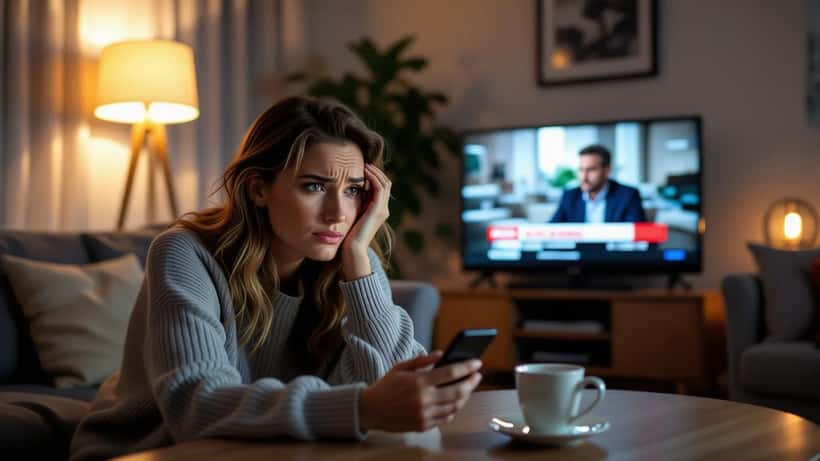
As United States strikes on Iran entered their seventh consecutive night on 18 July 2026, and Australian screens filled with live blogs, push alerts and rolling footage from the Strait of Hormuz, mental-health clinicians are reporting a familiar side effect of a distant war: rising anxiety at home. The conflict, which has now run for months and this week claimed the first American military deaths since March, is thousands of kilometres away — but the stress it generates in Australian living rooms is very real.
You cannot influence events in Tehran or Washington. You can, however, control how the news reaches you and what it does to your nervous system. Here is what psychologists and counsellors want Australians to understand about war-news anxiety, and how to keep an escalating global crisis from hijacking your wellbeing.
Why a distant war rattles your body
Anxiety about a conflict you are not physically part of is not irrational or weak — it is biology. When you scroll through alarming headlines, your brain does not neatly file them as "far away." Constant exposure to threatening news activates the body's stress response and releases cortisol, the hormone linked to a racing heart, disrupted sleep, tension and a sense of dread that outlasts the moment you put your phone down.
The pattern has a name — "doomscrolling" — and Australians are especially exposed to it. According to iSelect's Doomscrolling Health Impact Report, Australians spend an average of 1.88 hours a day on social media, and 44 per cent of Gen Z Australians spend three hours or more scrolling each day. Research into problematic news consumption has found that 74 per cent of the heaviest news consumers reported mental-health problems and 61 per cent reported physical symptoms. A war that produces fresh, dramatic updates every few hours is precisely the kind of story that keeps people locked to the feed.
The warning signs worth taking seriously
Feeling briefly unsettled by grim headlines is normal. Persistent distress is a signal to act. Watch for sleep that will not come because your mind keeps replaying worst-case scenarios, a compulsion to check for updates every few minutes, irritability, difficulty concentrating at work, or physical symptoms such as a tight chest, headaches or an unsettled stomach with no medical cause.
Certain groups feel this more sharply. Australians with family in the Middle East, members of the Iranian and wider regional diaspora, veterans, and people who already live with anxiety or trauma can find rolling coverage particularly destabilising. For them, the war is not an abstraction on a screen — it is personal, and the emotional load is heavier.
Six expert-backed ways to protect your calm
Clinicians consistently recommend a set of practical, evidence-based steps rather than switching off from the world entirely:
Schedule your news, do not graze on it. Choose one or two set times a day to catch up — say, once at midday and once in the early evening — and stay off live blogs in between. Structured exposure keeps you informed while reducing the drip-feed that fuels anxiety.
Kill the notifications. Turn off breaking-news alerts and social media pings. Every buzz is an invitation to spiral; removing them puts you back in charge of when you engage.
Choose your sources deliberately. Follow a small number of credible outlets rather than a chaotic feed where algorithms reward the most outraging, frightening content. Quality over volume lowers the emotional temperature.
Move your body. Physical activity — even a brisk walk — discharges the stress chemicals that news consumption builds up and strengthens your resilience against negativity.
Protect your sleep. Keep screens out of the bedroom and avoid checking updates in the hour before bed. Poor sleep and anxiety feed each other in a loop that a distant war is happy to power.
Talk about it. Naming your worry to a friend, family member or professional reduces its grip. Isolation amplifies anxiety; connection deflates it.
When to reach out for professional help
Self-help strategies work for most people most of the time. But if anxiety about the conflict is interfering with your sleep, your work, your relationships or your ability to function day to day — and especially if it persists for more than a couple of weeks — that is the point to seek support rather than tough it out.
A psychologist or counsellor can help you build a personalised plan, work through the specific fears the news is triggering, and, where relevant, address the deeper anxiety or trauma the crisis has stirred up. This is ordinary, sensible care, not an overreaction. For those with loved ones in the affected region, professional support can also help manage the particular strain of watching a conflict unfold where people you love live.
If you are unsure where to start, the Australian government-funded service healthdirect sets out the symptoms of anxiety and the support options available, and your GP can refer you into subsidised mental-health care. Connecting with a qualified expert through a consultation platform is another straightforward way to find the right professional for your situation. The related coverage on the legal questions Australians are asking about the Iran conflict shows how many practical worries the crisis is surfacing at once — managing the emotional load is part of navigating it.
The war may dominate the headlines for weeks to come. Your attention, your sleep and your peace of mind, though, are yours to defend — starting today.
This article is general information only and is not a substitute for professional medical advice. If you are experiencing significant distress, contact your GP or a registered mental-health professional. In an emergency, call 000. For 24/7 support, Lifeline is available on 13 11 14.
