 Chloe Kennedy
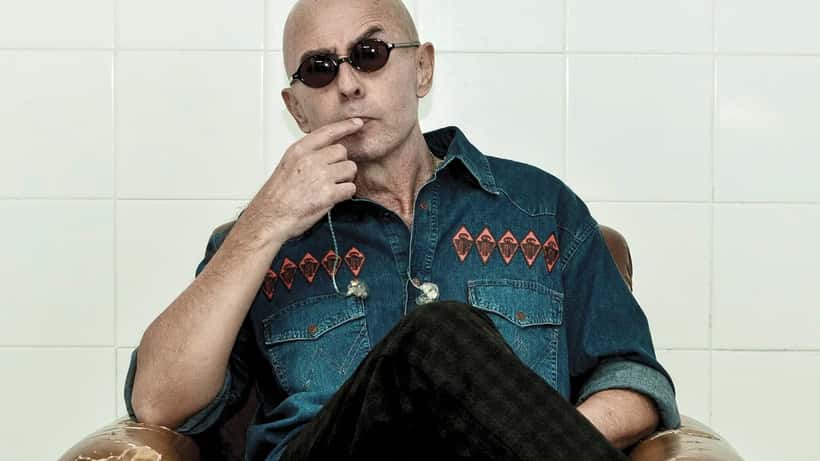
Carlos Alberto "Indio" Solari, the reclusive leader of Argentine rock band Patricio Rey y sus Redonditos de Ricota, died at his home in Parque Leloir on 5 June 2026, aged 77. He had lived publicly with Parkinson's disease since 2016, the year he gave his last full concert in Olavarría drawing a crowd estimated by Argentine media at more than 300,000 people. His death has prompted obvious sadness across Latin America and a less obvious wave of questions among Australian musicians, songwriters and their families: what actually happens to a working musician's royalties, masters and back catalogue when they die, and how much of it is determined by what they wrote down years earlier?
A career that stayed deliberately off the market
Indio Solari spent decades resisting the music industry's normal infrastructure. Patricio Rey y sus Redonditos de Ricota self-released most of their records, refused to give interviews for years, and kept tour merchandising tightly controlled. By the time the band split in 2001, Solari already owned a far larger share of his own copyrights than most artists of his generation. According to La Nación, the University of Buenos Aires named him an honorary doctor only weeks before his death, citing both his music and his refusal to commodify it.
That refusal has commercial consequences. An artist who owns their masters, controls their publishing and has cleared their sample chain leaves behind a far more valuable estate than one whose work is fragmented across labels and publishers. Solari's case is unusual in scale. The underlying legal and financial questions are exactly the same ones an Australian indie musician faces when they sign a small distribution deal at 25 and never update their will.
The Australian estate planning gap musicians keep missing
The Australian Copyright Council, the country's leading non-government copyright authority, publishes detailed guidance on what happens to copyright when an author dies. The key point is that copyright in Australia lasts for the life of the author plus 70 years. That means a musician who dies at 77, like Solari, has potentially 70 years of future royalty income that needs to pass through a will, a trust, or the rules of intestacy.
According to the Australian Copyright Council's Wills and Copyright information sheet, copyright is personal property and is dealt with by the deceased's will in the same way as a house or a share portfolio. If the will is silent, the copyright passes to whoever inherits the residue of the estate. If there is no will, the copyright is distributed under state intestacy rules, often to a surviving spouse and children in fixed proportions that may have nothing to do with what the musician would have wanted.
That gap matters because most working musicians die without specific directions for their catalogue. The result is predictable. A surviving partner inherits the master rights. Children inherit publishing. A label that thought it had a quiet renewal clause discovers it now negotiates with three executors. The catalogue stalls. Sync licensing dries up. Royalty income falls precisely when the family needs it most.
What a wealth manager would actually do
A wealth manager who specialises in creative industries treats a music catalogue as a separate asset class. The questions they ask before drafting an estate plan are practical:
- Who actually owns each master recording, and is that ownership documented in writing?
- Which works are administered by APRA AMCOS, and who is named as the beneficiary on the registration?
- Are there outstanding label advances, producer points or co-writer splits that would survive the artist's death?
- Does the artist hold image rights, trademarks or domain names that need to be transferred?
- Is there a separate testamentary trust to receive ongoing royalty income, or will it pass directly to beneficiaries who may not have the cash flow to manage tax on irregular income?
Solari's estate will reportedly include songwriting royalties from a back catalogue that has been streamed more than 2 billion times in Spanish-speaking markets, according to industry estimates published by El Balad. That is a substantial financial inheritance. For Australian artists at any scale, the principle is identical: catalogue income is not just an emotional legacy, it is a financial instrument with tax, succession and family law implications that compound over decades.
The disability planning lesson hiding in his diagnosis
Indio Solari disclosed his Parkinson's diagnosis publicly in 2016. He continued recording but withdrew from live performance. That decade-long window between diagnosis and death is exactly the period in which a wealth manager and an estate solicitor can do their most useful work. A degenerative illness gives families time to update wills, transfer copyrights into a family trust, appoint a literary executor, and document creative intentions while the artist still has full legal capacity.
Australian musicians and creative professionals living with chronic or degenerative conditions should treat a diagnosis as a planning trigger, not a financial endpoint. An experienced wealth manager working alongside a solicitor can structure ongoing royalty income to support medical care, protect a partner from unexpected tax consequences, and ensure that the artist's name is not commercially exploited in ways they would have opposed. None of that happens automatically. It happens because somebody sat down with a professional and wrote it down.
What Australian readers can do this week
Indio Solari's death will dominate Spanish-language music coverage for weeks. The practical lesson Australian musicians, songwriters and their families can take away today is more local. Anyone who earns regular royalty income, owns master recordings, or has registered works with APRA AMCOS should book a consultation with a wealth manager who has worked with creative clients before. Bring the contracts, the publishing statements and a copy of any existing will. A two-hour conversation now is the difference between a catalogue that supports your family for 70 years and one that fragments into a legal dispute within twelve months.
Indio Solari's refusal to commodify his music made him an icon. The structure he built around it is what will keep his family supported. Australian readers who admire his stance have an obvious next step: do the unglamorous paperwork now, while you still can.
