 Liam Campbell
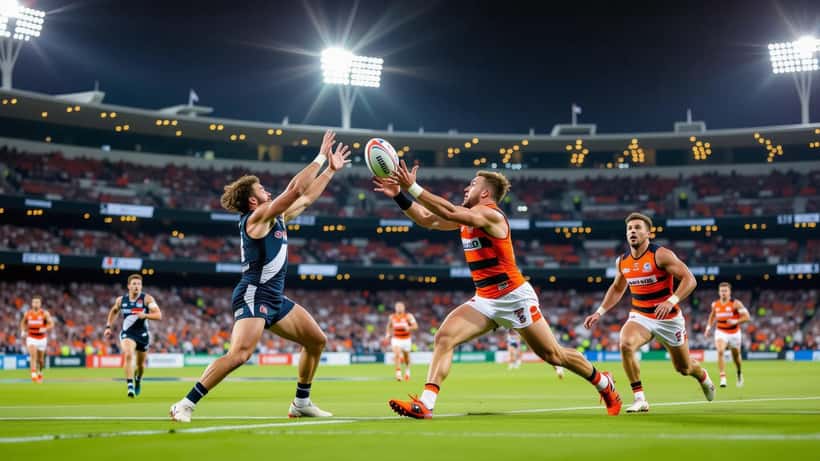
The 2026 AFL season is heating up, and the upcoming clash between the GWS Giants and Geelong is already one of the most discussed fixtures on the calendar. With both clubs positioned near the top of the ladder, this match is more than a four-point contest — it is a collision of contrasting football philosophies, list-management strategies, and high-performance cultures.
GWS arrives at this fixture with the energy of a side that has matured quickly. Their list blends explosive midfield depth with a defensive system that can absorb pressure and rebound at speed. The Giants' transition game has become their signature: quick hands, long kicking, and a willingness to take risks through the corridor. Against a Geelong outfit that prizes control and territory, the contest is likely to be decided by which team can impose its rhythm first.
Geelong, meanwhile, continues to defy the league's natural rebuilding cycle. The Cats remain a benchmark for sustained excellence, driven by a game model that values clean possession, disciplined structure, and situational awareness. Their senior players set the tone, but the real story in 2026 has been the seamless integration of emerging talent into a system that demands high football IQ from the moment a player debuts.
From an expert perspective, this fixture offers a fascinating case study in list construction. GWS built its current core through aggressive drafting and targeted trading, accumulating athletic assets and betting on development. Geelong took a different route, balancing retention of experienced champions with selective reloading. Both approaches have merit, and both carry risk — injury, form slumps, and salary-cap pressure can quickly shift the balance of power. Clubs and consultants who study AFL roster design often point to these two teams as opposite ends of the same strategic spectrum.
The midfield battle will attract most of the attention, and with good reason. Clearance dominance, contested-ball conversion, and the ability to control tempo are the levers that decide tight contests. Sports-science and performance analysts will be watching closely for indicators of fatigue, workload distribution, and recovery markers. In a season where fixture congestion and travel load have become bigger factors than ever, the teams that manage player conditioning most intelligently tend to peak when it matters.
That conditioning question is particularly relevant for GWS. The Giants have shown they can win away from home, but back-to-back interstate trips and short turnarounds can erode the sharpness that makes their game style effective. High-performance consultants often note that the difference between good teams and great teams is not always talent — it is the ability to recover, adapt, and execute under physical stress. How GWS manages that load over the next month could shape their finals trajectory.
Geelong's challenge is different. The Cats are less reliant on pure athleticism and more dependent on cohesion and decision-making. When their system clicks, they can dismantle opponents with precision. When it falters — through turnovers, slow ball movement, or a lack of forward-line connection — they can look vulnerable against younger, faster sides. The tactical chess match between the coaching boxes will therefore be critical, and analysts expect both teams to use this game as a dress rehearsal for September.
For fans and members, the experience extends well beyond the boundary line. Match-day logistics, ticketing, travel planning, and hospitality all shape how supporters engage with big games. Event-management experts have long argued that modern sporting fixtures are as much about customer experience as they are about the contest itself. Clubs that invest in seamless digital entry, crowd flow, and in-stadium entertainment are better placed to convert casual attendees into long-term advocates.
There is also a broader business angle. AFL clubs are increasingly sophisticated commercial operations, balancing membership growth, sponsorship retention, media rights, and community programs. The Giants and the Cats represent two distinct regional models: GWS as a growth-team investment in Australia's largest untapped market, and Geelong as a traditional powerhouse in a strong provincial city. Both clubs rely on expert advice across finance, marketing, governance, and strategy to remain competitive off the field.
Legal and regulatory considerations continue to hover in the background as well. Player contract negotiations, third-party agreements, injury-management protocols, and duty-of-care obligations all require careful navigation. As the industry becomes more professional, the demand for specialist advice in sports law, employment regulation, and risk management has grown accordingly. High-stakes fixtures like GWS versus Geelong highlight just how many disciplines must align for a club to succeed.
Looking ahead, the result of this match will likely influence not just the ladder but the narrative around both teams. A strong GWS performance would reinforce the belief that the Giants are genuine premiership contenders, capable of matching the league's most seasoned finals performers. A Geelong victory would remind the competition that experience and system still count for a great deal when the pressure rises.
Regardless of the final margin, the game is a reminder that elite sport is a multidisciplinary endeavour. Success depends on athletes, coaches, medical staff, analysts, administrators, and advisers working in concert. For observers who want to understand how modern football organisations operate, fixtures like this one offer a window into the complexity behind the scoreboard.
