 Olivia Miller
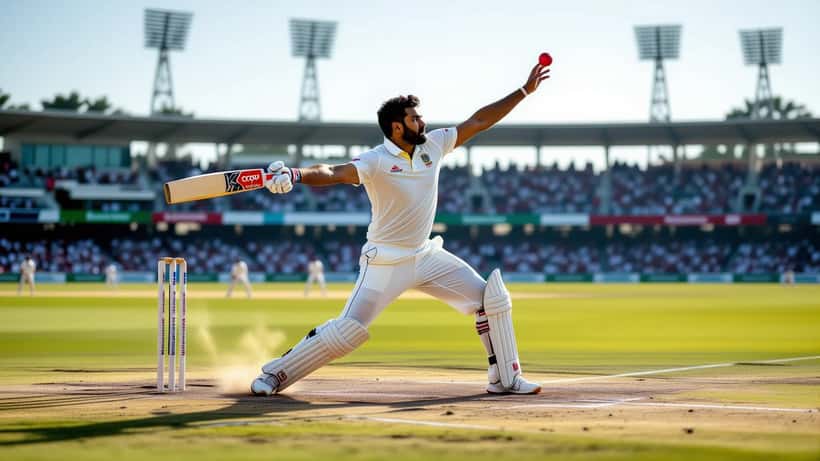
The BCCI announced on 19 May 2026 that Gurnoor Brar, a 25-year-old fast bowler from Punjab, has earned his maiden call-up to both India's Test and ODI squads for the upcoming Afghanistan series. The pacer — who stands over six feet tall and has built a reputation for raw pace and steep bounce — was rewarded after taking 33 wickets in 12 Ranji Trophy matches in the 2024-25 season.
Brar's emergence has been widely celebrated. But for sports medicine professionals, news of a tall, fast, young bowler breaking into international cricket also raises a question that rarely makes headlines: what does bowling at this level actually do to a human spine?
The Injury Statistics Every Cricketer Should See
Fast bowlers are the most injury-prone group in cricket, accounting for between 40 and 45% of all injuries in the sport. More significantly, research published in peer-reviewed sports science journals shows that up to 67% of fast bowlers will sustain a lumbar stress fracture at some point during their career.
The most common injury site is the lower lumbar spine — specifically the L4 and L5 vertebrae — which experience enormous compressive and rotational forces during the bowling action. With each delivery, vertical ground reaction forces can exceed six times the bowler's body weight.
What makes Brar's profile particularly relevant to injury prevention science is his height. A 2024 study found that injured fast bowlers were on average 7.9 centimetres taller and bowled 10.6 km/h faster than their uninjured counterparts. Being tall and bowling quickly — exactly what has made Brar valuable — is also what elevates the risk.
Why the Bowling Action Is So Demanding on the Back
The fast bowling action requires the spine to simultaneously extend, rotate, and withstand enormous impact forces in a fraction of a second. For tall bowlers, the lever arm created by a longer body means these forces are amplified.
The risk is highest during growth phases — which is why teenage and young adult fast bowlers are disproportionately represented in injury statistics. Brar, at 25, is past the most vulnerable window, but the cumulative load from years of domestic cricket and now international fixtures will continue to stress his lumbar spine throughout his career.
Common warning signs of developing lumbar stress injury include:
- Persistent lower back pain that worsens with bowling but is absent at rest
- Stiffness that increases during or immediately after a long bowling spell
- Pain that radiates into the buttocks or upper leg
- Reduced ability to rotate the lower back without discomfort
For club cricketers in Australia, these same symptoms warrant attention — not just elite players on Indian domestic circuits. The biomechanics of fast bowling are the same regardless of the level.
What a Sports Medicine Doctor Looks For
Sports medicine specialists who work with fast bowlers typically assess a combination of factors: bowling load history, biomechanical efficiency, core strength, and any imaging findings from previous concerns. In professional cricket, load monitoring has become standard, with governing bodies tracking weekly and monthly bowling volumes to manage cumulative stress.
For everyday Australian cricketers, this kind of systematic monitoring rarely happens. Many club fast bowlers continue through warning signs because they are reluctant to miss games — and because access to sports medicine advice outside elite sport can feel complicated.
According to Healthdirect Australia, sports injuries including back conditions should be assessed promptly by a qualified health professional, especially when pain persists beyond a few days or begins affecting performance. Early intervention significantly improves long-term outcomes and reduces the chance of a minor issue becoming a chronic one.
The Club Cricket Connection
Gurnoor Brar's debut story matters to Australian cricket fans not just as a news event but as a prompt. Australia has hundreds of thousands of registered club cricketers, and a significant proportion of them bowl medium pace or above. The injury patterns documented in elite research apply at amateur level too — junior fast bowlers in Sydney grade cricket or Perth district competitions face the same biomechanical pressures in miniature.
The same principles that guide elite athlete management apply in amateur settings:
- Avoid bowling through persistent lower back pain
- Prioritise core strengthening during the off-season
- Seek a sports medicine assessment when symptoms first appear rather than waiting
- Understand your own body's signals about fatigue and overload
When to Consult a Sports Medicine Specialist
A general practitioner can assess and refer for imaging if needed, but a sports medicine specialist or physiotherapist with cricket expertise can provide more targeted advice on bowling load, technique modifications, and rehabilitation programs.
If you are a club cricketer in Australia who regularly bowls at pace, a pre-season check with a sports medicine doctor is not an overreaction — it is the kind of proactive step that helps careers last. The story of a young Indian pacer earning his first international call-up is also a timely reminder that the spine underneath the achievement matters as much as the wickets above it.
ExpertZoom connects Australians with experienced sports medicine specialists and doctors who understand the demands of fast bowling. Whether you are a competitive club player or a parent concerned about a junior cricketer, a consultation can provide clarity on prevention before an injury becomes a problem.
This article is for general informational purposes only and does not constitute medical advice. Consult a qualified health professional for assessment and treatment specific to your circumstances.
