 Chloe Wilson
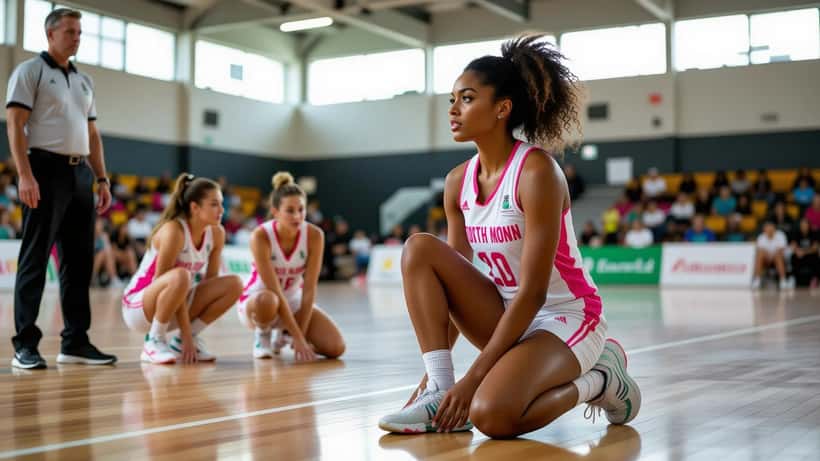
When Netball Scoop's live feed cut through the noise of the Fever vs Swifts SSN clash with a simple but unsettling message — "Hopefully, Grace Nweke is okay. We will await news on her injury" — the reaction across Australian netball circles was immediate. Nweke, the NSW Swifts' prolific goal attack and one of the most feared shooters in the Suncorp Super Netball competition, had gone down on court mid-match, leaving her participation in doubt.
The timing was brutal. Nweke was in the middle of a 2026 SSN campaign that would ultimately yield 667 goals for the Swifts — one of the most productive shooting seasons in the competition's recent history. Named in New Zealand's Silver Ferns squad for the 2026 Commonwealth Games in Glasgow under an eligibility exemption, the prospect of missing the Games loomed large.
As of August 2026, Nweke is in Glasgow competing for New Zealand at the Commonwealth Games, the Silver Ferns having pushed deep into the draw. Her recovery is a testament to what structured, expert-led sports medicine achieves. But for the 1.3 million Australians who participate in netball each year — from Thursday evening social leagues in Campbelltown to Saturday morning competitions in Cairns — her experience raises an urgent question: when something goes wrong on court, how do you know what to do next?
Why Netball Injuries Are Underestimated
Netball sits in a deceptive middle ground as a sport: it appears non-contact, yet its physical demands are considerable. Players absorb landing forces estimated at five to seven times their body weight when jumping for catches or shots, with the load concentrated through the ankle complex, knee joint, and lower back. The stop-start nature of the game subjects the lower limb to repeated eccentric loading throughout a 60-minute match — the kind of stress that accumulates in ways that aren't always obvious mid-game.
Within the goal circle, where shooters like Nweke face shoulder-to-shoulder pressure from opposing defenders, collisions and deflections happen as part of the contest. Ankle sprains remain the most frequent injury across all levels of netball. Anterior cruciate ligament (ACL) tears of the knee are a significant concern, with sports medicine data consistently showing that women aged 15 to 34 who play court sports face among the highest rates of this injury in the country. Finger fractures, shoulder impacts, and lower back strain complete the picture.
Recreational players face a compounding risk factor that elite athletes don't: inconsistent court surface quality, footwear that may not match the playing surface, and — in most cases — no pre-match physiotherapy check or structured warmup. These are the conditions in which a single misjudged landing can escalate from a manageable strain to a significant structural injury.
The Expert Take: What Happens Inside That First Hour
There is a consistent and well-documented pattern in sports medicine: athletes at all levels tend to delay seeking care for on-court injuries. Pain signals are suppressed during the adrenaline of competition. A player who manages to limp back to the bench often concludes the injury must be minor. Team commitments add social pressure to continue playing or return quickly.
For elite athletes like Nweke, this gap is closed by structure. A sports physician or physiotherapist is courtside, conducting immediate assessment, determining safe return-to-play criteria, and accessing imaging within hours if needed. For a recreational player heading home after a Saturday match with a bag of frozen peas and good intentions, that support structure simply doesn't exist.
The window that matters most is 48 to 72 hours after injury. This is when ligament damage can be accurately graded through clinical assessment — and an accurate grade means a targeted rehabilitation plan rather than a generalised guess. The difference between an eight-week recovery and a four-month one frequently hinges on what happens in this window.
See also: Glasgow 2026: The Netball Injuries Behind the Diamonds' Commonwealth Games Push
A Concrete Case: From Court to Consultation Room
Here is a scenario familiar to sports medicine practitioners across Australia's netball community.
Sarah is a 29-year-old teacher playing A-grade at a Saturday morning competition in Parramatta. Midway through the second quarter, she jumps to intercept a pass, comes down slightly off-balance, and rolls her right ankle outward. Pain flares immediately, settles within a minute, and she finds she can bear weight — carefully. Her team is down by four. She stays on.
By Sunday morning, the picture has shifted. Bruising has appeared along the outer ankle bone. The circumference of the injured ankle, measured at the widest point, is 2.8 cm greater than the uninjured side. Sarah applies more ice and decides to monitor.
Here is where the numbers make the decision for her. A bruising pattern on the lateral ankle appearing within 24 hours of injury, combined with tenderness directly over the anterior talofibular ligament (ATFL) — the small structure running from the outer ankle bone forward toward the foot — is associated with a Grade II or Grade III lateral ankle sprain in roughly 70 to 80% of similar clinical presentations. A Grade II sprain — a partial ligament tear — typically requires two to three weeks in a supportive brace with active rehabilitation beginning in week one. A Grade III tear, meaning complete rupture, calls for four to six weeks of immobilisation followed by ten to twelve weeks of guided physiotherapy before safe return to competitive netball.
The if/then test: if Sarah's swelling is still measurable and visible the morning after the match, AND her tenderness sits directly over the outer ankle bone rather than the lower shin, she is almost certainly dealing with ligament damage that requires clinical grading — not a mild roll that time alone will fix. An ungraded, under-treated Grade II sprain commonly develops into chronic ankle instability: a cycle of repeated re-injury that follows recreational players for years.
Related: Jamaica's Shock Win Over Australia: What Elite Netball Health Outcomes Teach Athletes
When to Act and Who to See
Sports medicine practitioners use a straightforward decision framework that recreational players can apply themselves in the hours after an incident:
Seek emergency care immediately if you cannot bear weight for four consecutive steps within the first hour after injury, or if the joint looks visibly deformed or misaligned.
Book an urgent appointment within 48 hours if you heard or felt a distinct pop at the moment of injury, bruising develops within 12 hours, or the joint feels unstable when you try to walk normally.
Schedule an appointment within one week if you can bear weight but pain persists, swelling is moderate and stable, and your range of motion is mildly restricted.
RICE — Rest, Ice, Compression, Elevation — is first-aid management, not treatment. It limits immediate swelling and reduces discomfort in the acute phase, but it provides no information about which structure is damaged or how severely. A sports health specialist, sports physiotherapist, or GP with sports medicine experience can conduct a hands-on assessment and, where needed, arrange Medicare-rebatable imaging — ultrasound or MRI — within a day or two. That imaging provides the grading that drives the right rehabilitation protocol.
An ExpertZoom health specialist can also conduct an initial assessment remotely, help determine whether in-person imaging is warranted, and guide you through a recovery framework calibrated to your injury and your season — not a generic timeline.
The Standard Nweke Set
The trajectory of Grace Nweke's 2026 season — from a concerning mid-match incident during the SSN to representing the Silver Ferns at the Commonwealth Games in Glasgow just months later — reflects what early, expert-supported injury management makes possible. Her medical team did not guess and did not advise passive rest. They assessed, imaged, graded, and built a progressive return-to-sport plan with the Commonwealth Games as the target date.
The same principles that govern elite sports injury management apply to every recreational netball player. The key variable is not the quality of the care — it is the access to it. Whether you play A-grade on Saturday mornings or compete at international level, getting the right specialist eyes on an injury in the first 48 hours is the single highest-leverage decision you can make for your recovery.
This article is for informational purposes only and does not constitute medical advice. If you have been injured, consult a qualified health professional before returning to sport.
