 Liam Campbell
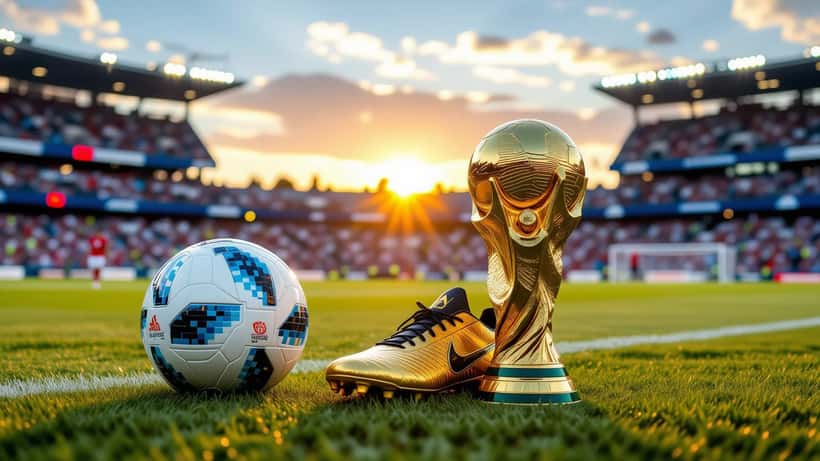
The race for the Golden Boot at the 2026 FIFA World Cup is already shaping up as one of the most open betting markets in recent memory. With the tournament expanding to 48 teams and more group-stage minutes on offer, strikers who can convert early opportunities into decisive goals could sprint ahead before the knockout rounds even begin. For Australian fans, the question is not only which global superstar will top the scoring charts, but how punters and fantasy managers should weigh form, fixture difficulty, and injury history when placing their confidence — and money — behind a candidate.
At the top of every shortlist sits Erling Haaland. The Manchester City forward has redefined goal-scoring consistency across the Premier League and Champions League, and by the summer of 2026 he will be in his physical prime at 25. Norway’s qualification path remains the biggest hurdle; if they reach the finals, bookmakers expect Haaland to be the outright favourite. His odds are routinely the shortest in early markets, reflecting both his shot volume and a penalty-taking role that guarantees high-leverage chances. Analysts caution, however, that a single knockout tie against a deep defensive block can quickly turn a Golden Boot favourite into a footnote.
Kylian Mbappé offers the most compelling counter-narrative. France’s captain combines explosive pace with the experience of having already won the World Cup and finished as the tournament’s top scorer in 2022. Mbappé thrives in transition, and the expanded format may gift France more counter-attacking space against weaker opponents in the early rounds. His odds typically sit just behind Haaland, with many experts arguing that France’s deeper squad run gives Mbappé more games — and therefore more goal-scoring opportunities — than a Norwegian side likely to face an earlier exit.
England’s Harry Kane cannot be discounted, even if age will push him toward 33 by the tournament. Kane’s record of scoring in major tournaments is remarkably reliable, and his move to Bayern Munich has kept him sharp in the Champions League against elite opposition. The England captain’s penalty duties and ability to drop deep to create chances for teammates make him a high-floor, high-ceiling option. If England progresses deep into the knockout stage, Kane could easily collect six or more goals from open play, penalties, and assists-turned-tap-ins.
Brazilian Vinícius Júnior and Argentine Julián Álvarez represent the next tier of contenders, each backed by national teams expected to advance. Vinícius has matured into a decisive finisher at Real Madrid, while Álvarez benefits from Argentina’s cohesive system and Lionel Messi’s continued creativity, assuming Messi remains available through 2026. Both players carry longer odds than Haaland and Mbappé, making them popular each-way selections for bettors seeking value rather than safety.
The Australian perspective adds another layer of complexity. The Socceroos are not expected to supply a Golden Boot winner, but their group-stage fixtures will influence the scoring race indirectly. A favourable draw could allow a European heavyweight to rack up goals against the same opponents Australia faces, inflating a contender’s tally before the round of 32. Australian bettors should therefore watch the group draw closely: a striker drawn into a relatively weak group often enjoys a head start over rivals in tighter, more defensive pools.
Beyond the headline names, there are genuine each-way prospects that sharp bettors monitor closely. Inter Milan’s Lautaro Martínez arrives in peak years as Argentina’s likely starting centre-forward, and his movement inside the box fits the low-block breakdowns common in knockout football. Portugal’s Gonçalo Ramos could see a dramatic increase in minutes if Cristiano Ronaldo reduces his international role, while Germany’s Jamal Musiala and Florian Wirtz may split goals in a fluid attack that lacks a single fixed striker. These longer-priced options matter because Golden Boot markets often misprice players who begin the tournament on the bench but end it as starters.
From an expert-consultation standpoint, the Golden Boot market is a textbook case of noise versus signal. Public betting tends to overreact to recent club form and underweight tournament-specific variables such as travel, heat, altitude, and squad rotation. Professionals advising high-stakes clients recommend building a portfolio rather than betting a single name. A common strategy is to split stakes across two favourites — Haaland and Mbappé — and one longer-priced option such as Álvarez or Ramos, whose minutes could surge if a veteran withdraws.
Injuries and squad selections between now and June 2026 will move the odds repeatedly. A long-term absence for any of the leading forwards would immediately compress the market around the survivors. Likewise, managerial decisions — particularly whether France leans on Olivier Giroud as a starter or supersub — can reshape expected minutes. Smart observers track UEFA Nations League matches, domestic form in the 2025-26 season, and pre-tournament friendlies rather than relying on rankings from months earlier.
Ultimately, the 2026 Golden Boot is likely to be decided by a combination of individual finishing quality and the path a nation receives through the draw. Haaland and Mbappé deserve their status as co-favourites, but tournament football has a habit of rewarding the player whose team stays alive longest. Anyone researching the competition should also keep an eye on the broader tournament picture, including the World Cup 2026 group table and Australia’s fixtures, because a striker’s goal count is only as good as the schedule that creates the chances.
