 Emily Turner
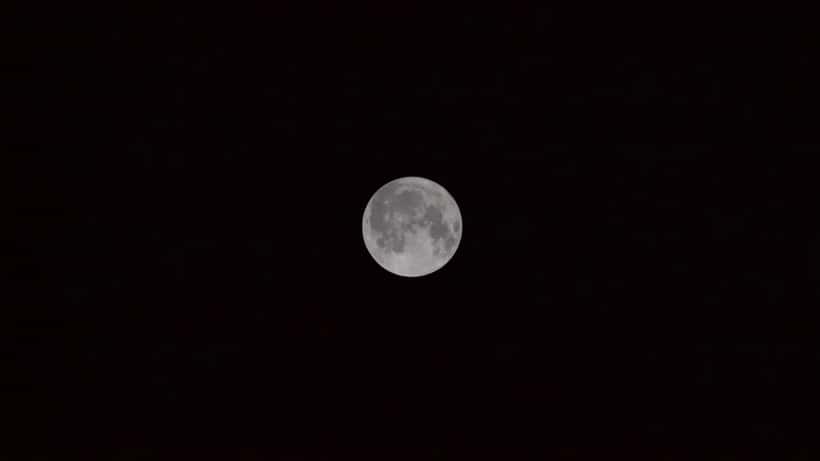
The Flower Moon rises over Australia on Friday, 1 May 2026 — and while millions will step outside to admire it, many will wake on Saturday morning feeling strangely unrefreshed. There is growing scientific evidence that lunar cycles do affect how we sleep, and the upcoming Flower Moon is a timely prompt to understand what is genuinely happening in your body and when disrupted sleep becomes a medical concern worth raising with a professional.
When Does the Flower Moon Rise in 2026?
The Flower Moon reaches its official peak on 1 May 2026 at 17:23 UTC, which translates to early morning on 2 May for Eastern Australia. The best viewing window for most Australians falls on Friday evening, 1 May, when the moon rises just after 4:39 pm AEST in Sydney and climbs brilliantly into the early autumn sky.
This year's Flower Moon is technically a micromoon — the Moon is near apogee, its furthest point from Earth, sitting approximately 402,003 km away compared to its average distance of 384,472 km. While it will appear very slightly smaller than a typical full moon, it will still cast considerable light across the sky and, according to researchers, into your bedroom.
The name "Flower Moon" comes from Indigenous peoples of North America, who associated the May full moon with the abundant wildflowers that bloom during northern spring. In Australia, May marks the beginning of autumn — a season of shorter days and longer nights that, for many people, already brings changes in sleep quality and mood.
What Science Says About the Full Moon and Sleep
The idea that the full moon affects human behaviour sounds like folklore, but peer-reviewed research supports at least one consistent finding: people tend to sleep worse in the days around the full moon.
A study published in the journal Science Advances by researchers at the University of Washington found that in the three to five days leading up to a full moon, adults took longer to fall asleep, spent less time in deep restorative slow-wave sleep, and logged an average of 20 minutes less total sleep per night. The effect was observed across highly diverse groups — from urban dwellers in Seattle to rural Indigenous communities in the Argentine Chaco — suggesting it is not simply a product of streetlights or city noise.
The proposed mechanism is melatonin suppression. Moonlight, while far dimmer than sunlight, contains enough blue-spectrum wavelengths to subtly signal the brain to delay melatonin production. The brighter and higher the full moon, and the more it illuminates a bedroom without blackout curtains, the more this effect compounds over the course of a night.
Who Is Most Affected?
Not everyone loses sleep equally. Research suggests gender plays a measurable role: men tend to experience greater disruption during the waxing moon phase in the days leading up to the full moon, while women report shallower sleep specifically at the peak itself.
People who sleep in rooms without effective light-blocking, those who work night shifts, and individuals already prone to insomnia are most likely to feel the Flower Moon's effects. For Australians heading into cooler May nights and opening windows for fresh air, the trade-off is often more moonlight in the bedroom than they realise.
Children and older adults may also be more sensitive. If your child seems unusually restless over the 1–2 May weekend, or an elderly parent appears more disoriented than usual, increased nighttime light exposure may be a contributing factor.
Astrology, Emotions, and the Full Moon
Astrology enthusiasts across Australia associate the Flower Moon — falling in Scorpio in 2026 — with themes of emotional intensity, deep processing, and transformation. Whether or not you follow astrology, the science offers an explanation for why many people feel heightened emotions around a full moon that has nothing to do with celestial mysticism.
Research from the University of California Berkeley has shown that even modest sleep loss amplifies emotional reactivity significantly. Losing 20 minutes of deep sleep, as research suggests may occur during the full moon period, increases activity in the amygdala — the brain's emotional alarm centre — by measurable amounts. Irritability, difficulty concentrating, and a lowered mood on the morning after a full moon are not imaginary. They are downstream consequences of disrupted sleep architecture.
The Mental Health Question: When to Take It Seriously
The popular belief that full moons trigger psychiatric crises has not been supported by large-scale evidence. Emergency departments do not see consistent spikes in mental health presentations on full moon nights when studies are properly controlled for weekends and seasonal factors.
However, for Australians already managing anxiety, depression, or mood disorders, even a modest reduction in deep sleep can tip the balance. If you notice that your mental wellbeing consistently dips around the full moon, tracking your sleep quality over several lunar cycles — using a wearable device or a simple sleep diary — can reveal a real, actionable pattern worth discussing with your GP or a mental health professional.
When Should You See a Doctor About Sleep?
The Flower Moon is a useful prompt to honestly assess whether your sleep problems extend beyond one unusual night. According to the Sleep Health Foundation, Australians should seek medical advice when they experience difficulty falling or staying asleep for more than three nights per week lasting longer than three months, daytime fatigue that impairs driving or work performance, loud snoring or choking during sleep, or restless limbs that disturb their rest.
Sleep disorders are significantly underdiagnosed in Australia. An estimated one in three adults lives with inadequate sleep, and conditions like obstructive sleep apnoea affect around five per cent of the adult population — many of them undiagnosed. A GP can carry out an initial assessment and, where needed, refer to a sleep specialist. Cognitive behavioural therapy for insomnia (CBT-I) is now the gold-standard first-line treatment and is widely available via telehealth across Australia.
If the Flower Moon has you wide-eyed at 2 am this weekend, don't dismiss it as coincidence. Use it as a cue to review your sleep environment, invest in blackout curtains, and reduce screen time after dark. If poor sleep is a recurring visitor regardless of lunar cycles, speaking with a qualified health professional can make a measurable difference. You can also find useful guidance in our earlier feature on late-night sport events and sleep health, which covers practical strategies for protecting your rest during disrupted nights.
This article is for informational purposes only and does not constitute medical advice. If you have ongoing sleep or mental health concerns, please consult a qualified healthcare professional.
