 David Kelly
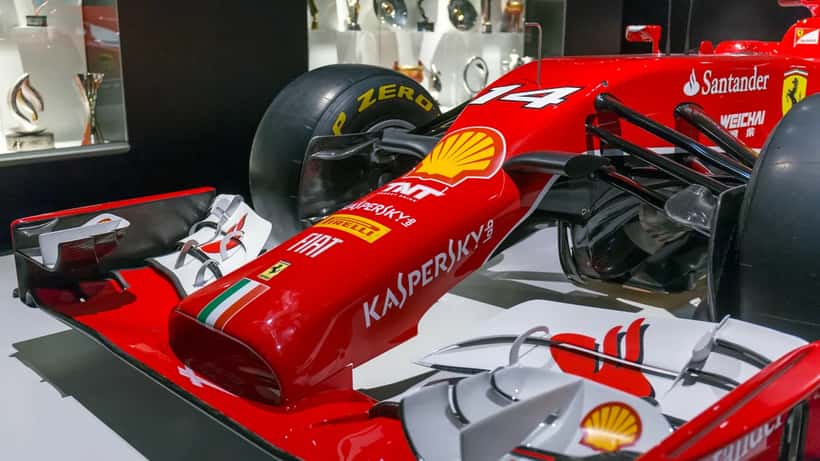
The FIA has banned a cutting-edge aerodynamic trick used by both Mercedes and Red Bull Racing at the start of the 2026 Formula 1 season, after stewards ruled the innovation fell outside the technical regulations. The so-called "flexi-wing" mechanism — which allowed the cars' front wings to flex and alter shape at speed, improving downforce and stability — was deemed non-compliant and ordered removed ahead of the next grand prix weekend.
In a sport where the difference between winning and losing is measured in thousandths of a second, the story is about far more than aerodynamics. It's about what happens when brilliantly engineered solutions are ruled inadmissible — and the broader lesson it carries for anyone who has ever trusted the wrong person to work on their car.
What Was the Flexi-Wing Trick?
In Formula 1, aerodynamic components must remain rigid under load. The FIA imposes strict static load tests on wings to prevent teams exploiting flexible parts that change shape at racing speeds — because a wing that deflects at 300km/h behaves very differently from one tested in the garage.
The 2026 Mercedes and Red Bull innovation reportedly involved a design that technically passed static load tests but flexed under aerodynamic load in a way that provided an advantage. This is not new territory in F1 — flexible wings have been a recurring controversy for over two decades — but the sophistication of the 2026 implementation prompted the FIA to act decisively.
Teams affected by the ban must strip and rebuild the front end of their cars for compliance. The FIA's technical directive takes effect immediately, with no grace period.
The F1 Analogy That Every Australian Car Owner Should Hear
Formula 1 teams employ hundreds of engineers and mechanics. They have budgets exceeding $200 million. They subject their cars to tens of thousands of hours of computational fluid dynamics simulation and physical testing. And yet — they still sometimes build systems that fail to meet regulations, or that work brilliantly until an outside authority audits them.
Now imagine what can go wrong with a single mechanic working on your everyday vehicle, without an FIA inspector watching.
Most Australians interact with a mechanic not for the love of engineering but because something has gone wrong — a warning light, a strange noise, a service that's overdue. The relationship requires trust in a way that almost no other professional service does: you hand over your car, you cannot easily verify the work done, and the consequences of a failure can be life-threatening.
That trust is frequently misplaced.
What Can Go Wrong — and How Often It Does
The Australian Competition and Consumer Commission (ACCC) and state-based consumer affairs bodies handle thousands of complaints about automotive repair services each year. Common issues include:
- Unnecessary repairs — work performed that was not needed, often discovered when a second mechanic reviews the car
- Parts not replaced despite being charged — particularly filters, brake pads, and timing belts
- Incorrect diagnosis — symptoms attributed to the wrong cause, leading to expensive repairs that solve nothing
- Damage caused during service — components disturbed but not correctly reassembled
- Non-compliant modifications — aftermarket parts installed that do not meet Australian Design Rules (ADRs), potentially voiding insurance and rendering the vehicle unregistered
The Australian Consumer Law provides strong protections: repair work must be carried out with due care and skill, take a reasonable time, and be fit for purpose. If it isn't, you are entitled to a remedy — repair, replacement, or refund. But exercising those rights is far easier when you know what to look for before and after a service.
How to Evaluate a Mechanic Before You Hand Over Your Keys
The FIA tests F1 cars with rigorous, standardised load tests. You need your own version of that process. Here's how:
Check for licensing and accreditation. In Australia, all mechanics performing automotive work should hold a relevant trade certificate. Each state has its own licensing body — the Queensland Office of Fair Trading and its equivalents in NSW, Victoria, and other states license vehicle repairers. Ask to see the licence number. Unlicensed work can void your insurance.
Look for industry association membership. The Motor Trades Association of Australia (MTAA) and the Australian Automotive Association (AAA) both operate member directories. A mechanic affiliated with a recognised body has agreed to industry codes of practice.
Get a written quote before any work begins. Under Australian Consumer Law, you are entitled to request a written estimate before authorising repairs. A reputable mechanic will provide one without hesitation. If a workshop refuses or insists on verbal-only quotes, walk away.
Ask for old parts back. When a mechanic replaces a part — brake pads, spark plugs, belts — ask for the old ones. A genuine replacement will produce a worn or broken component. If the "old" part comes back in perfect condition, or no part is produced, ask direct questions.
Get a post-service explanation. A good mechanic will walk you through what was done and why. If the explanation is vague, rushed, or condescending, that's data worth noting.
Use a second opinion for major work. If you're quoted more than $800 for a job, getting a second quote from a different workshop is always worth the time. Pricing in the automotive repair industry varies significantly.
The Expert Advantage
Just as Red Bull and Mercedes rely on thousands of engineers to design, build, and audit their systems — and still get called out by the FIA — the complexity of modern vehicles has outgrown what most owners can monitor themselves.
Today's cars contain electronic control units (ECUs), adaptive driver systems, and integrated safety features that require specialist diagnostic tools to assess properly. A general service mechanic may not have the equipment — or the training — to work on some vehicle brands or systems.
When you need complex work done — transmission rebuilds, advanced diagnostics, EV battery systems, or structural repairs after an accident — a specialist mechanic with brand-specific credentials is worth the extra search. In Australia, authorised service centres and marque-specific specialists operate across every capital city and most regional areas.
The FIA's swift action against Mercedes and Red Bull sends a clear message: even the most technically sophisticated organisations operate better with independent oversight. For your car, that oversight is you — and the more tools and knowledge you have to evaluate the work, the safer you will be on the road.
