 Emily Turner
Everton host Chelsea at Hill Dickinson Stadium on Saturday 17 October 2026, a 12:30pm UK kick-off that lands at 10:30pm on the east coast of Australia. By full time, thousands of Australians who watched will be thinking about their own Sunday kick-around, and the muscles they are about to ask too much of.
What is on the table in Liverpool
According to Goal's match preview, this is Matchweek 7 of the 2026/27 Premier League. Everton arrive after a 2-2 draw away at Hull City on 11 October. Chelsea come in after a 5-1 home win over Bournemouth on 10 October, and Chelsea's official site confirms the 12:30pm UK start.
For Australian fans, that means a late-night session on Saturday and a body that is tired, stiff and often cold by Sunday morning. That is exactly when amateur footballers, many of whom were watching until close to midnight, head to the park for their own game.
Why Sunday football hurts more after a late night
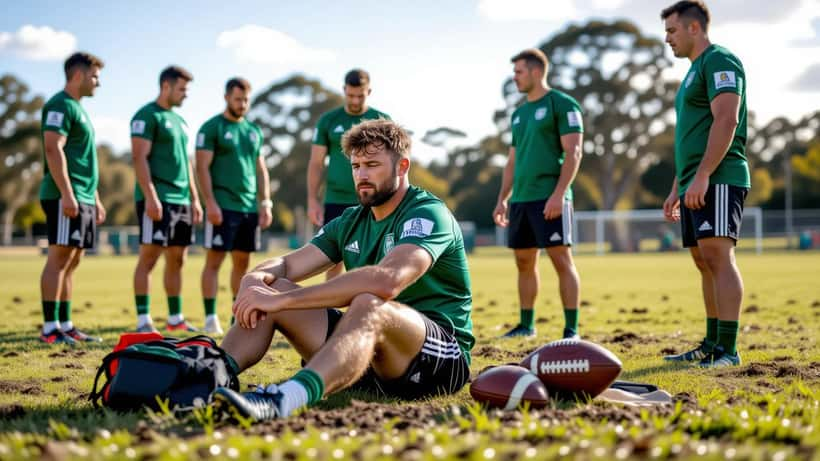
Local clubs run on Sunday mornings across Australia, and plenty of players treat a Saturday-night match as a warm-up for their own. A short night's sleep is not a clean slate. Fatigue slows reaction time, and tired legs tend to land and cut differently from rested ones.
The most common soft-tissue complaints in recreational football are hamstring and calf strains, groin pain and ankle sprains. Healthdirect, the Australian Government-funded health advice service, lists rest, ice, compression and elevation among its first-line steps for minor sprains and strains. It also stresses that severe pain, an inability to bear weight or marked swelling needs a professional assessment.
The expert angle: what a sports physician or physio actually checks
Pain is a poor guide to severity. A sharp "pop" at the back of the thigh during a sprint can be a mild strain or a significant tear, and only a hands-on assessment separates the two. A sports physician or physiotherapist will typically:
- check where the pain sits along the muscle and test strength against resistance;
- compare flexibility and range of motion with the other leg;
- decide whether imaging such as ultrasound or MRI is warranted;
- set a graded return-to-play plan, rather than a guess.
Skipping this step is where short injuries turn into season-long ones. A player who returns at 70 per cent often compensates, and the compensation is what damages the next muscle along.
A Sunday-morning scenario: the 38-year-old winger
Take a hypothetical case. A 38-year-old plays in an amateur 11-a-side league. He stays up until midnight on Saturday 17 October to watch Everton v Chelsea, sleeps about five hours, and plays at 9am on Sunday 18 October without a proper warm-up. Twenty minutes in, he feels a sudden tightness at the back of his right thigh while sprinting and stops.
If he treats it as a "tight hamstring" and plays the following Sunday, 7 days later, he risks re-straining a muscle that is only part-healed. Strain grades are commonly described as mild (grade 1), partial tear (grade 2) and complete tear (grade 3), and recovery times differ widely between them. A mild strain may settle in a couple of weeks, while a partial tear commonly takes several weeks of structured rehab.
If, instead, he books a physio or sports physician within 48 to 72 hours, he gets a grade, a rehab schedule with clear milestones, and a realistic return date. A hypothetical plan might be: week one of load management, weeks two and three of progressive strengthening, and a test of sprint and kicking intensity before game day. That is a three-week plan versus a roughly nine-week setback if the first muscle goes again and he strains the second leg while compensating.
The numbers in this scenario are illustrative. Your own timeline depends on the grade of injury, your age and your training history, which is exactly what an assessment establishes.
What the professionals do differently
Elite clubs such as Everton and Chelsea do not leave recovery to feel. Players are monitored for workload, sleep and soreness, and a muscle complaint is assessed the same day. Amateurs rarely have that safety net, but the principle transfers: the earlier a niggle is looked at, the cheaper it is to fix.
We have covered the same theme around other fixtures, including Everton vs Liverpool at Hill Dickinson Stadium and what sports injury compensation can mean for players. If your injury happened in an organised competition, it is also worth asking your club whether its insurance covers treatment costs, and keeping the receipts and the date of injury.
A good assessment also looks beyond the sore spot. A physio may check hip mobility, core control and how you land from a jump, because weakness in one area often loads another. That is why two players with the same strain can end up with very different rehab programs.
Red flags you should not wait on
Book an assessment quickly if you notice any of the following after a game:
- a sudden pop or a feeling of tearing at the moment of injury;
- bruising that spreads down the leg over the next day or two;
- pain at rest or at night, not only when you move;
- difficulty walking normally or putting weight on the leg;
- a joint that swells quickly, especially the knee or ankle.
Anyone with chest pain, severe breathlessness, a deformed limb or a head injury should call Triple Zero (000) or go to an emergency department rather than book a routine appointment.
Why recovery plans fail
Most failed returns follow the same pattern. The pain fades after a few days, the player feels fine walking around, and the first full sprint is the first real test. By then the muscle has not been loaded in a controlled way, so it gives way again. A staged plan avoids this by raising the load a little each week and only moving on when the previous step is pain free. Ask your practitioner for the specific tests that must be passed before you play again, such as a pain-free single-leg bridge or a series of progressive sprints, and write them down.
Protecting your body on match weekends
A few habits make a measurable difference for weekend players who also follow the Premier League:
- Treat sleep as part of training. If a late kick-off is unavoidable, avoid stacking a hard Sunday session on top of it.
- Warm up properly. Ten to fifteen minutes of dynamic movement, including jogging, lunges and leg swings, before the first sprint.
- Build load gradually. Jumping from zero to ninety minutes after a break is a classic route to a hamstring strain.
- Stop when something feels wrong. Playing through a sharp pain is the single most common way a minor injury becomes a major one.
- Hydrate and eat before you play, especially after a night of match-watching snacks.
What to do next
If you are carrying a niggle from last weekend, or you pulled something this Sunday, do not leave it to chance. A short consultation with a qualified sports physician or physiotherapist can confirm what you have, rule out the worse options and give you a timeline you can plan around. You can find and compare Australian health specialists on Expert Zoom and book the right person before the next round of fixtures.
This article is general information only and does not replace personal medical advice. If you are injured or unsure, speak to a doctor or qualified health professional. In an emergency, call 000. For more on common injuries, see Healthdirect's guide to sports injuries.
