 Fred Rivers
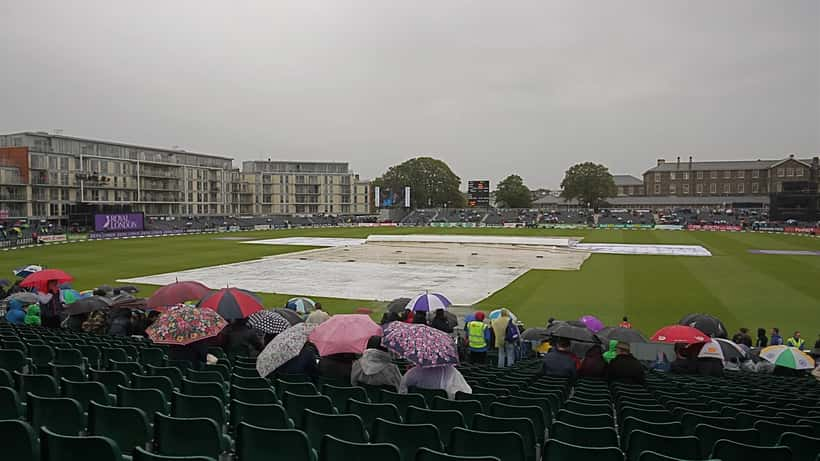
The first ODI between England and Sri Lanka gets underway this evening at Riverside Ground, Chester-le-Street — a day/night match on 22 September 2026 that thousands of Australian cricket fans have built holidays around. With English autumn weather never far from a grey cloud, the spectre of match abandonment looms large, and the financial consequences for travelling Australians can run into the tens of thousands of dollars.
The Series So Far: England in Dominant Form
Sri Lanka arrives at the ODI campaign already bruised. England swept the T20I series with a commanding 119-run victory in the opener — Harry Brook, Jos Buttler, and debutant baker starring in a dominant display — before running down targets in 12.1 and 9.4 overs in the two subsequent matches. For Australian fans who made the journey or are streaming from home, the whitewash set up an ODI series that carries real stakes: Sri Lanka are using this tour to prepare for bouncy, overcast conditions ahead of the 2027 World Cup cycle, while England seek to maintain their dominant white-ball form on home soil.
But the cricketing context is only part of the story. The September scheduling across England's north — Chester-le-Street first, then continuing through late September — was always going to brush with autumn weather risk. County Durham sits close to the Scottish border in latitude, and Riverside Ground is no stranger to sudden showers, overcast skies, and the kind of persistent drizzle that delays play without technically abandoning a match.
The Hidden Cost of Following Cricket Abroad
Australia maintains one of the world's most passionate cricket audiences, and a substantial diaspora in the UK — estimated at over 1.2 million Australian-born residents, many of whom attend international fixtures each English summer. Beyond the diaspora, a growing number of Australians fly specifically from Australia for marquee tour matches, spending an average of AUD $6,000–$12,000 on a dedicated cricket trip to England.
This financial commitment creates a significant exposure problem that most fans never think about until the covers come on and the umpires reach for the bails. When a match at Chester-le-Street is delayed or abandoned entirely, the cascade of non-refundable expenses can be devastating for families or groups who have spent months planning.
According to the Australian Bureau of Statistics, Australians spent approximately AUD $7.4 billion on international travel in the first half of 2026, with the UK remaining the top long-haul destination. Sports tourism — travel built around a specific live event — is a growing but legally complex subset of that spending, and consumer protections for these travellers are far weaker than many assume.
What English Law Actually Says About Abandoned ODIs
The England and Wales Cricket Board operates under standard UK consumer law. Under the Consumer Rights Act 2015 and the ECB's published ticket terms, holders are entitled to a refund of the face value of their ticket if:
- The match is abandoned before any play begins; or
- Fewer than 10 overs per side are bowled in a one-day match.
If 10 overs are completed on each side, the Duckworth-Lewis-Stern (DLS) method can be applied and the match is deemed legally "complete" — meaning the ECB's ticket obligation has been fulfilled. Fans could sit through a rain-reduced 10-over slog and receive no refund whatsoever, even if they flew from Melbourne specifically to attend.
Crucially, the ECB's refund policy covers the ticket face value only. It does not — and legally cannot be compelled to — cover flights, accommodation, travel insurance shortfalls, or consequential costs such as missed work or pre-booked transfers. Australian Consumer Law may not apply either: the ACCC explicitly warns consumers that when purchasing from overseas sellers, Australian protections may have no jurisdiction, leaving buyers subject entirely to UK law.
For fans who purchased tickets through third-party resellers rather than directly from the ECB, protections can be even further diluted — some reseller contracts exclude weather-related cancellations entirely.
Concrete Case: How Much Could Jason Actually Lose?
Consider the situation facing Jason, a 42-year-old Melbourne electrician who travelled to England specifically for the ENG vs SL ODI series with his teenage son. His total spend looks like this:
- Return flights, two passengers (Melbourne–London): AUD $5,800
- Accommodation in Durham, 2 nights (family room): £320 (~AUD $640)
- 1st ODI tickets, two seats (Members' Stand, Chester-le-Street): £110 (~AUD $220)
- Train travel within England: £95 (~AUD $190)
- Standard leisure travel insurance, two travellers: AUD $340
Total trip cost: approximately AUD $7,190
Now apply the critical if/then:
If tonight's match is abandoned before 10 overs per side are bowled, then Jason's guaranteed recovery is the ticket face value — £110, or roughly AUD $220. Every other cost sits at risk.
If Jason's travel insurance includes a specific "event cancellation" clause covering sporting events, he could claim up to AUD $5,000–$10,000 depending on policy limits — potentially recovering most of his trip cost. If his policy covers only "travel disruption" (flight delays, lost luggage, medical emergencies), he recovers nothing beyond the £110 ticket refund — leaving him AUD $6,970 out of pocket after a trip that ended in two hours of play.
This gap between what most people assume their travel insurance covers and what it actually covers is the single most common dispute category consumer law specialists see following major cricket tour weather events in England. Most standard Australian holiday policies cap event cancellation claims at $500–$1,000, or exclude sporting events from the definition of "event" entirely — buried in the Product Disclosure Statement under "General Exclusions."
Travel Insurance: The Clause That Changes Everything
Not all Australian travel insurance policies are equivalent when it comes to sporting event cancellations. Policies regulated under the Corporations Act 2001 and subject to the Australian Financial Complaints Authority (AFCA) vary enormously in this area.
Key terms to search for in your PDS before travelling:
- "Event cancellation" or "entertainment/sporting event cancellation" — this is the clause you need; confirm it lists sporting events specifically
- "Travel disruption" or "travel delay" — covers flights and logistics, not events
- "Force majeure" exclusions — weather is typically NOT treated as force majeure for English cricket (it is a foreseeable risk), but some insurers attempt to apply it
- Claim notification windows — most policies require written notification within 30–90 days of the event; missing this window can void your claim regardless of merit
Policies marketed specifically as "sports travel insurance" or "event travel insurance" by AFSL-licensed Australian providers typically offer the most robust protection for situations like a rained-out ODI. Generic holiday insurance sold alongside cheap flights frequently excludes sporting event cancellations or imposes sub-limits far below the cost of an international cricket trip.
The AFCA complaint process — free, binding on Australian-licensed insurers, and handling disputes up to $1 million — is the most practical first step if your insurer denies a legitimate claim. You do not need a lawyer to lodge an AFCA complaint, though a consumer law specialist can help you build the strongest possible case if the dispute is complex or involves multi-leg hospitality packages.
What to Do Before You Board the Plane
Australian fans planning to attend remaining ENG vs SL ODIs — or any future cricket fixture in England — should take these steps before travelling:
- Read your PDS specifically for "event cancellation" — search the document for "sporting event," "entertainment," and "event cancellation" to confirm coverage before purchasing
- Buy insurance from an AFSL-licensed Australian insurer — this locks in AFCA jurisdiction for any dispute and gives you the strongest complaint pathway
- Purchase tickets directly from the ECB where possible — third-party resellers add contractual complexity to any refund claim and may have weaker cancellation policies
- Keep every receipt and confirmation — flights, hotel bookings, ticket purchase emails, and any ECB correspondence; a paper trail is essential for both insurer and AFCA claims
- Photograph your venue entry on the day of the match — timestamped photo evidence proving you attended strengthens disputed refund claims significantly
If you are already in England facing a match abandonment situation, or an insurer has denied a claim you believe is valid, a legal consultant or consumer law specialist can assess the specific circumstances of your policy wording and the ECB's obligations under UK consumer law. For additional context on what happens to cricket wagers when play is interrupted, the England vs Sri Lanka Cricket 2026 betting voided guide covers the wagering side of match abandonment in detail.
Full details on AFCA's free dispute resolution service are available at afca.org.au.
This article provides general information only and does not constitute legal or financial advice. Readers with specific insurance disputes or legal questions should consult a qualified professional licensed in the relevant jurisdiction.
