 Emie Wang
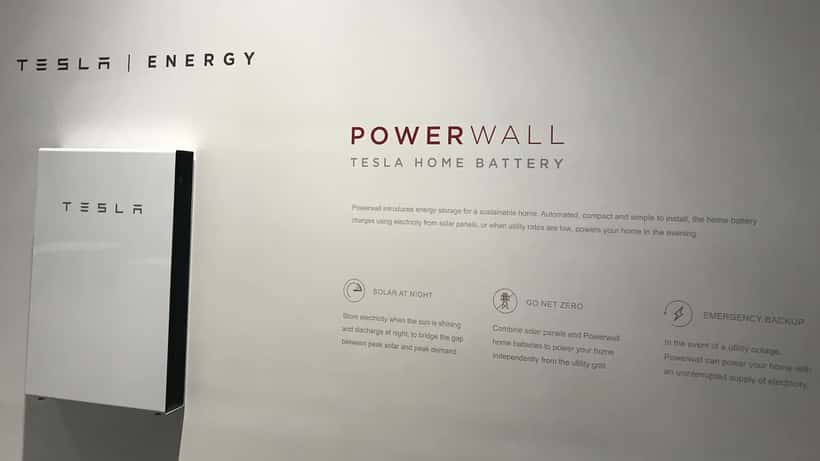
Two major battery product recalls in 2026 have left thousands of Australian households questioning their rights. Tesla's Powerwall 2 home battery system is subject to an active ACCC recall updated in April 2026, covering units sold over more than four years — and if you own one, you may be entitled to more than just a free repair.
What Is Happening With Battery Recalls Right Now?
On 13 April 2026, the Australian Competition and Consumer Commission (ACCC) updated a product recall for the Tesla Powerwall 2 AC Battery Power System. Tesla identified certain lithium-ion battery cells — sourced from a third-party supplier — that may fail and overheat. Units have been confirmed smoking or emitting flames, causing property damage in Australian homes.
The recall now covers Powerwall 2 systems sold between 1 November 2020 and 23 August 2025. That is more than four years of product sales, meaning tens of thousands of Australian households could be affected. Tesla confirmed affected units will be replaced at no cost, and that compensation will be considered for lost energy savings — on a case-by-case basis.
Separately, Hyundai issued a recall for nearly 5,000 electric vehicles in Australia due to a battery management software fault that could cause fires while the car is recharging or while parked. The recall covers the Kona EV (manufactured 2018–2023) and the IONIQ EV (2018–2022).
What Are Your Rights Under Australian Consumer Law?
Under the Australian Consumer Law (ACL), consumers have specific, enforceable rights when a product is found to have a safety defect or fails to meet consumer guarantees. These rights exist regardless of what a manufacturer's recall notice says.
Consumer guarantees under the ACL include the right that goods are of acceptable quality — meaning safe, durable, and free from defects. When a product fails to meet these guarantees and the problem is major, you are entitled to a refund or replacement, not just a repair. A safety risk such as a battery that may catch fire or explode is generally classified as a major defect.
"Case-by-case" compensation — the language Tesla uses for lost energy savings — is often where consumers get short-changed. An independent consumer law adviser can help you understand whether the remedy being offered complies fully with your ACL rights.
Can You Claim More Than Just a Replacement?
Yes — in certain circumstances. Under the ACL, consumers can seek compensation for:
- Consequential losses — such as higher electricity bills resulting from a switched-off or throttled battery
- Property damage caused by a defective product catching fire or overheating
- Out-of-pocket expenses incurred because of the recall, including temporary energy costs
This is where many consumers leave money on the table. A manufacturer's recall notice typically focuses on replacing the defective product. Australian consumer law goes further, and a qualified consumer rights solicitor can help you assess whether additional compensation applies in your situation.
For vehicle recalls like the Hyundai EV recall, if your car has a major problem that cannot be fixed within a reasonable time, you are entitled to reject the vehicle and receive a full refund or replacement — regardless of the vehicle's age, provided the defect existed at purchase.
Steps to Take If Your Product Is Recalled
- Check the ACCC Product Safety website — confirm your specific model or serial number is listed in the recall
- Document everything — keep records of purchase receipts, all communications with the manufacturer, and any costs you have incurred
- Do not assume the offered remedy is final — your rights under the ACL may exceed what the manufacturer is proposing
- Seek independent advice if unsatisfied — if the company's remedy seems inadequate or your compensation claim is denied, a consumer rights solicitor can advise on next steps
When Should You Contact a Legal Expert?
Consider consulting a consumer rights lawyer if:
- The manufacturer is slow to respond or delays the recall remedy
- You suffered property damage, personal injury, or significant consequential losses
- You are offered only a partial remedy (for example, a repair only, when a full refund may be your entitlement)
- You are unsure whether the compensation offered for "lost energy savings" is fair or adequate
Battery recalls can involve significant financial stakes. Home battery systems typically cost between $10,000 and $20,000 installed. Electric vehicles often exceed $50,000. Accepting an inadequate remedy on a product of that value can mean thousands of dollars left unclaimed.
A qualified consumer rights solicitor on ExpertZoom can assess your specific situation, advise on your ACL entitlements, and help you navigate any dispute with the manufacturer or retailer.
The Broader Picture: Australia's Battery Boom and the Safety Gap
Australia is in the middle of a battery storage boom. More than 250,000 home battery systems are installed nationally, with numbers rising each year as solar uptake accelerates. EV registrations grew sharply through 2024 and 2025, with federal government incentives bringing more electric vehicles onto Australian roads than ever before.
Recalls like these are, in part, a product of rapid adoption outpacing quality control. The ACCC has flagged lithium-ion battery safety as an ongoing priority, noting in its dedicated 2023 report that lithium-ion batteries were linked to a significant number of product safety incidents annually — including fires, burns, and explosions in both consumer devices and home energy systems.
For information on current product recalls and your rights, visit the ACCC Product Safety website — Australia's official consumer product recall register.
If you have been affected by a battery recall or believe you are entitled to more than what has been offered, ExpertZoom connects you with qualified consumer law specialists who can advise on your rights — at a time that suits you.
This article provides general legal information only and is not a substitute for professional legal advice. For advice specific to your situation, consult a qualified legal professional.
