 Fred Rivers
When the Wallabies face the All Blacks at Eden Park in Auckland for the 2026 Bledisloe Cup, an estimated 12,000 Australian supporters will cross the Tasman — each spending an average of AUD $2,800 on flights, accommodation and match tickets. Legal experts warn that most of those fans have little idea how different consumer protections become the moment they step off the plane in New Zealand.
The 2026 Bledisloe Cup and Eden Park's Record Demand
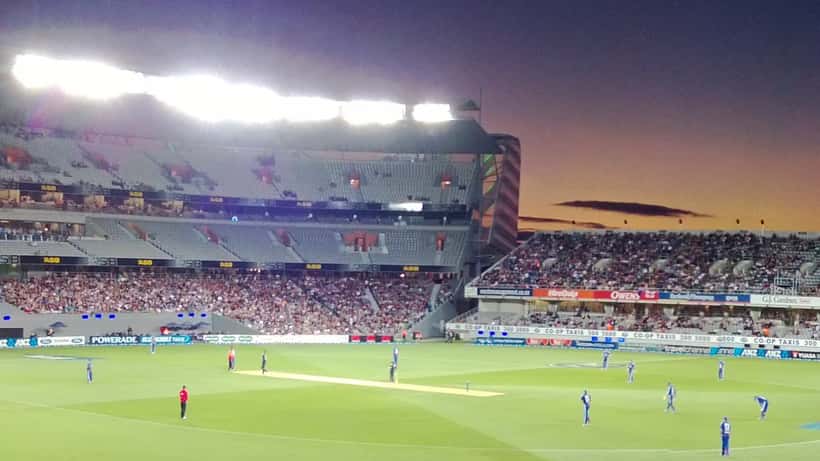
Eden Park, New Zealand's largest outdoor stadium with a certified capacity of 50,000, is one of international rugby's most iconic venues and has been the site of Australian heartbreak for decades. The 2026 Bledisloe Cup series has drawn stronger demand than any recent edition: tickets for the Eden Park leg sold out within three hours of public release via Ticketmaster NZ, with secondary market prices rapidly climbing to AUD $480–$1,200 per seat — up to four times face value.
For Australian fans making the journey, the total financial exposure is substantial. Tourism New Zealand research shows that Australian sports event visitors spend an average of NZD $1,950 on accommodation per trip, and the typical Eden Park Bledisloe package combines return flights (AUD $320–$680 on major carriers), two nights of hotel (AUD $180–$350 per night), match tickets and ground transfers. An all-in figure of AUD $2,500–$4,000 per person is common for bookings made within six weeks of the event.
What most fans do not check — and what can make the difference between recovering their money and absorbing a major financial loss — is which country's consumer law governs each component of that package, and whether their travel insurance covers the specific risk that most commonly triggers claims on sporting event trips.
Where Australian Consumer Law Ends — and New Zealand's Begins
Consumer rights lawyer Marcus Aldridge, who specialises in cross-border dispute resolution, identifies the central misconception: Australian fans assume that Australian Consumer Law (ACL) protects them throughout the trip.
"The ACL is excellent legislation, but it is Australian legislation," Aldridge explains. "The moment you purchase a New Zealand-issued event ticket — whether directly or through a resale platform — you are principally governed by New Zealand's Consumer Guarantees Act 1993 and its Fair Trading Act. Those are robust laws, but they operate differently from what Australians expect, particularly around refund entitlements."
The most consequential distinction concerns postponement versus cancellation. Under New Zealand consumer law, if an event is postponed rather than outright cancelled, the organiser is generally not obligated to provide a cash refund — only a ticket valid for the rescheduled fixture. If the rescheduled date is impossible for the ticket holder due to work commitments, family obligations or prior travel bookings, the right to a cash refund depends entirely on the ticketing company's own terms and conditions, not on any automatic statutory entitlement. In contrast, Australian consumer law under the ACL imposes a higher standard: if a service cannot be delivered as promised and the consumer does not accept an alternative, a full refund is often available as a default right.
The secondary market creates a further layer of exposure. NZ Rugby and Ticketmaster NZ operate official dispute pathways. Third-party resale platforms — StubHub, Viagogo, Fan-to-Fan NZ — carry no equivalent consumer guarantee, and purchases through these channels are treated as private sales under New Zealand law, offering minimal recourse if an event changes or a ticket proves invalid at the gate.
What Your Travel Insurance Actually Covers (and What It Doesn't)
Standard Australian travel insurance policies have a consistent blind spot that catches sports event travellers off guard. The key distinction lies in how the policy defines a "cancelled event."
Most policies sold by major Australian insurers (Cover-More, Allianz Travel, nib) cover "cancellation by the event organiser." What many policies explicitly exclude — or cover only in premium tiers — is event postponement where a replacement date has been confirmed within 90 days. If Eden Park announces a rescheduled fixture for three weeks after the original date, the event has not been cancelled in the policy's technical sense, and claims for non-refundable flights and hotel deposits may be denied.
Travel insurance specialist Karen Tung, writing for the Insurance Council of Australia, estimates that postponement-related exclusions account for more than 30 per cent of rejected travel insurance claims involving international sporting events. "People read 'events cancellation cover' and assume it covers postponement," Tung notes. "In most standard policies, it does not."
The critical check: locate Section 3 ("Events Cancellation") in your policy's Product Disclosure Statement. Search specifically for the words "postponed" and "rescheduled." If neither appears, assume the policy does not cover this scenario. Specialist sports travel insurance products — a small but growing segment — are designed specifically to cover postponement, often with named-event endorsements available at the point of purchase.
Concrete Case: The AUD $3,450 Eden Park Trip That Left a Sydney Fan Out of Pocket
Consider this realistic composite scenario for a Sydney-based fan booking the 2026 Bledisloe Cup at Eden Park:
Tom, 42, commits in early August: Jetstar return flights (AUD $550, non-refundable economy), two nights at the Cordis Auckland (AUD $780 total, non-refundable rate), and a Category B ticket purchased on StubHub NZ (AUD $920) — a total of AUD $2,250 before spending money. His travel insurance is a standard single-trip policy from a major Australian insurer costing AUD $89.
In late August, a scheduled maintenance issue forces Eden Park to postpone the fixture by 19 days. Tom cannot take additional leave.
If Tom had purchased his ticket directly from Ticketmaster NZ: He would receive a ticket valid for the new date — no cash refund, but a usable asset he could potentially resell.
If Tom's insurance covered postponement (it does not): He could claim the AUD $550 flight cost and AUD $780 hotel deposit, minus the policy excess. His net loss would be AUD $250 rather than AUD $1,330.
If Tom had booked a refundable flight fare (AUD +$160 extra at booking): He recovers the $550 flight cost immediately. His exposure drops to the hotel deposit (AUD $780) and the StubHub ticket (AUD $920) — assuming the resale ticket carries no refund provision, a total unrecoverable loss of AUD $1,700.
The difference between the worst-case outcome (AUD $2,250 fully lost) and a substantially mitigated outcome (AUD $250 lost) comes down to three decisions made at the time of booking: choosing a direct ticketing channel, selecting a refundable airfare, and reading the PDS before paying the insurance premium.
According to the Australian Competition and Consumer Commission (ACCC), Australian consumers spent more than AUD $1.1 billion on international sporting event travel in 2025, with cross-border event disputes among the fastest-growing complaint categories received. The ACCC notes on its consumer rights page at accc.gov.au that Australians purchasing tickets from foreign entities should treat the transaction as governed by the foreign jurisdiction's law, not the ACL, unless the vendor has an Australian presence.
What to Do Before You Book Your Eden Park Trip
Four steps taken at the time of booking — not after the match date changes — determine your financial exposure:
1. Buy tickets exclusively from Ticketmaster NZ or NZ Rugby's official channel. Only authorised ticketing platforms carry any dispute pathway under New Zealand's Fair Trading Act. StubHub, Viagogo and equivalent resale platforms offer no statutory refund right under New Zealand consumer law.
2. Pay the premium for a refundable or flexible airfare. The AUD $100–$200 difference at booking is almost always lower than the risk of holding a non-refundable fare on an event that could postpone. Qantas, Air New Zealand and Virgin Australia all offer flexible fare tiers on the Sydney–Auckland route.
3. Read Section 3 of your travel insurance PDS before you buy. Look for explicit mention of "postponement" and "rescheduled event." If the policy is silent, it does not cover this scenario. Consider specialist event travel products if your total commitment exceeds AUD $2,000.
4. Seek legal or financial advice before large commitments. If your total outlay exceeds AUD $3,000, a brief consultation with a consumer rights lawyer or travel insurance specialist — available through platforms like Expert Zoom — can identify your specific exposure points and confirm whether your booking structure gives you viable recovery options if the match date changes. Thirty minutes of expert guidance at the planning stage typically costs a fraction of an unrecoverable booking.
For disputes that have already arisen involving New Zealand-based businesses, New Zealand's Disputes Tribunal accepts claims from Australian residents for amounts up to NZD $30,000 (approximately AUD $27,000), with online filing available at disputes.govt.nz. The ACCC can assist where Australian-registered companies are involved in a cross-border transaction.
This article provides general information only and does not constitute legal or financial advice. For advice specific to your booking situation, consult a qualified professional.
