 Emie Wang
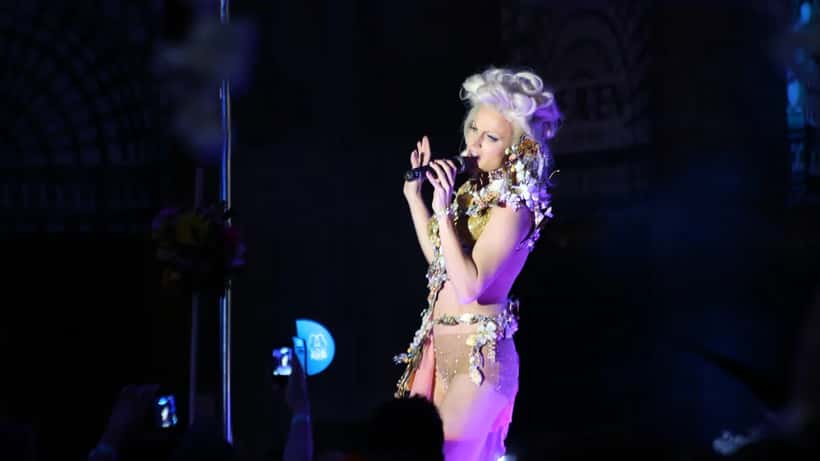
Courtney Act is back in the Eurovision commentary booth. Australia's most recognised drag performer and LGBTQ+ rights advocate returns to SBS alongside singer-songwriter Danny Estrin for the 2026 Eurovision Song Contest, which reaches its grand final this weekend in Vienna. It is her second consecutive year calling the contest, and her presence on Australia's national broadcaster continues to signal a shift in how mainstream media platforms represent gender-diverse talent.
For LGBTQ+ performers, creative workers, and entertainers in Australia, the spotlight Courtney Act brings to Eurovision is also an opportunity to ask a quieter question: what legal protections do they actually have in 2026?
Courtney Act: From Drag Race to National Broadcaster
Born Shane Jenek, Courtney Act rose to national fame on Australian Idol in 2003 and went on to place in the top four on RuPaul's Drag Race Season 6 in the United States. She won Celebrity Big Brother UK in 2018, becoming the first drag queen to win the show, and has since become one of Australia's most prominent advocates for LGBTQ+ equality, sex education, and mental health awareness.
Her return to Eurovision coverage on SBS reflects a broader trend: LGBTQ+ performers in Australia's entertainment industry are increasingly visible in mainstream and public broadcast roles. But visibility alone does not guarantee legal protection.
Protection 1: Anti-Discrimination Law Covers Sexual Orientation and Gender Identity
Australia's Sex Discrimination Act 1984 prohibits discrimination on the grounds of sexual orientation, gender identity, and intersex status in employment, education, and the provision of goods and services.
This means an employer — including a broadcaster, production company, or event organiser — cannot legally:
- Refuse to hire someone because they are gay, lesbian, bisexual, or queer
- Terminate or disadvantage a worker because they are transgender or gender diverse
- Apply different performance standards based on sexual orientation or gender identity
- Subject a worker to a hostile or demeaning work environment related to their LGBTQ+ identity
The Australian Human Rights Commission (AHRC) is the federal body responsible for handling complaints under the Sex Discrimination Act. Complaints can be lodged directly and are assessed by a Commissioner.
"The legal framework exists and it is strong," says a legal expert specialising in discrimination and employment law. "What many people don't realise is how broadly it applies — from performers and contractors to volunteers and interns."
Protection 2: State and Territory Laws Add Further Layers
While federal law sets a baseline, each Australian state and territory has its own anti-discrimination legislation that may provide additional protections or cover situations not captured at the federal level.
Key variations:
- Queensland, New South Wales, Victoria, South Australia, Tasmania, and the ACT all have state-level discrimination protections covering sexual orientation and gender identity
- Western Australia and the Northern Territory have protections that, in some areas, are more limited — legal advice specific to jurisdiction matters
- Victoria in particular has some of the most robust protections, including the Equal Opportunity Act 2010, which applies to contractors, gig workers, and volunteer roles — categories increasingly relevant to the entertainment and events industry
"If you work in entertainment — whether as a performer, a crew member, a commentator, or in a behind-the-scenes role — it is important to know which jurisdiction's laws apply to your specific situation," notes one employment law specialist. "The answer isn't always obvious, particularly for touring artists or those with interstate engagements."
Protection 3: Workplace Bullying Protections Under the Fair Work Act
The Fair Work Act 2009 provides protections against workplace bullying for most Australian workers — including those in performance and media roles. Repeated, unreasonable behaviour directed at a worker that creates a risk to their health and safety constitutes bullying under the Act.
For LGBTQ+ workers, bullying often takes the form of:
- Deliberate and repeated misgendering despite correction
- Exclusion from professional opportunities, team communications, or events
- Hostile comments about gender expression, transition, or sexual orientation
- Unauthorised disclosure of a worker's gender identity or sexual orientation to others
A worker who experiences bullying can apply to the Fair Work Commission for an order to stop the bullying. The Commission can also provide mediation and set conditions for future behaviour.
"Gender-related bullying in entertainment environments is underreported," says one workplace law specialist. "The gig economy and project-based nature of many performance roles means workers sometimes feel they can't speak up for fear of not being rehired. That is exactly the scenario the law was designed to address."
If Discrimination Occurs: Practical Steps
If you believe you have experienced discrimination or bullying related to your sexual orientation, gender identity, or gender expression at work, your immediate steps should include:
- Document the incident — dates, times, what was said or done, any witnesses
- Request a copy of your employment contract or engagement agreement — your terms of employment affect which protections apply
- Raise it internally if safe to do so — most organisations are legally required to have a workplace complaints process
- Contact the AHRC or your state anti-discrimination body — federal and state bodies can handle complaints without the cost of litigation
- Get legal advice early — a lawyer can assess whether what you experienced constitutes unlawful discrimination and advise on your options
For context on how trans-specific rights have developed in Australian workplaces, our coverage of the Alex Consani Met Gala case and Australian trans workplace rights provides a useful lens on how the law is being applied in 2026.
Visibility and Legal Rights: Two Different Things
Courtney Act's presence on SBS Eurovision coverage reflects how far LGBTQ+ representation has come in Australian mainstream media. But as she herself has long argued through her advocacy work, visibility does not automatically translate into legal safety or workplace equality.
The legal protections available in Australia are genuine and enforceable — but they require workers to know they exist and how to use them. For performers, presenters, creatives, and all those working in entertainment, understanding your rights before an issue arises is far more effective than pursuing a remedy after the fact.
A legal expert with experience in discrimination and employment law can advise on the protections specific to your situation, jurisdiction, and type of engagement.
