 Chloe Anderson
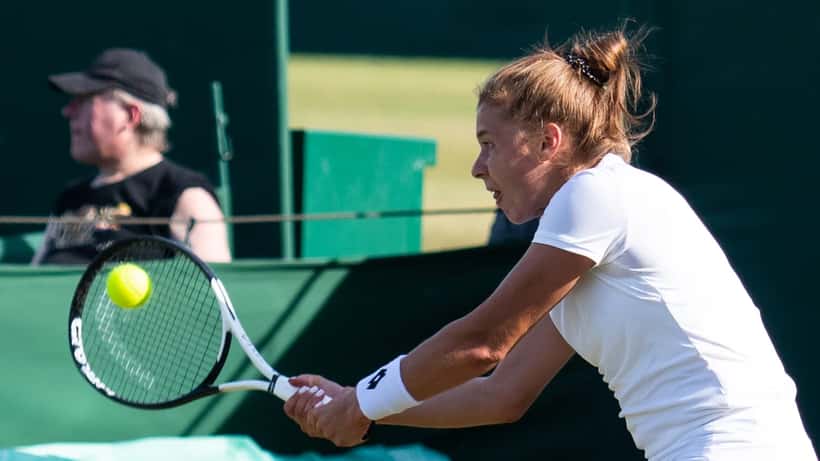
Polish qualifier Maja Chwalinska, 24, played nine straight matches in 14 days to reach the Roland Garros 2026 women's singles final on 6 June, before losing 6-3, 6-2 to Mirra Andreeva. The Sports Illustrated profile of her Cinderella run framed it as a tennis story; sports physicians read it differently — as a textbook case in what elite endurance and pressure tolerance look like, and why most athletes break long before reaching her stage.
For Australian club players, masters-level cricketers, surf competitors and junior tennis hopefuls, Chwalinska's two-week tournament tells a more useful story than the trophy ceremony did. The 114th-ranked qualifier from Dabrowa Gornicza was not the most talented player in Paris. She was, by every public account, the most prepared for sustained pressure.
A nine-match marathon ranked among the open era's hardest
According to the official Roland-Garros 2026 site, Chwalinska is only the second qualifier in the Open era to reach a major singles final after Emma Raducanu at the 2021 US Open, and the first ever to do so at Roland Garros. To get there she defeated, among others, world No.1 Aryna Sabalenka, No.3 Iga Swiatek and No.4 Coco Gauff. Each match exceeded two hours. Her semi-final win over Diana Shnaider stretched past three.
In sports-medicine terms, that workload mirrors what an Olympic decathlete experiences across two days, repeated four times. Recovery windows of 24-36 hours between matches leave little room for the muscle, glycogen and central-nervous-system repair that elite athletes need to maintain output.
What the body does under repeated peak pressure
Two physiological systems matter most over a tournament of this length.
- The autonomic nervous system swings between sympathetic (fight-or-flight) activation during matches and parasympathetic recovery between them. Athletes who cannot trigger that parasympathetic switch — often because of anxiety or poor sleep — accumulate fatigue faster.
- The hypothalamic-pituitary-adrenal axis governs cortisol response. Chronic cortisol elevation suppresses immune function, slows tissue repair and impairs short-term memory — the same memory used to remember a coach's between-points instructions.
The Australian Institute of Sport's mental health resources for high-performance athletes describe the same loop in plain language: pressure tolerance is a trainable skill, not a personality trait.
Why most amateur athletes fold first
Roland-Garros showcased extremes, but the same pattern appears in Australian club sport. Tennis Australia data and physiotherapist case loads after a long state championship usually show the same three failure points:
- Sleep collapse from match-day anxiety. Less than six hours of sleep before competition reduces reaction time by roughly 20%, on par with a 0.08 blood alcohol reading.
- Underfuelling between sessions. Many junior and masters players eat less, not more, during competition because nerves suppress appetite.
- Mental rumination after losses. The athletes who lose a tight match and then ruminate for 48 hours arrive at the next match metabolically and emotionally depleted.
A sports psychologist working alongside a physiotherapist can build protocols that address all three. Pre-match sleep routines, structured carbohydrate timing and post-match cognitive-debrief scripts are well-evidenced techniques, not motivational extras.
The expert team Chwalinska almost certainly had
Top-100 tennis players travel with at least four professionals: a head coach, a fitness coach, a physiotherapist and, increasingly, a sports psychologist. Chwalinska's exact set-up has not been disclosed, but her ability to recover three times in a week from grinding three-set wins points to disciplined recovery work — ice baths, compression, sleep monitoring and load management.
Australian amateur athletes cannot reproduce that staffing, but the principles transfer. Two relationships matter most for anyone playing serious club competition:
- A general practitioner aware of sports medicine who can flag when symptoms — persistent fatigue, sleep disruption, low mood after losses — cross from normal training stress into something that needs treatment.
- A registered psychologist with sports-performance experience who can teach evidence-based techniques such as cognitive defusion, attentional control and arousal regulation.
Healthdirect Australia, the federal government's free health-advice service, also offers a 24/7 nurse helpline and a service finder for both GPs and mental-health professionals across every state.
Warning signs that should prompt a consultation
Chwalinska's run was sustainable because she presumably caught problems early. Recreational athletes rarely have that infrastructure. Symptoms that warrant a doctor or psychologist appointment — not a "push through it" mentality — include:
- Sleep that does not return to baseline within 48 hours of an intense match.
- Resting heart rate elevated by more than 10 beats per minute over personal baseline for several days.
- Loss of interest in training that lasts longer than a normal recovery week.
- Anxiety spikes before matches that interfere with eating, sleeping or concentration at work.
- Recurrent minor injuries — chronic shin pain, elbow soreness, plantar fasciitis — that signal accumulated load rather than acute trauma.
In Australia, a GP referral under a Mental Health Treatment Plan can subsidise up to ten psychology sessions per year through Medicare. Many sports physiotherapists also accept self-referrals, with private-health rebates depending on the cover level.
What Chwalinska's two weeks teach a Saturday morning competitor
She lost the final, but the deeper takeaway is that nine consecutive elite matches are survivable when the right systems are in place — and that the same systems, scaled down, protect amateur athletes from the smaller but real breakdowns that follow club championships and tournament weekends.
A doctor experienced with athletes can build a baseline assessment — bloodwork, sleep review, injury history — that turns generic advice into a personal plan. A sports psychologist can do the same on the mental side. Both are accessible in Australia without a wait if the search starts before, not after, symptoms become a problem.
Chwalinska's Roland-Garros run will be a footnote in tennis history; her preparation is the part worth copying. The body and mind can carry enormous load with the right support, and the right support starts with the right expert conversations.
