 Chloe Davis
Christopher Nolan's The Odyssey opens in cinemas everywhere on Friday 17 July 2026, and it arrives with a catch that has sent Australian film fans into a frenzy: it is the first feature ever shot entirely on IMAX film cameras, yet only a handful of venues on Earth can project it the way Nolan intended. Just 41 sites worldwide are equipped for true IMAX 70mm film, and in the whole of Australia there is exactly one — IMAX Melbourne. Tickets went on sale months early and sold out almost instantly.
For the millions of Australians who won't score a Melbourne seat, the question is practical rather than romantic: what does it actually take to watch a visually maximalist film like this properly, and how much of Nolan's format can you recreate in your own living room? That is a consumer electronics question, and it is worth getting right before you spend money.
What makes *The Odyssey* different
Nolan shot the entire 2 hour 52 minute epic — an adaptation of Homer starring Matt Damon as Odysseus and Anne Hathaway as Penelope — on large-format IMAX cameras. On a true IMAX 70mm screen the image uses a 1.43:1 aspect ratio, meaning the frame fills the wall top to bottom and delivers roughly 40% more picture than a standard cinema, according to IMAX Melbourne. Most people will instead see the film in one of the more common formats: 1.90:1 on IMAX digital screens, or a cropped widescreen version at their local multiplex.
The gap between those experiences is exactly why the demand story went viral. Variety reported fans crossing the country and buying tickets to 18 separate screenings just to guarantee a seat. When a format becomes this scarce, home viewing stops being a compromise and becomes the realistic option for most of the audience.
You can't buy the format at home — but you can buy the fundamentals
Here is the honest part an electronics specialist will tell you: no consumer product reproduces a 1.43:1 IMAX 70mm film print. That aspect ratio, resolution and brightness live in a purpose-built theatre. What you can do is optimise the three things that actually decide picture quality on the couch — and avoid overspending on the things that don't.
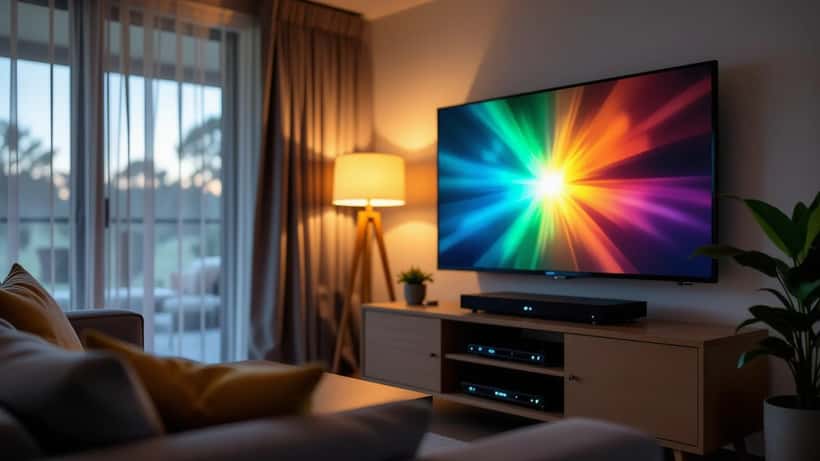
Screen size and viewing distance matter more than resolution. A larger image at the right seating distance does more for immersion than chasing the latest panel spec. For a film framed as tall as The Odyssey, a bigger screen recovers far more of the intended scale than a marginal jump in sharpness.
Contrast and brightness beat pixel count. Nolan's cinematography leans on deep blacks and searing highlights. A display with strong local dimming or self-lit pixels will show the difference; a cheap panel with weak contrast will flatten every night-sky and torch-lit scene regardless of how many pixels it advertises.
The room is part of the equipment. Ambient light washes out contrast. Controlling reflections and lamp glare often improves the picture more than a hardware upgrade — and it costs nothing.
When the film reaches premium digital rental and 4K disc later in 2026, these fundamentals — not brand names — will determine whether it looks like an event or like television.
Where a consumer electronics expert saves you money
Home cinema is one of the easiest categories to overspend in, because the marketing pushes headline numbers that rarely translate to what your eyes notice from three metres away. An independent consumer electronics specialist earns their fee in three ways.
First, they match the gear to your actual room. A projector that dazzles in a blacked-out home theatre can look washed out in a bright open-plan lounge; a specialist steers you to the right technology for your space instead of the most expensive one on the shelf.
Second, they stop you paying for irrelevant specs. Refresh rates, processing "enhancements" and inflated contrast claims often add cost without adding anything you'll see in a Nolan film. An expert separates the specs that matter from the ones printed purely to justify a higher price.
Third, they set the whole chain up correctly — display calibration, sound placement and source settings — so you get the picture the panel is capable of, not the flat factory default most sets ship with.
Know your rights before you spend
A home cinema upgrade can run into thousands of dollars, so treat it as the significant purchase it is. Under Australian Consumer Law, products must be of acceptable quality, match their description and do what the seller claimed — and these consumer guarantees apply automatically, on top of any paid warranty. The Australian Competition and Consumer Commission sets out exactly what you are entitled to if an expensive television or projector fails or was misrepresented at the point of sale (accc.gov.au).
Keep your receipts, get any performance promises in writing, and remember that a retailer cannot simply point you to the manufacturer if the product doesn't live up to what you were told.
The practical takeaway
The Odyssey has turned a projection format into a national talking point, and for most Australians the true IMAX 70mm version at IMAX Melbourne will be out of reach. That doesn't mean settling for a poor picture at home. Get the fundamentals right — a large, high-contrast display in a light-controlled room, set up properly — and you'll capture far more of Nolan's vision than the format debate suggests.
If you're weighing a home cinema purchase off the back of the hype, a short consultation with a consumer electronics expert is the cheapest part of the whole project. It's the difference between buying the right equipment once and paying twice for specs you'll never notice. Before you commit, book a session with a home cinema specialist through Expert Zoom and spend on the picture, not the marketing.
