 Liam O'Connell
One in Three Electric Cars on Australian Roads Now Comes From China — And Not Everyone Is Comfortable With That
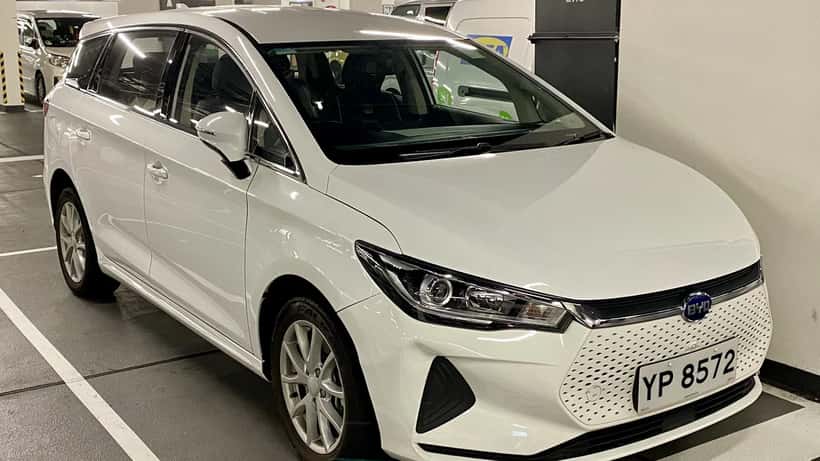
One in three electric vehicles sold in Australia is Chinese-made, and if you include Chinese-manufactured Teslas, that figure rises to two in three. As of April 2026, Chinese automotive brands hold roughly 17 per cent of the Australian new-car market — up from just 1.7 per cent in 2019. That tenfold surge in less than a decade has sparked a debate that goes well beyond price and performance: who is watching what these cars record?
Australia's Department of Home Affairs put the matter plainly before a Senate committee this year. Internet-connected vehicles — including those built in China — can collect travel data, audio recordings, and imagery of sensitive locations. Officials also flagged the risk of vehicles receiving malicious software updates remotely. For the millions of Australians who have embraced BYD, GWM, and MG as budget-friendly alternatives to traditional brands, those revelations deserve serious attention.
What Exactly Are Connected Cars Collecting?
Modern vehicles — regardless of their country of origin — are computers on wheels. They typically record GPS routes, driving behaviour (speed, braking, acceleration), voice commands, Bluetooth-paired device data, and footage from cameras and sensors. The difference with internet-connected cars is that this data can be transmitted off the vehicle entirely.
In a briefing to the Senate Legal and Constitutional Affairs Committee, Hamish Hansford, Deputy Secretary of the Department of Home Affairs, confirmed that connected vehicles do not currently fall under Australia's existing cybersecurity legislation. That regulatory gap means there is no mandatory standard governing what data these cars transmit, to whom, or where it is stored.
The Privacy Commissioner, Carly Kind, revealed in a February 2026 Senate estimates hearing that her office has open investigations against two separate entities relating to connected vehicle privacy concerns.
Government Bans Public Servants From Syncing Phones in Chinese Cars
The Federal Government has taken one concrete step: under the Protective Security Policy Framework, Australian public servants are now banned from syncing their smartphones with BYD or other connected vehicles. The reasoning is straightforward — smartphone pairing can expose contacts, messages, and location history to the vehicle's data systems, which may then be transmitted overseas.
That policy applies to government employees. The other 26 million Australians have no such protection beyond their own awareness.
Meanwhile, the Coalition has gone further in its warnings. A frontbench spokesperson described Chinese-manufactured connected vehicles as "a national security risk that must be taken seriously," citing parallels with the ban on Huawei equipment in Australia's 5G network. The Albanese Government has flagged that trade policy discussions — including the question of Chinese EV oversupply — are likely to be raised at a World Trade Organization meeting, though no specific tariff measures have been announced as of April 2026.
What IT Security Experts Say You Should Do Now
An IT specialist can assess the specific data exposure profile of any connected vehicle and recommend mitigation strategies. There are several practical steps experts commonly advise for owners of Chinese or other internet-connected vehicles.
Check your privacy settings before driving. Most connected vehicles have a settings menu where owners can limit data sharing. Many owners never review these settings after leaving the dealership. An IT professional can walk you through what each option actually permits.
Do not sync your primary smartphone. Using a dedicated secondary phone — or avoiding smartphone pairing altogether — significantly reduces the personal data your vehicle can access. Your contacts list, call history, and app data should not be transmitted to a third-party server without your explicit consent.
Review the manufacturer's data policy. Chinese-made vehicles often store data on servers located in China, subject to Chinese data access laws. Understanding where your data goes — and who can access it — is the first step to making an informed decision. An IT consultant can help you interpret the legal fine print.
Disable the always-on microphone. Many connected vehicles include voice-command systems that keep a microphone active. If you are not using this feature, an IT specialist can advise whether and how it can be fully disabled.
Keep software updated — but know what you are updating. Remote software updates carry both benefits (security patches) and risks (unauthorised modification). Understanding the update process for your vehicle model is something an IT expert can assist with, particularly for vehicles from manufacturers with less transparent update policies.
Should Australians Stop Buying Chinese Cars?
The data security concerns are real, but they do not automatically mean Chinese vehicles are unsafe to drive. The risk profile depends on individual circumstances — whether you are a private citizen, a public servant, a business owner with sensitive trade information, or someone who regularly parks near government or defence facilities.
For most everyday Australians, the practical risk of a connected Chinese EV collecting and misusing personal data is modest. For those with higher security profiles, the risk calculus is different.
What is clear is that Australia's current regulatory framework was not designed with connected vehicles in mind. According to the Department of Home Affairs, connected cars currently sit outside the scope of the country's cybersecurity legislation — a gap the government is working to address under its Cyber Security Strategy.
How an IT Specialist Can Help
The question of whether your car is a privacy risk is not one most Australians have the technical background to answer alone. IT specialists with expertise in cybersecurity and consumer IoT (Internet of Things) devices are well placed to audit your vehicle's connectivity settings, advise on data minimisation strategies, and help you understand your rights under the Privacy Act 1988.
ExpertZoom connects you with qualified IT specialists who can help you assess your connected vehicle's security profile, explain what data your car may be sharing, and recommend practical steps to protect your privacy — without asking you to give up the EV you bought for its value.
DISCLAIMER: This article provides general information only. Specific cybersecurity concerns should be assessed by a qualified IT professional based on your individual circumstances.
