 Amelia Clarke
As Cathy Freeman's name was etched into a grandstand at Sydney's Accor Stadium and the Federal Government awarded her a Companion of the Order of Australia — the nation's highest civilian honour — the 2026 NAPLAN results landed with uncomfortable timing. Released in August 2026, the data confirmed what educators had feared: one in three Indigenous students now requires additional academic support, compared to fewer than one in ten non-Indigenous students. The gap Freeman's Foundation has battled for over two decades is still wide, still stubborn, and still costing children futures.
What the 2026 NAPLAN Data Actually Shows
The picture that emerges from this year's national literacy and numeracy assessments is precise in a way that makes comfortable denial difficult. At Year 5 level, only 65.7 per cent of Indigenous students reached "developing or above" proficiency levels in reading and numeracy, compared to 90.7 per cent of their non-Indigenous classmates — a differential of 25 percentage points, according to data reported by the National Indigenous Times this month.
The divide deepens by geography. In major Australian cities, around 70 per cent of students exceed baseline reading and numeracy benchmarks. In very remote areas — where a large proportion of Australia's First Nations communities reside — that figure collapses to 23 per cent. Year 7 Indigenous students participated in numeracy assessments at a rate of 80.3 per cent, compared to a national participation rate of 95.8 per cent, meaning thousands of the most disadvantaged learners are not even captured in official statistics.
The Closing the Gap framework, overseen by the Australian Department of Education, lists Year 12 attainment and NAPLAN performance as two of its most closely monitored education targets. Progress on both remains "mixed" as of the 2026 Closing the Gap report — a phrase that, translated from policy language, means the numbers are not moving fast enough.
One further figure puts this into sharp relief: students from very remote areas are more than three times less likely to exceed national benchmarks than students from major cities. Distance is not just a logistical problem for First Nations education. It is a compounding academic deficit that grows with every year it goes unaddressed.
The Cathy Freeman Foundation's Mission — and the Gap Still to Cross
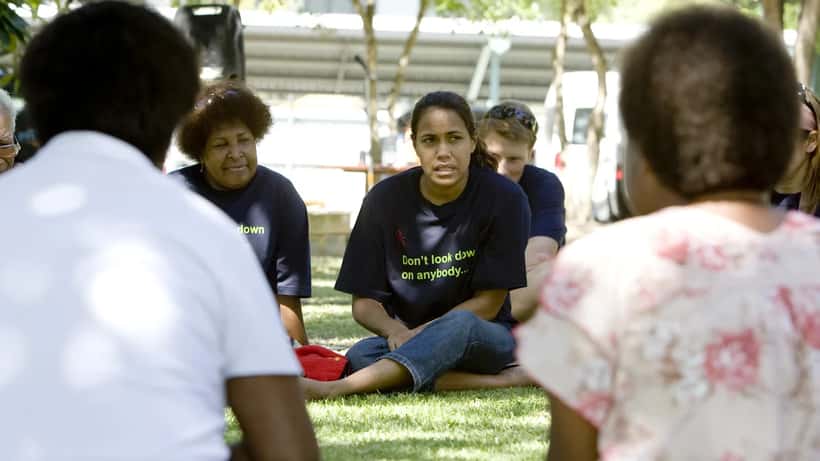
The Cathy Freeman Foundation — now operating as Murrup, an Aboriginal Community Controlled Organisation — was established specifically because these numbers do not move on their own. For more than 20 years, the Foundation has partnered with remote communities to design education programs tailored to First Nations children: culturally safe tutoring, literacy and numeracy camps, mentoring structured around oral learning traditions, and wraparound support designed to keep students engaged through the years when disengagement is most common.
Freeman has described the Foundation's philosophy simply: education is the key to opening doors. That conviction underpins the recognition she received this year — an AC awarded not for a single gold medal at Sydney 2000, but for decades of sustained work building something that outlasts any podium moment.
But community programs, however well designed, cannot replace the one-to-one intervention that reverses a specific child's specific learning pattern. The Reconciliation Week 2026 report — which you can read in our earlier analysis of Indigenous rights and service access in Australia — noted that structural programs address system-level barriers while individual support addresses the learner in front of you. Both are needed. And for many families, the hardest question is knowing when a gap has moved from normal variation into territory where professional help makes the difference.
Recognising the Warning Signs Before Year 7
Schools release NAPLAN results each August, which means right now — this week — parents, carers, and guardians across Australia are opening results envelopes or logging in to online portals. For children in Years 3, 5, 7, and 9, these results are diagnostic tools: not a pass/fail verdict, but a signal about where learning support is most needed.
The benchmark to track is the "Strong" or above band. Nationally, roughly 75 per cent of all students reach this threshold in reading and numeracy. For Indigenous students in 2026, this drops closer to 50 per cent in several literacy domains. If your child's result has come back in the "Needs Additional Support" band, that is precisely what the test is communicating.
Key warning signs that a student needs more than classroom support:
- Two consecutive NAPLAN assessments below the "Developing" level in the same domain — reading, writing, or numeracy.
- A single result in the "Needs Additional Support" band at Year 5 or Year 7, the two years that carry the strongest predictive weight for senior secondary performance.
- Teacher feedback indicating a student is disengaging, avoiding tasks that require sustained reading, or falling consistently behind on homework expectations.
- The student expressing frustration, embarrassment, or active avoidance about a particular subject — children often recognise their own struggle well before formal assessment captures it.
Year 7 is commonly treated as the intervention deadline, but that deadline is already late. Longitudinal NAPLAN data consistently shows that students who receive targeted support before Year 6 recover the gap at significantly higher rates than those who wait.
A Year 5 Student in Townsville: What the Data Looks Like in Practice
Consider a Year 5 student in Townsville — a regional Queensland city with a significant First Nations population — whose 2026 NAPLAN reading results arrive in the "Developing" band. Her classroom teacher notes she reads independently but avoids comprehension tasks and struggles to identify the main idea in non-fiction texts, particularly in science and history contexts.
At Year 5, reading comprehension is the strongest single predictor of Year 9 writing performance. Research from the Australian Council for Educational Research (ACER) indicates that if this gap is not addressed by Year 7, the likelihood of reaching an ATAR above 60 drops by approximately 35 per cent relative to peers who received early support.
Here is where the if/then logic becomes concrete. If this student scores in the "Developing" band on Year 5 NAPLAN reading and receives no additional support in Years 5 or 6, then the gap compounds: a 25-percentage-point national deficit at Year 5 typically grows to a 30-to-35-point differential by Year 9 without intervention, according to the Australian Institute of Health and Welfare's Indigenous learning progression data.
The reverse is also evidenced. A qualified tutor working with her two sessions per week across one school term — 10 weeks, 20 sessions, approximately 2 hours per week — has been shown in Foundation-aligned programs to move students up by roughly one full NAPLAN band in targeted literacy domains.
For families in households with an annual income below the Closing the Gap eligibility threshold, subsidised tutoring assistance may be available through the Department of Education's existing support structures. A tutor who specialises in culturally responsive pedagogy — familiar with oral storytelling traditions, two-way learning, and culturally relevant texts — achieves meaningfully better outcomes than a generic online reading programme in this context.
If her family waits until Year 7 to act, those same 20 sessions cost roughly two academic years of compounding disadvantage to recover rather than one term of targeted support to prevent.
What to Do After Your Child's NAPLAN Results Arrive This Month
Australia's 2026 NAPLAN results are arriving now. If the results have raised a concern, the most effective actions happen within the next four weeks — before Term 3 ends and the gap extends further into Term 4 without a plan.
Step one: request a formal learning support meeting with your child's school, not just a parent-teacher conversation, but a structured review asking specifically whether your child qualifies for an Individual Learning Plan (ILP) or additional classroom support hours.
Step two: check eligibility for Closing the Gap tutoring support via the Australian Government's education.gov.au/closing-the-gap portal. Families who meet the means test may access specialist tutoring without out-of-pocket cost.
Step three: find a tutor with cultural competency if your child is from a First Nations background. The evidence from the Cathy Freeman Foundation's own programs is unambiguous: cultural safety is not a nice-to-have in an education context; it determines whether the child re-engages or disengages further.
Step four: don't treat Year 7 as the starting point. It isn't. It is the last comfortable intervention window — and in many cases, it is already too late for low-cost correction.
As our earlier piece on student academic support after major institutional changes noted, access to early academic help — whether at university entry or in primary school — is the single most reliable predictor of whether a student finishes what they started.
Cathy Freeman's foundation was built on one clear insight: a single qualified adult in a child's learning life can change the trajectory of their education. The Accor Stadium grandstand now bears her name. The 2026 NAPLAN data tells us that the work she began — and the work of every tutor, learning specialist, and education expert in communities like Townsville, Alice Springs, and Broome — is far from finished. If your child's results have raised a flag, an education expert can help you read the data clearly and act before the window narrows.
This article draws on publicly available NAPLAN 2026 data and government reports. Individual student outcomes depend on a wide range of educational and personal factors. For a full assessment of your child's learning needs, consult a qualified education specialist.
