 Liam Campbell
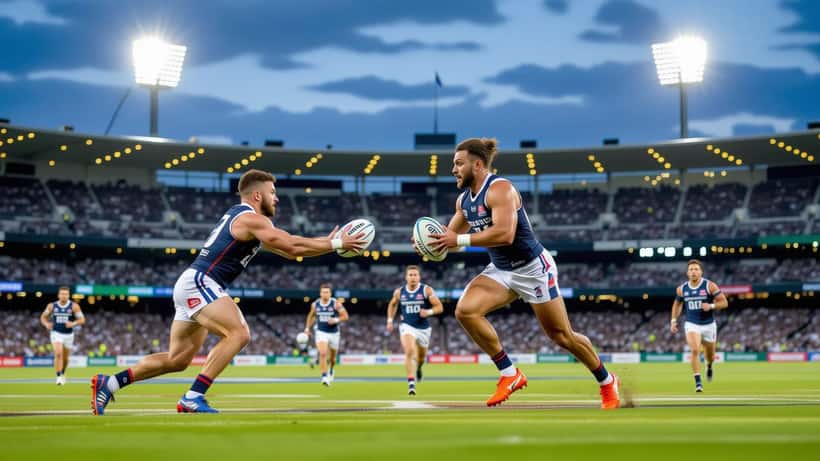
The 2026 AFL season has thrown up another mouth-watering instalment of the Carlton versus Hawthorn rivalry, and this time the contest is being watched as closely in medical and performance consulting circles as it is in the stands. With both clubs reshaping their lists and both fan bases expecting September action, the Round 6 meeting at the MCG is shaping as a litmus test for how well modern preparation methods are holding up under the pressure of a condensed fixture.
Carlton enters the game with one of the youngest and most explosive midfields in the competition. Their game plan relies on repeat high-speed efforts, contested-ball dominance and rapid transition from defence to attack. Hawthorn, by contrast, has built its 2026 identity around structured ball movement, disciplined defensive arcs and a veteran core that knows how to slow the tempo when required. The tactical clash is compelling, but it is the physical and mental load on players that has drawn the attention of sports medicine and performance experts.
According to sports physiotherapists who work with elite Australian footballers, the Carlton versus Hawthorn match-up highlights two very different injury risk profiles. Carlton's reliance on acceleration and ground-ball bursts places significant demand on posterior-chain muscles, particularly the hamstrings and calves. Hawthorn's preference for grinding, tackle-heavy contests increases exposure to shoulder, neck and rib complaints. Both clubs have invested heavily in load management this season, yet the experts agree that fixtures like this one reveal whether those investments are paying off.
A key storyline heading into the contest is the availability of key tall forwards and ruck options on both sides. Ruck duels between developing big men and seasoned campaigners have become a focal point for concussion and neck-strength specialists, who note that repeated contested aerial clashes are among the most physically taxing moments in any game. Performance consultants have also flagged the importance of vestibular and visual-motor training for ruckmen and key defenders, with clubs increasingly seeking expert guidance on how to prepare athletes for the kind of repetitive overhead contact that defines these match-ups.
The psychological dimension has not been lost on performance psychologists either. Carlton is a club that has carried the burden of expectation for several seasons, and each high-profile game is treated as a referendum on its progress. Hawthorn, meanwhile, is navigating the different challenge of sustaining motivation while integrating new talent around a hardened senior group. Experts in elite mindset coaching say that games between historical rivals often amplify emotional arousal, and the team that can regulate that arousal most effectively usually controls the critical moments.
One area where external consultants are becoming more visible is in fan and member engagement. Both Carlton and Hawthorn have enormous, traditional supporter bases, and the commercial teams behind each club are using behavioural insights to manage everything from ticketing demand to in-stadium experience. Digital analysts and customer-experience specialists have been engaged to interpret sentiment data in the lead-up to blockbuster fixtures, helping clubs anticipate complaints about congestion, pricing and broadcast scheduling. In that sense, the rivalry is no longer just played out on the field; it is a case study in how expert input shapes every layer of a modern sporting event.
Broadcasters and commentators have also turned to former players and tactical consultants to unpack the contest. The focus has shifted away from simple statistics and toward deeper markers such as field position value, pressure acts and defensive transition speed. Analysts with backgrounds in data science and sports performance are now regular contributors to pre-game coverage, demonstrating how specialised knowledge is moving from the back rooms of clubs into mainstream conversation.
From an injury-prevention standpoint, the week before a fixture of this magnitude is one of the most carefully managed periods in the season. Clubs lean on soft-tissue specialists, dietitians and sleep consultants to ensure players arrive at the ground in peak condition. Experts caution that even minor disruptions to travel, hydration or recovery protocols can be amplified when the emotional stakes are high. For fans watching at home, the visible contest is only the final act of a preparation process that has involved dozens of specialised professionals.
The broader lesson for businesses watching the Carlton versus Hawthorn fixture is that elite sport operates as an ecosystem of expertise. No single department owns success. Strength and conditioning, sports medicine, psychology, nutrition, analytics, fan engagement and commercial strategy all intersect, and each requires access to trusted specialists. Organisations outside football are increasingly adopting the same model, building networks of consultants who can be called on when specific challenges arise.
For anyone involved in community or semi-professional football, the matchup also offers practical takeaways. The physical demands placed on AFL players may be at the extreme end of the spectrum, but the principles are transferable. A local club dealing with a spate of hamstring injuries can benefit from the same expert assessment that an AFL club uses. A coach struggling with team cohesion can draw on performance-psychology frameworks. A committee managing membership growth can apply the customer-insight techniques used by the biggest clubs. The key is knowing when to bring in outside expertise rather than trying to solve every problem internally.
As the 2026 season unfolds, the Carlton versus Hawthorn rivalry will continue to generate headlines for goals, tackles and final-quarter heroics. Yet the real story may be the invisible network of experts working behind the scenes to keep athletes healthy, teams composed and organisations resilient. In an era where margins are razor thin, access to the right advice at the right time is often what separates contenders from pretenders.
