 Chloe Wilson
A fast-moving fire that began in a training area at Canadian Forces Base Wainwright in Alberta on Saturday, 17 October 2026, has killed four service members and wounded dozens more, according to Prime Minister Mark Carney. The blaze spread beyond the base boundary, and investigators have not yet found a cause.
Australians are watching closely, and not only because of the human cost. Dry grass, high wind and a fire that outruns the people trying to contain it are conditions familiar to anyone living near a rural base, a farm or the bush. This is what the medical side of such an event looks like, and what it means for you.
What is known so far
According to Time and CBS News, the fire ignited in the late afternoon in a training area at CFB Wainwright, roughly 160 kilometres south-east of Edmonton. Carney described a "violent, fast-moving fire" and called it one of the worst peacetime tragedies for Canadian forces on Canadian soil.
Edmonton hospitals declared a "code orange", an alert reserved for external disasters and mass-casualty incidents. The small local health facility in Wainwright acted as the first triage point. Wainwright mayor Bruce Pugh said it was the largest mass-casualty event the community has seen, and pointed to a dry October and strong winds.
Defence Minister David McGuinty has said an investigation will follow, and the military says there is no indication of terrorism. Details are still developing, and casualty figures may change as next of kin are notified.
Why a grass or scrub fire injures so many people so quickly
A wind-driven fire does not behave like a fire in a building. Flame fronts can move faster than a person can run on rough ground, and radiant heat injures skin well before flames touch it. Smoke carries superheated air and toxic gases that damage the airways.
Emergency physicians generally describe three overlapping problems in a mass-casualty fire:
- Burns to skin, which range from reddened, painful surface burns to deep injuries that need grafting.
- Inhalation injury, where hot air and fine particles inflame the throat and lungs. Swelling can build over hours, not minutes.
- Carbon monoxide exposure, which starves the body of oxygen without obvious signs of burning.
For that reason, hospitals treat people who "seem fine" at the scene with caution. A person who walked away from a smoky area can deteriorate overnight.
The expert view: what changes the outcome in the first hour
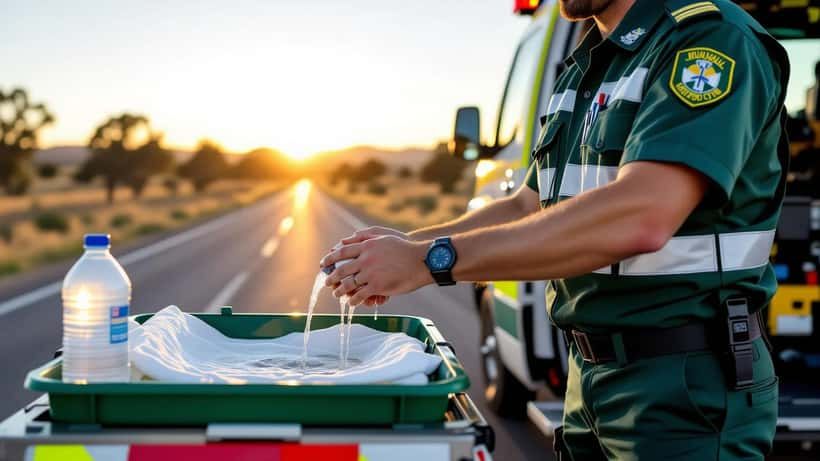
Burns clinicians stress that the first minutes of care shape the weeks of recovery. Healthdirect, the Australian government health advice service, advises cooling a burn under cool running water for 20 minutes and getting urgent medical help for large, deep or facial burns. Ice, butter and creams make matters worse.
Three points are worth remembering:
- Remove the heat source, then cool. Take off rings, watches and clothing that is not stuck to the skin before swelling begins.
- Cover loosely. Plastic cling wrap laid lengthwise over a cooled burn protects it on the way to hospital. Do not wrap it tightly around a limb.
- Call Triple Zero (000) for burns on the face, hands, feet or genitals, burns that go all the way around a limb, or any burn larger than the patient's palm on a child.
Smoke exposure deserves its own rule. Coughing, a hoarse voice, black soot around the nose or mouth, and shortness of breath all warrant an emergency assessment, even if the person insists they are well.
A realistic scenario: the delayed symptoms trap
Consider a hypothetical situation that mirrors what fire services see every summer. A 42-year-old farmer helps a neighbour hold back a grass fire for about 40 minutes on a windy afternoon. He has red skin on his forearms covering roughly 3 per cent of his body, which is far below the level where most hospitals admit an adult for burns alone. He feels tired, but not unwell.
Here is how the if/then logic plays out:
- If his burns are small and shallow, then 20 minutes of cool running water and a clean dressing are usually enough, and a GP review within a day or two checks for infection.
- If he also coughed through thick smoke for those 40 minutes, then the burn size is the wrong measure of risk. Airway swelling can peak 12 to 24 hours later, so a hoarse voice that evening means an emergency department, not bed.
- If he has headaches, nausea or confusion, then carbon monoxide is a possibility and he needs oxygen and a blood test.
The point is that small visible injuries can hide a serious problem. A short check with a doctor on the same day costs little. Missing airway damage can cost days in intensive care.
The longer road: psychological injury and recovery
Survivors and first responders of a mass-casualty fire often carry injuries that cannot be seen. Sleep disruption, flashbacks, avoidance of smoke or the smell of burning, and sudden anxiety in dry, windy weather are common in the weeks that follow. These are normal reactions to an abnormal event, and most ease with support.
For burn survivors, rehabilitation is long. Scar management, compression garments, physiotherapy to keep joints moving and pain management can stretch across many months. Early input from a burns unit, followed by a GP-coordinated plan, reduces long-term stiffness.
Australians affected by the Black Summer fires learned the same lessons. Recovery is faster when people ask for help early and keep follow-up appointments. If you want a refresher on fire hazards closer to home, our earlier piece on backyard barbecue fire-safety steps covers the basics.
Questions people ask after a fire like this
Is it safe to keep exercising or working outdoors after smoke exposure? Give your lungs time. If you have asthma or another chronic lung condition, keep your reliever close and follow your action plan. A cough that lingers beyond a few days is worth a GP visit.
Do children and older adults need extra care? Yes. Children breathe faster for their size and take in more smoke per kilogram. Older adults heal skin more slowly, and heart conditions can worsen after carbon monoxide exposure. Both groups should be assessed earlier, not later.
When does a burn scar need specialist attention? If a scar tightens over a joint, limits movement or keeps breaking down, ask your GP for a referral to a burns or plastic surgery clinic. Early treatment is simpler than late repair.
What to do now
You do not need to be near a base to apply these lessons.
- Save a short card in your phone or on the fridge: cool the burn for 20 minutes, call 000 for serious burns, treat smoke exposure as a medical issue.
- Keep a basic first-aid kit with sterile non-stick dressings and cling wrap, and check expiry dates once a year.
- If you live or work near bushland, a rural training area or a range, learn your local fire danger rating and your evacuation route before the season starts.
- If you or someone close to you was exposed to heavy smoke or sustained any burn that blisters, see a doctor. If you are in distress after witnessing a fire, tell your GP, who can arrange support.
Expert Zoom connects you with registered health professionals who can advise on burn aftercare, smoke-related breathing problems and recovery planning. Find a health expert on Expert Zoom if you need personalised guidance.
This article is general information, not medical advice. In an emergency, call Triple Zero (000). Always seek personal advice from a qualified health professional.
