 Isabelle Torres
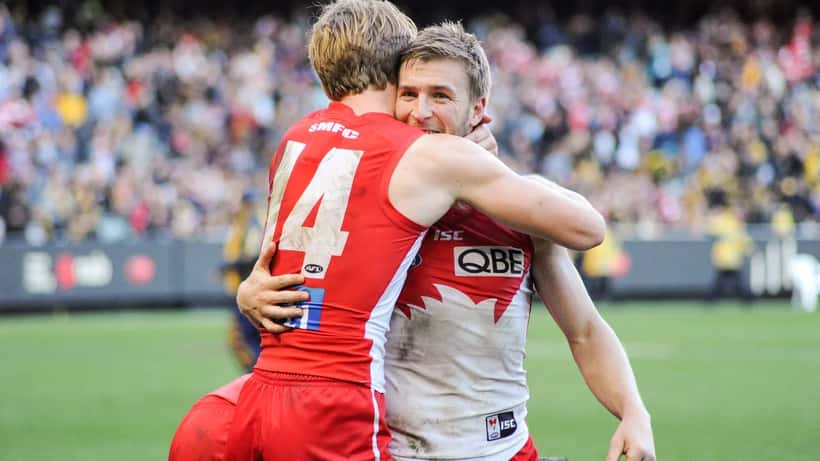
Callum Mills, the Sydney Swans' captain since 2024, stood before his club's AFLW players on Tuesday and apologised on behalf of the organisation — a rare, defining moment of leadership that arrived in the middle of one of the AFL's most publicised off-field crises of 2026. Several Swans players, including All-Australian midfielder Isaac Heeney, Chad Warner, James Jordon and Riley Bice, were banned for the rest of the AFL season following their alleged involvement in an incident at a Melbourne hotel. For Mills — who is not linked to the investigation — the act of stepping forward as captain has thrown open a question many Australians face in their own workplaces: what exactly happens when off-field behaviour triggers an employment ban, and what rights do workers have when it does?
The Scandal That Stopped a Season
In mid-August 2026, police began questioning several Sydney Swans players over an alleged sexual assault at a Melbourne hotel. The AFL released an official statement confirming their involvement, and within days the club took the extraordinary step of banning Isaac Heeney, Chad Warner, Nick Blakey, Riley Bice and James Jordon from the remainder of the AFL season — one of the harshest collective disciplinary responses from a club in recent memory, according to reporting from SEN on 18 August 2026.
The incident has placed the Sydney Swans — currently fighting for finals contention — into a situation few sporting organisations are equipped to navigate cleanly: a police investigation still under way, players stood down, sponsors watching closely, and a captain tasked with holding a fractured squad together. Mills' decision to personally address the club's AFLW players reflected how acutely clubs now understand that internal conduct ripples across every corner of their organisation.
What Australian Law Says About Off-Field Misconduct
The Swans situation illustrates a reality that Australian employment law has grappled with for decades: when can an employer take action — including suspension, demotion, or termination — based on something an employee did outside work hours?
Under the Fair Work Act 2009 (Cth), an employer may lawfully dismiss or suspend an employee for out-of-hours conduct if that conduct is sufficiently connected to the employment relationship. Courts and the Fair Work Commission have consistently upheld disciplinary action where:
- The conduct damaged the employer's reputation or commercial interests
- The employee's role requires public trust or a specific standard of behaviour
- The conduct undermined working relationships with colleagues
Professional athletes sit squarely in the highest-scrutiny tier. A listed AFL player is, by definition, a public-facing commercial asset for a club that depends on sponsor confidence, membership trust and community standing. A ban for off-field misconduct in that context is legally defensible — but that does not mean it goes unchallenged. Employment lawyers across Australia routinely advise employees facing suspension that their rights are far from exhausted, and that acting quickly is what determines the outcome.
The $41,500 Question: What a Suspension Ban Actually Costs You
Consider this scenario, structured around the financial realities reported in the AFL's 2025 Collective Bargaining Agreement:
A mid-career listed AFL player earning the listed-player average of approximately $180,000 per annum is stood down without pay pending an investigation into alleged off-field misconduct. The suspension covers the final 12 weeks of the home-and-away season plus finals.
The direct financial arithmetic:
- $180,000 ÷ 52 weeks = $3,462 per week
- 12-week suspension = $41,544 in base salary lost
But the financial damage typically extends beyond base pay. During a suspension, players and employees in equivalent positions may also lose:
- Superannuation contributions on unpaid weeks — at 11.5%, that adds approximately $4,778 on a 12-week suspension
- Performance-based bonuses tied to appearances or milestones
- Endorsement and sponsorship income — most personal contracts contain conduct clauses that allow sponsors to suspend or terminate payments if the player is stood down by their club
If the suspension ultimately leads to termination, the clock starts immediately. Under the Fair Work Act, an employee has just 21 days from the date of dismissal to lodge an unfair dismissal application with the Fair Work Commission. That window is a hard deadline — not a guide.
The if/then rule is unforgiving: if the employer demonstrates the misconduct had a genuine connection to the employment relationship and that due process was followed, a termination is legally defensible. If due process was not followed — for instance, the employee was banned without being given a written notice of the allegations or a reasonable opportunity to respond — the employer's position weakens significantly, regardless of the underlying conduct.
For the Swans players currently stood down, this means the legal review happening through their player agents and club management is as consequential as any disciplinary outcome.
What Employment Lawyers Say You Must Do First
According to the Fair Work Commission, employees are entitled to respond to allegations before an employer takes disciplinary action — this is the procedural fairness requirement. When that requirement is bypassed or compressed under media or sponsor pressure, it can expose the employer to successful legal challenge even where the underlying conduct was serious.
Legal practitioners advising on high-profile employment matters consistently identify three early priorities that shape the outcome:
1. Review your contract's conduct provisions immediately. AFL contracts — like many corporate employment agreements — contain clauses defining what constitutes misconduct serious enough to justify suspension without pay. As the Nick Coffield contract case from earlier in 2026 illustrated, the specific wording of player conduct and image clauses matters enormously when disputes arise.
2. Request the allegations in writing. A verbal summary from HR, club management, or a football operations officer is not sufficient. A formal written notice sets the factual scope of what you are responding to, and establishes a paper trail if the matter proceeds to the Commission.
3. Make no public statements without legal advice. Anything a suspended employee says publicly — in media interviews, on social media, or in group communications — can and has been used to support claims of further misconduct or reputational damage. The urge to set the record straight in the immediate aftermath of an allegation is natural; acting on it unadvised is consistently costly.
The Club Liability Dimension: Not Just a Player Problem
Callum Mills' apology to the AFLW players was a leadership act — but it also reflects an emerging legal reality in Australian workplaces. Under Work Health and Safety laws and evolving Fair Work interpretations, organisations are increasingly exposed to liability not just for what happens on company time, but for the workplace culture they create and maintain.
In industries where employees share facilities, travel together, and socialise in connected networks — elite sport, large hospitality groups, university campuses — an employer's failure to respond to known risks, including patterns of off-field conduct among high-profile staff, can attract regulatory scrutiny even when incidents occur off-site.
The Swans' decision to stand down their players before police concluded their investigation is notable precisely because it prioritised reputational and cultural risk over procedural caution. Whether that judgment holds legally will depend on how thoroughly the club documented its process and whether it met its obligations under the players' contracts and the AFL's own Collective Bargaining Agreement.
What to Do If You're Facing Suspension
If you are an employee confronting a suspension — whether linked to a police investigation, an internal workplace review, or an employer's conduct inquiry — the same principles apply whether you play AFL or work in an office:
- Suspension with pay is the default in most employment relationships. Unless your contract explicitly provides for suspension without pay in specified circumstances, or your conduct has been proven (not merely alleged), paid suspension is typically required.
- You are entitled to written particulars of the allegations and a genuine opportunity to respond before any formal decision is made.
- The 21-day window to challenge unfair dismissal at the Fair Work Commission is a hard legal deadline that cannot be extended except in exceptional circumstances.
- If your employer is citing conduct clauses in your contract, have a lawyer review whether the conduct alleged actually falls within those provisions as written — the threshold is often higher than employers claim in the heat of a crisis.
Australian employment law is built on the principle that an employee's right to earn income from their job is substantive and protected. When allegations are still under investigation, that protection matters most. The players at the centre of the Swans scandal are learning this in a very public forum — but the same rights apply to any Australian worker facing a workplace suspension in 2026.
This article is for informational purposes only and does not constitute legal advice. If you are facing a workplace suspension, ban or dismissal, seek advice from a qualified employment lawyer.
