 David Kelly
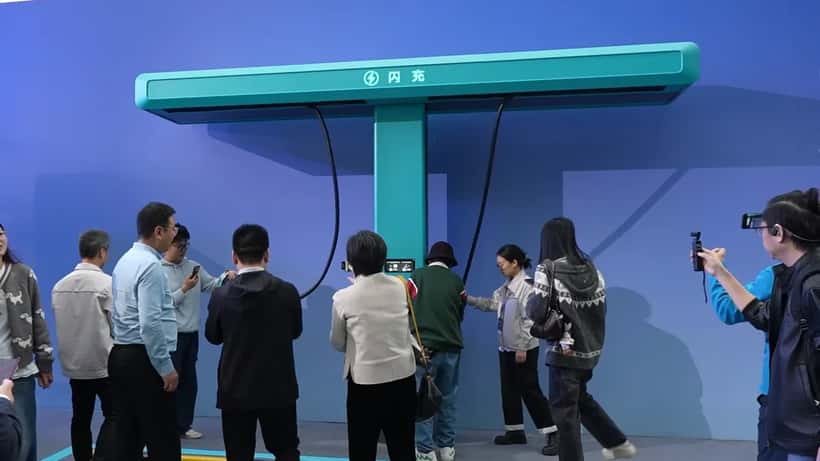
BYD, China's largest electric vehicle manufacturer and the world's leading EV maker by volume, announced on 4 May 2026 that it will establish its Flash Charging network across Australia and New Zealand. The move signals a new era for Australian EV drivers — and raises immediate technical questions about battery health, compatible vehicles, and what it means for your servicing schedule.
What Is BYD Flash Charging?
BYD's Flash Charging technology operates at peak power levels far beyond conventional fast chargers. While standard DC fast chargers typically deliver between 50kW and 150kW, BYD's flash charging infrastructure is designed to support power delivery at rates of 1,000kW (1 megawatt) or higher on compatible vehicles. In practical terms, that means adding hundreds of kilometres of range in under five minutes.
The announcement follows rapid expansion across Australia's public charging network. As of early 2026, the country has over 5,000 public EV charging sites, with the fast-charging network spanning more than 1,270 locations. Flash-grade infrastructure represents a step-change in capability that could fundamentally shift how Australians think about long-distance EV travel.
Australia's Charging Landscape: Already Moving Fast
Australia's charging rollout has accelerated sharply this year. NSW alone has committed over $100 million to EV infrastructure, funding more than 3,300 chargers across 1,200 sites in metropolitan, regional, and remote areas. Ampol has partnered with Kempower to accelerate DC fast charging in Sydney, with further deployments planned nationally.
The Federal Government's National Electric Vehicle Strategy sets out a framework to guide charging infrastructure investment through 2034, using the EV Charging Infrastructure Mapping Tool to identify priority locations based on traffic, grid capacity, and projected EV adoption.
BYD's Flash Charging network adds a third major player to this expanding ecosystem — and its arrival places battery health and specialist servicing in sharper focus than ever.
The Battery Question Every EV Owner Should Be Asking
Ultra-fast charging introduces a real technical variable: heat. When a battery is charged at very high rates, it generates more thermal energy — and sustained heat is the primary driver of battery degradation over time.
Most modern EVs use sophisticated battery management systems (BMS) to regulate charge rates, manage cooling, and protect cell integrity. BYD's own Blade Battery, built from lithium iron phosphate (LFP) chemistry, was specifically engineered for high-speed charging and carries a strong thermal performance record. However, not every EV on Australian roads is flash-charging compatible — or has the same thermal tolerance.
The key concern for existing EV owners is this: while a charger will not force more power into a car than its BMS permits, repeatedly charging at the vehicle's maximum accepted rate — especially in warm Australian conditions — can accelerate cell degradation when battery health is already compromised. If you do not know your battery's current state of health, now is the right time to find out.
For an overview of what EV servicing involves for newer vehicles, including Chinese-brand models, see what every Australian should know about EV servicing specialists.
Three Questions to Ask Your EV Mechanic Before Using Flash Chargers
1. Is my vehicle flash-charging compatible?
Not every EV can accept charge rates above 50kW to 150kW. Your maximum DC charge rate — listed in kilowatts in the manufacturer's vehicle spec sheet — determines how much you benefit from flash-charging infrastructure. An EV technician can confirm this from your vehicle's on-board diagnostics as well as manufacturer data. If your car caps at 50kW, a 1,000kW charger delivers no speed advantage, though it remains safe to use at the vehicle's own limit.
2. What is my battery's current state of health?
Battery state of health (SoH) measures how much of the original capacity your cells retain. A new EV at 100% SoH handles high-rate charging well. A vehicle at 80% SoH — common after several years of mixed use — has cells that may respond differently under sustained charging stress. An EV-qualified mechanic can run diagnostic reads from the BMS and give you a baseline reading, which matters before you commit to regular flash charging use.
3. What maintenance should I schedule now?
High-speed charging places greater thermal demand on your vehicle's cooling infrastructure. Radiator coolant, thermal management fluid circuits, and battery cooling systems all need periodic inspection — particularly relevant as Australian summers push ambient temperatures high across most of the country. Unlike the misconception that EVs are essentially maintenance-free, high-rate charging makes regular specialist checks more important, not less.
For what to look for when selecting an EV specialist for newer models including Zeekr and other Chinese-brand vehicles, see why finding the right EV mechanic matters as new brands enter Australia.
Who Benefits Most From Flash Charging?
Flash charging is most relevant for:
- Long-distance commuters and regional drivers who previously avoided EVs due to range anxiety on routes with limited charging coverage
- Fleet operators who need rapid turnaround and cannot absorb the 30 to 45 minutes a standard fast charger requires
- BYD owners whose vehicles are specifically engineered to support flash charging rates, including Atto 3, Seal, and Dolphin models with compatible BMS specifications
City drivers who park at home overnight and charge from a standard AC wall box may find flash charging infrastructure largely irrelevant to their daily routine — but valuable as a backup on road trips.
What Prospective EV Buyers Should Know
For Australians considering an EV purchase in 2026, flash charging compatibility is now a meaningful selection criterion. If you regularly drive long routes between major centres, choosing a vehicle that can accept 200kW or higher will allow you to make full use of the expanding fast-charging network — even before BYD's flash-grade stations are fully deployed.
Australia's EV infrastructure is expanding faster than many drivers realise. Understanding the technical implications — from battery chemistry to cooling system requirements — is exactly where a qualified EV specialist can save you costly surprises.
Connect With an EV Specialist
ExpertZoom connects Australians with qualified mechanics and EV technicians who understand the specific demands of electric vehicle servicing — including battery diagnostics, thermal management, BMS reads, and charge system checks. As flash charging infrastructure rolls out nationally in 2026, a trusted EV specialist becomes an increasingly valuable part of your ownership experience.
