 Amelia Clarke
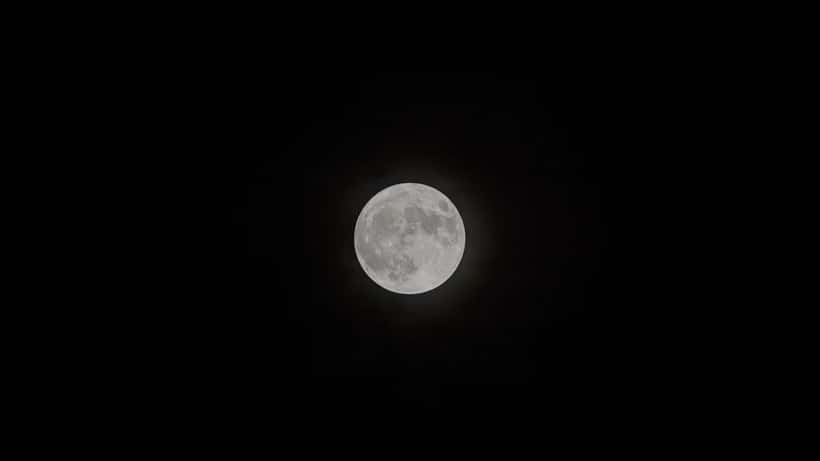
On the night of 29 July 2026, the sky over Australia will be dominated by the Buck Moon — July's full moon, reaching its peak at 14:36 UTC (00:36 AEST on 30 July for eastern Australia). Social media is already flooded with astrology charts, zodiac predictions, and claims that this full moon will "shift your energy" or "reveal hidden truths." But what does science actually say — and more importantly, what can this natural event teach Australian students about the difference between evidence and belief?
What Is the Buck Moon?
The name "Buck Moon" comes from North American Indigenous traditions recorded by early European settlers. It marks the time of year when male deer — bucks — are in full antler growth, their velvet-covered tines extending rapidly as testosterone levels peak through mid-summer.
From a Southern Hemisphere vantage point, Australians enjoy a significant observing advantage: while Northern Hemisphere observers see the July full moon low on the horizon, it sits much higher in the southern sky. Cities from Perth to Brisbane can expect excellent viewing conditions, with the moon rising in the east around sunset and reaching its highest point around midnight. The moon appears in Capricornus — a relatively dim region of sky that makes the bright, fully illuminated disk stand out even more dramatically against the winter darkness.
The Question Australian Students Are Actually Asking
Every July, millions of Australians search for the Buck Moon's astrological meaning: What does it mean for Libra? Will this full moon bring change? Does the moon actually affect your emotions?
These are not silly questions — they are the starting point for one of the most powerful lessons in critical thinking a student can receive: understanding the difference between astronomy and astrology.
Astronomy is a natural science. It uses observation, mathematics, and the scientific method to study the physical properties of celestial objects — their positions, movements, composition, and evolution. The Buck Moon rising on 29 July 2026 is an astronomically verifiable fact: anyone with clear skies, a compass, and a published ephemeris can confirm it independently.
Astrology is a belief system. It holds that the positions of celestial bodies can influence human personality and affairs. There is no confirmed scientific mechanism by which a full moon 384,400 kilometres away could affect whether you will have a good week at work or whether a relationship will improve.
According to the Australian Astronomy education resources, distinguishing between astronomy and astrology is explicitly taught as part of developing scientific literacy — the capacity to evaluate claims against evidence rather than tradition or intuition.
What Science Actually Says About the Full Moon
There is some real science connecting the full moon to human biology — and it is more nuanced than either astrology enthusiasts or pure sceptics claim.
A landmark study published in Science Advances (2021) analysed sleep data from participants in urban and rural settings and found that humans sleep an average of five minutes less in the days leading up to a full moon, and fall asleep roughly 30 minutes later. Critically, this pattern appeared in both people without electric light access and in modern city-dwellers — suggesting an ancient circadian entrainment to the lunar cycle rather than simply a cultural expectation.
The proposed mechanism is straightforward: even small amounts of moonlight — as little as 0.1 lux — can suppress melatonin production, the hormone that signals the brain to prepare for sleep. A full moon produces approximately 0.1–0.3 lux at ground level, enough to cause a measurable biological response.
However, measurable is not the same as dramatic. Five minutes of lost sleep is not a life-altering event. Large population studies consistently show no reliable link between full moon phases and psychiatric admissions, accident rates, or emergency department presentations. The dramatic "lunar effect" on behaviour belongs primarily to folklore, confirmation bias, and the tendency of people to notice unusual events on visually memorable nights.
A Year 9 Student and the Buck Moon: A Concrete Case
Consider this scenario: a Year 9 student in New South Wales is preparing for a Science assessment on pseudoscience and scientific reasoning. The task requires identifying a widespread belief not supported by scientific evidence, then explaining — using the characteristics of a valid scientific theory — why it fails to qualify as science.
The Buck Moon arrives at precisely the right moment. Using astrology's claims about the July 2026 full moon, the student can build an argument worth 70–75% under the NSW Science Stage 5 marking rubric, compared to the 50–55% they would score with a vague or undirected response.
Here is the framework a tutor would use in a single session:
Step 1 — The astronomical fact: The Buck Moon peaks on 29 July 2026 at 14:36 UTC, visible in Capricornus. This is independently verifiable using published ephemeris data, telescope observation, and satellite imagery.
Step 2 — The astrological claim: Multiple major astrology platforms predict that this full moon in Aquarius will "trigger emotional breakthroughs," "liberate suppressed truths," and "reshuffle long-standing patterns." These are the actual claims the student evaluates.
Step 3 — The falsifiability test: A scientific hypothesis must make specific, testable predictions that could in principle be proven wrong. "You will experience emotional clarity this week" cannot be falsified — any experience can be reinterpreted as emotional clarity. The claim fails the basic falsifiability criterion, marking it as pseudoscience by the definition used in the Australian curriculum.
Step 4 — The evidence check: The student cites the Science Advances (2021) data: there is a confirmed 5-minute sleep disruption near full moon, attributed to melatonin suppression by ambient moonlight. However, no peer-reviewed evidence links lunar phases to the specific personality or relational outcomes astrology predicts. The mechanism proposed by astrology (gravitational or energetic influence on personal emotions) is inconsistent with known physics and has never been demonstrated experimentally.
Step 5 — The conclusion: Astrology's predictions are unfalsifiable, the proposed mechanism is implausible, and existing research does not confirm the claimed effects on human behaviour at a population level. The full moon has a real but minor physiological effect on sleep — one that astrology has co-opted and dramatically overstated.
A student who can execute this five-step argument has not just completed an assignment. They have internalised a framework for evaluating any extraordinary claim — from health misinformation to financial scams to AI hype — that will serve them throughout HSC and beyond.
Indigenous Australian Astronomy and the July Moon
Australia's curriculum cross-curriculum priority on Aboriginal and Torres Strait Islander histories and cultures includes Indigenous astronomical knowledge. For thousands of years before European contact, Aboriginal Australians tracked the sky with extraordinary precision — not for astrological prediction, but for practical, ecological, and navigational purposes.
The Boorong people of northwest Victoria, for instance, used the movements of specific star clusters and planetary objects to mark the arrival of food sources and seasonal changes. This represents empirical, evidence-based observational astronomy — knowledge accumulated through direct observation, tested across generations, and refined over time.
Incorporating Indigenous Australian astronomical knowledge into a Buck Moon lesson gives students a richer understanding of what scientific thinking actually looks like across cultures: careful observation, practical testing, and knowledge that updates when evidence changes. It also directly satisfies the cross-curriculum priority that appears in ACARA's framework for Science Years 7–10.
What Students and Parents Should Do Before Term 3 Ends
The Buck Moon peaks on 29 July 2026 — but its value as a learning tool extends well past that night. Whether your child is preparing a Year 7 science project, studying for a Year 10 exam on Earth and Space Sciences, or simply curious about why everyone suddenly starts talking about star signs when the moon is full, this is an ideal moment to turn a trending topic into genuine academic progress.
If your child struggles with scientific reasoning, structuring an argument, or distinguishing evidence from belief in their written responses, working with a qualified science tutor now — before the final weeks of Term 3 — creates measurable gains before Year 10 exams and HSC Preliminary courses begin. A tutor who knows the Australian curriculum can map the Buck Moon's teachable moment directly to the assessment criteria that determine your child's marks.
Look up on 29 July. The science is there for anyone willing to observe it — without a birth chart required.
format_used: Explainer Q&A
