 Olivia Miller
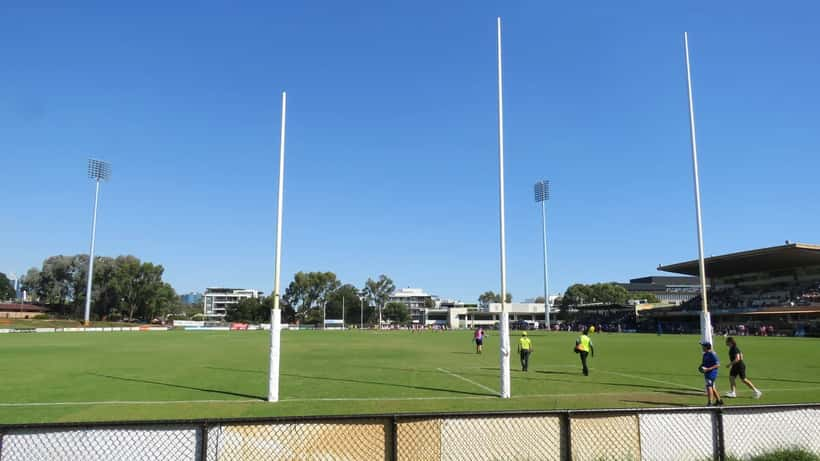
WA football legend Bryan Cousins, 72, has revealed he is battling motor neurone disease, going public with a diagnosis he received more than a year ago in an emotional appearance at Swan Districts Football Club in Perth. Cousins, the father of AFL Brownlow medallist Ben Cousins, described telling his family as one of the hardest moments of his life — but said he does not fear what lies ahead.
The 1983 Sandover Medal winner, who played 240 games and kicked 309 goals across two stints with Perth, said he first noticed something was wrong while running along the beach — a subtle change in how his body responded that, at the time, he couldn't fully explain. The announcement comes weeks after the death of former Melbourne Football Club coach Neale Daniher, who also battled MND. Cousins had been in regular contact with Daniher since his own diagnosis.
What Is Motor Neurone Disease?
Motor neurone disease is a progressive neurological condition in which the nerve cells responsible for controlling muscle movement — the motor neurones — gradually deteriorate and die. As the disease advances, affected individuals progressively lose the ability to walk, speak, swallow, and eventually breathe independently.
According to healthdirect, Australia's government-funded health information service, approximately 2,100 Australians are living with MND at any given time, with around 2 in every 100,000 people diagnosed each year. The condition is more common in men than women, and the majority of diagnoses occur after the age of 50.
There is currently no cure for MND, and the progression of the disease varies significantly between individuals. Some forms advance rapidly over months; others follow a slower trajectory spanning years. The median survival time after diagnosis is two to three years, though some patients live considerably longer with appropriate care and support.
The Warning Sign Bryan Cousins First Noticed
Bryan Cousins described noticing something unusual during a run along the beach — a subtle physical change he initially couldn't attribute to any specific cause. That detail resonates with neurologists who work in MND. Specialists in the field consistently report that early-stage MND can be profoundly subtle, with initial symptoms that patients often attribute to fatigue, ageing, or a minor musculoskeletal issue.
The challenge is that MND's early signals — a slight change in gait, a feeling of heaviness in a limb, or an uncharacteristic stumble — are easy to dismiss, particularly in individuals who have maintained high physical activity levels throughout their lives. Athletes and active individuals often have a strong baseline of physical self-awareness, which can work in their favour as a diagnostic trigger, but the very fact of their fitness can also delay the moment they seek a formal assessment.
A neurologist is the appropriate specialist to assess whether these kinds of changes might indicate MND or another neurological condition. Early referral matters — not because it changes the ultimate course of the disease, but because it opens access to specialist care, support services, and, in some cases, medication that may slow progression.
Early Symptoms of MND Every Australian Should Recognise
Neurologists describe MND as presenting differently depending on which motor neurones are first affected. There are four main subtypes, each with a distinct symptom profile:
ALS (Amyotrophic Lateral Sclerosis) is the most common form, affecting both upper and lower motor neurones. Symptoms typically begin in the arms or legs — as unexplained weakness, clumsiness, or dropping objects — before eventually progressing to affect speech and swallowing.
Progressive Muscular Atrophy (PMA) affects the lower motor neurones first, commonly presenting as weakness or wasting in the hands or feet, with reduced grip strength or difficulty walking.
Primary Lateral Sclerosis (PLS) affects upper motor neurones and generally follows a slower progression. Symptoms include muscle stiffness, spasticity, balance difficulties, and slowing of voluntary movement.
Progressive Bulbar Palsy begins in the bulbar region — the areas controlling speech and swallowing — with slurring of speech or difficulty managing food and liquids as the earliest noticeable signs.
Symptoms that persist for more than a few weeks and do not respond to rest, physiotherapy, or standard musculoskeletal treatment warrant a specialist review. A general practitioner can provide an initial assessment and referral to a neurologist when warranted.
Who Is Most at Risk?
Age is the most significant risk factor for MND. The condition is rare before 50 and becomes progressively more common through the 60s and 70s — the age bracket in which Bryan Cousins received his diagnosis. Men are approximately 1.5 times more likely than women to develop MND across all age groups.
Approximately 5 to 10 percent of MND cases are hereditary, caused by an identifiable genetic mutation. Individuals with a direct family history of MND — a parent or sibling with the condition — should discuss genetic counselling and testing options with a neurologist. For the remaining 90 to 95 percent of cases, the cause is not yet fully understood. Research suggests a combination of genetic susceptibility and environmental or lifestyle factors, though no single environmental trigger has been confirmed.
Some research has examined sustained high-intensity physical activity as a possible contributing factor in a subset of MND cases, particularly in professional athletes. The evidence remains inconclusive and no causal relationship has been established, but the pattern is being studied. Bryan Cousins' profile — a high-level footballer over many years — is consistent with the demographic most commonly associated with MND diagnoses in Australia.
When to See a Neurologist
Early diagnosis cannot currently reverse or halt MND, but it is critically important for access to specialist multidisciplinary care, medications that may slow progression in some patients, and planning for the physical, emotional, and practical challenges ahead. Families and carers also benefit from early engagement with support services.
The outpouring of support following Cousins' announcement reflects how deeply MND affects Australian sporting communities. As was the case following the 2026 ALS diagnosis of Eric Dane, neurologists have urged Australians not to delay seeking assessment if they notice unexplained or persistent changes in muscle control, coordination, speech, or swallowing.
If you or someone close to you is experiencing neurological symptoms that concern you, ExpertZoom can connect you with qualified specialist physicians for an initial assessment and referral pathway.
Disclaimer: This article is for general health information purposes only and does not replace professional medical advice, diagnosis, or treatment. If you have concerns about your health or the health of someone close to you, consult a qualified healthcare professional.
