 Andrew Thompson
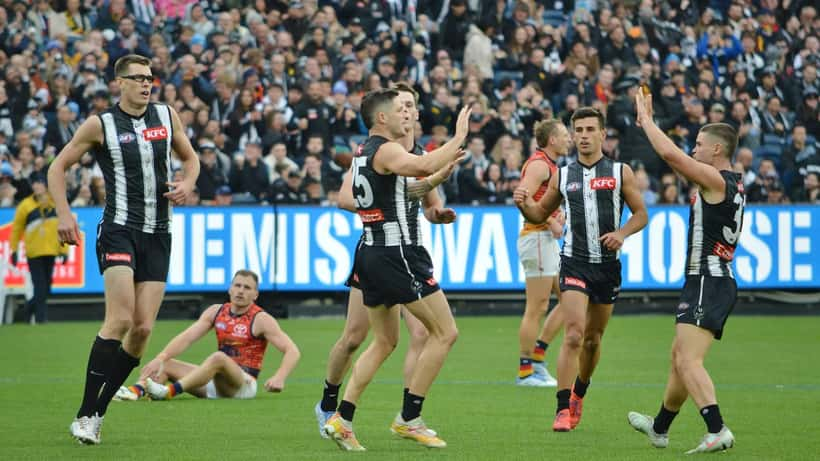
As the 2026 Brownlow Medal count unfolds tonight at Crown Melbourne, one name dominates every broadcast, prediction model, and pub conversation across Australia: Nick Daicos. The 23-year-old Collingwood midfielder entered the evening at $1.01 — the shortest market price in Brownlow history — with predictors placing him between 47 and 50 votes, a haul that would rival the all-time records. For Magpies supporters, it represents a fifteen-year wait; no Collingwood player has polled the most votes since Dane Swan claimed the medal in 2011.
But behind the televised glamour of the count, another story plays out that most fans never consider: what does winning the Brownlow Medal actually mean for a player's contract, their bank account, and their legal standing as an employee?
The answer involves bonus clauses, the Fair Work Act, a single two-letter word — and, depending on how a player's contract was drafted, the difference between a guaranteed $50,000 and nothing at all.
When the votes flow, so does the money
Performance incentive clauses are standard across AFL player contracts. According to reporting from AFL.com.au, most players have best-and-fairest incentives built into their deals, with the Brownlow Medal typically triggering the highest tier. The standard structure runs approximately like this: $50,000 for winning the Brownlow outright, $40,000 for finishing runner-up in the count, $30,000 for third place, $20,000 for fourth, and $10,000 for fifth.
Individual clubs layer additional triggers on top — All-Australian selection, Coleman Medal contention, and Grand Final participation are all common bonus conditions. For a player who racks up a strong season across multiple metrics, performance clauses alone can add $100,000 or more to an already substantial base salary.
These are not informal rewards. A bonus clause written into an AFL player's employment contract is, in principle, a legally enforceable obligation under Australian law — provided it is drafted correctly. That proviso is where many players and managers discover, often too late, that the detail matters enormously.
What the contract experts say
Sports employment lawyers in Australia increasingly flag a specific linguistic distinction that separates a guaranteed bonus from one a club can quietly bury in a salary-cap review. The key word is "discretionary."
A non-discretionary bonus clause — one that says a player "will receive" or "is entitled to receive" a specific amount upon meeting a defined condition — creates a binding contractual obligation. If the condition is met, the club must pay. Full stop.
A discretionary clause — one that says the club "may pay" or "may, at its discretion, consider paying" — is a different matter entirely. Under Australian employment law, courts have interpreted discretionary bonus provisions as giving employers broad latitude to choose whether and how much to pay, subject only to an obligation of good faith. A player whose Brownlow bonus clause contains the word "may" rather than "will" may have far less legal protection than they assume.
"Players and their managers often sign contracts without fully understanding whether a bonus clause is binding or purely discretionary," says one Melbourne-based sports employment lawyer who advises AFL clients. "That distinction can be the difference between a legally enforceable $50,000 entitlement and a payment the club can withhold at its convenience."
The AFL-AFLW Collective Bargaining Agreement 2023–2027 governs minimum standards across player contracts, but individual performance bonuses above those minimums are negotiated case by case — and the CBA does not standardise the language clubs use to frame them.
A concrete case: the "will" versus "may" problem
Consider a hypothetical player — call him Marcus — who signed a four-year deal with a finals contender in early 2024 at a base salary of $750,000 per season. His manager negotiated a performance incentives package that included three separate Brownlow-related triggers:
- $50,000 if Marcus wins the AFL Brownlow Medal in any season during the contract
- $40,000 if Marcus finishes runner-up in the count
- $25,000 if Marcus polls 20 or more votes in a given season
In the 2026 season, Marcus polls 22 votes — not enough to win or finish runner-up, but enough to trigger the third clause. His club faces a salary-cap squeeze. Management contacts his agent and suggests the $25,000 payment could be "deferred to next year." The agent, reviewing the contract carefully, finds the clause reads: "The player will receive $25,000 if he polls 20 or more votes in the current AFL season."
That word "will" is significant. Marcus's total compensation for the 2026 season is $750,000 base plus the $25,000 incentive — $775,000. His club cannot defer, reduce, or withhold the $25,000 without exposing itself to a breach of contract claim. Under the Fair Work Act, employment contract entitlements cannot be unilaterally altered after the fact. Marcus's agent escalates. The club pays.
If instead the clause had read "the club may, at its discretion, pay Marcus up to $25,000 if he polls 20 or more votes," the outcome could be entirely different. Same performance, same votes, same season — but a word change in the original contract shifts the legal ground dramatically.
The difference between "will" and "may" is $25,000. In a five-year contract, it can be much more.
What happens when clubs push back
This concern is not hypothetical in AFL circles. In 2021, multiple clubs around the country consulted with players and agents about removing best-and-fairest bonus clauses from existing contracts entirely — a response to COVID-19's financial impact on the league. The move would have cost individual players up to $50,000 per season. Some clubs succeeded in renegotiating. Others faced pushback from agents who understood that existing non-discretionary clauses could not simply be torn up.
The episode exposed a fault line in AFL player representation: players with clearly drafted, non-discretionary bonus language were largely protected; players with looser, discretionary wording were more exposed to club pressure.
It also underscored a broader point about AFL contracts that applies equally today, as high-profile players like Nick Daicos prepare to cash in on standout seasons. The time to understand what a bonus clause actually means legally is when you sign the contract, not when a dispute arises eighteen months later.
For further context on how multi-year AFL contracts work and the risks players carry across long deals, see our earlier coverage of Logan Morris's five-club contract year and Caleb Serong's long-term Fremantle commitment.
Tax: the bonus question most AFL players forget
A $50,000 Brownlow bonus is taxed as ordinary income in Australia. For a player earning above $180,001 annually — which describes every Brownlow contender — the marginal tax rate sits at 47 per cent, inclusive of the Medicare Levy.
On a $50,000 bonus, a top-bracket player takes home approximately $26,500 after tax. Before a player celebrates a "fifty-thousand dollar milestone," nearly half has already been earmarked for the ATO.
Structuring advice from a financial planner or tax adviser — ideally before a contract is signed — can make a meaningful difference over a career. Options such as timing bonus payments around contract years, maximising concessional superannuation contributions, or exploring legitimate income structuring strategies are all worth modelling. What looks like a career-defining windfall on the night of the count can shrink considerably by tax time in the following July.
What every AFL player — and sports professional — should do next
As the 2026 Brownlow Medal count builds toward its finale and Nick Daicos edges toward a historic first-time win for Collingwood, the evening serves as a useful prompt for every contracted AFL player to review a few direct questions:
- Does your current contract include Brownlow or best-and-fairest bonus clauses — and do they say "will receive" or "may receive"?
- Does your club retain any contractual right to modify, defer, or remove those clauses without your consent?
- Has a tax adviser or financial planner modelled the after-tax value of your performance bonuses, and do you understand what you actually take home?
These are not abstract legal questions. They are the difference between a bonus that arrives in your account and one that disappears quietly into a salary-cap renegotiation.
AFL players are employees under Australian law. Performance bonuses written into their contracts carry the same legal weight as any other employment entitlement. Understanding that weight — before the night of the count, not after — is the kind of advice that an independent employment lawyer or financial adviser can provide in a single consultation.
This article is for general information only and does not constitute legal or financial advice. Individuals should seek independent professional advice for matters specific to their circumstances.
format_used: Expert reaction
