 Isabelle Torres
On 12 September 2026, Queensland woman Brianna Cronin, 29, slipped from an 80-metre cliff at Kelingking Beach on Bali's Nusa Penida island and died from her injuries. Within days, her family launched a crowdfunding campaign to cover one expense her death certificate could not: the cost of bringing her home. That fundraiser — and what it reveals about the limits of standard Australian travel insurance — is a wake-up call for the millions of Australians who travel to Bali each year.
What Happened at Kelingking Beach
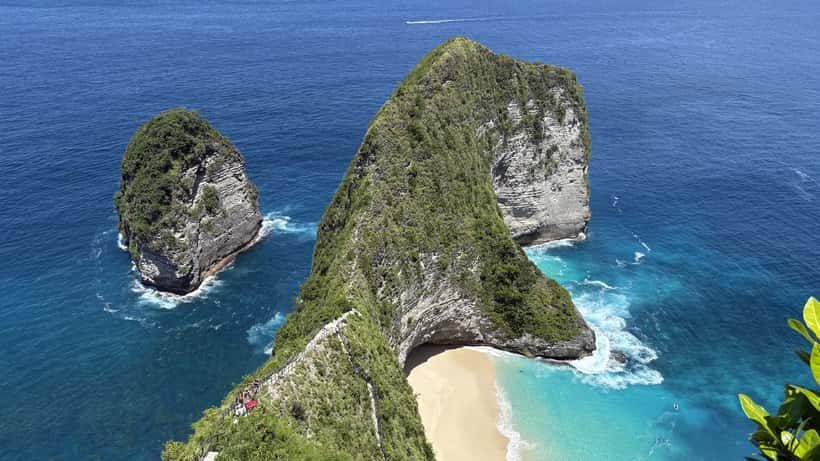
Brianna Cronin was solo travelling when she lost her footing on loose rock near the cliff edge at Kelingking Beach, a licensed tourist attraction known for its dramatic T-Rex-shaped rock formation. The beach sits at the base of an 80-metre vertical drop on Nusa Penida, accessible only by steep path. A fellow tourist spotted Cronin on a ledge and alerted a local lifeguard monitoring the beach below. A rescue attempt was organised, but Cronin fell a second time before help reached her, striking the sand and sustaining multiple fatal fractures.
Cronin had described the trip as her "trip of a lifetime." She is survived by family in Queensland who have asked supporters to help repatriate her remains. "We just want to hold her close and say goodbye," the family wrote on their fundraising page.
Kelingking Beach sees thousands of visitors each year and is marketed across major travel platforms. It is not classified as an extreme sport venue or adventure activity site — it is a standard tourist lookout. That distinction matters enormously when it comes to insurance.
The Hidden Cost of Dying Abroad
When an Australian dies overseas, their family inherits a bureaucratic process that runs parallel to their grief. In Indonesia, that process typically involves a local death certificate (issued in Bahasa Indonesia), embalming required for international transport, a consular notification to the Australian Embassy, and — critically — coordination with an international funeral logistics provider.
According to Smartraveller, the Australian Government's official travel advisory, repatriation of remains from Southeast Asia costs between $10,000 and $30,000 AUD depending on the location, airline routing, and documentation processing times. In remote parts of Indonesia — including Nusa Penida, which is a ferry ride from mainland Bali — these costs sit toward the higher end of that range.
The Cronin family's fundraiser is not unusual. It is, in fact, a pattern: families of Australians who die in Bali regularly discover that their loved one's travel insurance either does not include repatriation cover, caps it well below the actual cost, or requires documentation that takes weeks to compile before any funds are released.
What Australian Travel Insurance Actually Covers — and What It Doesn't
Travel insurance in Australia is not standardised. Two policies sold at the same price point by different providers can have radically different repatriation clauses. Legal experts who specialise in insurance disputes identify three recurring gaps that trip up Australians in exactly this situation.
Gap 1 — The "repatriation of remains" clause is often absent from budget policies. Medical evacuation coverage (for a living patient) and repatriation of remains (for a deceased person) are two separate categories in most policy documents. Many travellers assume one implies the other. It does not. Budget and mid-range policies regularly exclude or severely cap the latter.
Gap 2 — Claim processing timelines create upfront cost burdens. Even when full coverage exists, insurers require documentation: an Indonesian police report, a translated death certificate, a coroner's report if an inquest is ordered, and sometimes a medical examiner's sign-off. In Indonesia, this process takes two to six weeks. Families must often pay funeral logistics companies upfront — in rupiah — and wait for AUD reimbursement. If bridging funds are unavailable, remains may be held pending payment.
Gap 3 — "Dangerous activity" exclusions can be disputed. While Kelingking Beach is not an adventure sport venue, some insurers include broad exclusions for deaths occurring near cliff edges or in areas with posted warning signs. Whether such an exclusion would survive a legal challenge is debatable — but the dispute itself costs families time, money, and emotional energy during their worst weeks.
Australians travelling to Bali — particularly solo travellers — should consult a legal expert who can review insurance policy wording before they depart, not after something goes wrong.
A Concrete Case: The $115 That Could Have Made All the Difference
Consider two Australian women — let's call them Rachel and Kate — both booking a two-week trip to Bali in late 2026. Both are 29 years old. Both visit Kelingking Beach. Both book travel insurance before departure.
Rachel pays $180 AUD for a comprehensive policy. The repatriation-of-remains clause is explicit: up to $250,000 AUD for return of remains to Australia, including funeral transport, embalming, documentation and consular liaison. Her premium is $180 AUD for two weeks.
Kate pays $65 AUD for a budget policy marketed as "Bali cover." Medical evacuation for living travellers is included. Repatriation of remains is capped at $5,000 AUD. No consular liaison service is included.
If Kate dies in circumstances matching Brianna Cronin's — a fall at a licensed tourist site, no extreme sport activity — and repatriation costs total $18,000 AUD:
- If Kate's family can identify and dispute the $5,000 cap through a legal dispute process, they may recover the full amount — but the process takes three to five months and typically requires legal representation.
- If Kate's family cannot afford to contest the claim, they face a $13,000 AUD shortfall. That is precisely the gap that crowdfunding campaigns are designed to fill — and precisely why they keep appearing after Australian deaths in Bali.
- Rachel's family, by contrast, submits documentation and receives full reimbursement within four to six weeks. Out-of-pocket cost: $0 beyond the initial premium.
The difference between Rachel's and Kate's premiums: $115 AUD. That is the cost of a mid-range dinner in Seminyak, a tank of petrol, or roughly two rounds of drinks on Kuta Beach.
This is not a hypothetical risk. Since January 2026, at least four Australians have died in Bali, according to reports tracked by Australian consular services. In every case, families faced some level of repatriation complexity.
What to Look for Before Your Next Bali Trip
Brianna Cronin's death is not the story of someone doing something reckless. Kelingking Beach is on every Bali bucket list. What her death reveals is a structural gap in how most Australians approach travel insurance: they buy it, but they do not read it.
Before your next trip to Indonesia — or any destination where consular access is limited and medical infrastructure is stretched — take these steps:
Check your repatriation clause specifically. Open your policy document and search for "repatriation of remains" or "return of mortal remains." If the clause is absent or capped below $20,000 AUD, your policy does not adequately cover this risk.
Ask your insurer directly. Call and ask: "If I die at a tourist attraction in Bali, will you fully cover repatriation of my remains without applying a dangerous-activity exclusion?" Get the answer in writing.
Consider a policy review by a legal expert. Insurance policy language is deliberately dense. A legal specialist with expertise in insurance disputes can identify exclusions and gaps in thirty minutes that most travellers would miss entirely. For solo travellers in particular — who have no travel companion to manage logistics in an emergency — this review is worth every dollar.
ExpertZoom connects Australians with qualified legal professionals who specialise in insurance policy review and dispute resolution. A consultation before departure costs far less than a crowdfunding campaign after.
This article discusses legal and financial matters. It is provided for general information only and does not constitute legal advice. For advice specific to your circumstances, consult a qualified legal professional.
