 Emie Wang
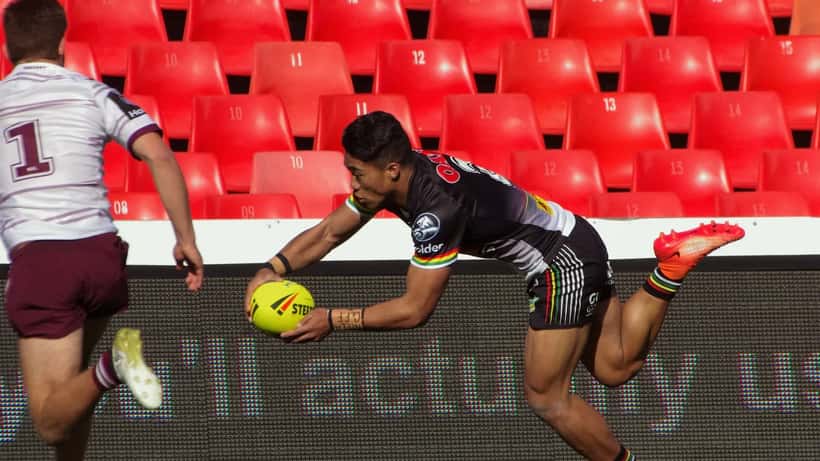
Brian To'o, the Penrith Panthers' record-breaking winger and four-time NRL premiership winner, is expected to leave the club at the end of his current contract in 2027. From 1 November 2026, his management will be free to formally negotiate with rival clubs — with the PNG Chiefs widely reported as the preferred destination.
The development highlights an often misunderstood area of professional sport: how NRL player contracts actually work, what rights players have during and after their agreements, and what Australian employment and contract law says about movement, restrictions, and fair dealing.
How NRL Contract Windows Work
The NRL Collective Bargaining Agreement governs the conditions under which players can negotiate with rival clubs. Under the current framework, players who are in the final year of their contract, or who reach specific milestones (such as 18 months from contract expiry), become eligible to negotiate with rival clubs from a defined window date.
For To'o, whose current deal runs through 2027, the 1 November 2026 window is the point at which outside clubs can formally approach his management. Before that date, any approach by a rival club — even informal — could constitute a breach of the rules, exposing the club concerned to NRL sanctions.
This window system exists to balance two legitimate interests: the player's freedom to secure the best deal available to them, and the club's right to have stability and proper notice before losing a contracted player. It is a structured form of what the Fair Work Act calls "bargaining in good faith," applied to the sports employment context.
What the PNG Chiefs Opportunity Actually Means
The PNG Chiefs are being built for entry into the NRL competition in 2028, and they have already made their first major signing with Jarome Luai officially joining the club. For To'o, a Pacific Islander with deep community ties, the Chiefs represent not just a sporting opportunity but a cultural one.
Legally, the PNG Chiefs signing represents several contractual considerations worth understanding. First, a new multi-year deal with a club entering competition in 2028 creates questions about what happens if the club's entry is delayed or restructured. Contracts should include provisions for this scenario — either a novation clause that transfers obligations to a successor entity, or clear conditions that trigger early termination rights.
Second, the geographic and regulatory dimensions of a PNG-based NRL club are novel. Papua New Guinea has a different employment law framework from Australia, and professional players should understand which jurisdiction governs their agreement, where disputes would be resolved, and how taxation obligations would be allocated between countries.
Third, the financial structure of a new expansion club — which may rely on NRL subsidy, government support, or private investment — differs significantly from an established club like Penrith. Players signing with new franchises should scrutinise payment security provisions more carefully than they would with an established team.
Restraint of Trade in Australian Professional Sport
Even after a contract expires, players are frequently bound by post-term restraint provisions. These can include restrictions on joining direct rivals within a defined geographic area, obligations to maintain confidentiality about training methods or game plans, and conditions around social media and commercial endorsements.
Under Australian law, restraint-of-trade clauses in employment contracts are enforceable only to the extent they protect a legitimate business interest and are reasonable in scope. The Australian Competition and Consumer Commission (ACCC) oversees competition law, including provisions that govern when restraint-of-trade agreements cross the line into anti-competitive conduct. A clause preventing a winger from playing NRL for any Australian club for two years after his Penrith contract expires would almost certainly be found unenforceable — it is too broad to be proportionate.
However, narrower clauses — such as restrictions on sharing proprietary performance data with a specific rival — may well survive legal challenge. This is not an area where common sense alone is a reliable guide. Contract terms that appear routine can have significant consequences for a player's post-contract freedom.
The Latrell Mitchell injury recovery case and similar NRL stories have drawn attention to the physical risks players accept under contract. The legal obligations that accompany those physical risks — including duty of care provisions, return-to-play standards, and insurance requirements — are equally important to understand before signing.
What NRL Players Earn and What They Owe
The NRL salary cap is a central feature of club contracting. From 2026, the NRL salary cap sits at approximately $11 million per club. Senior players like To'o sit at or near the top of their club's wage structure, which makes their movement significant for both parties financially.
Players offered deals that approach or exceed existing cap values at their current club need to understand the interaction between their gross salary, the club's cap obligations, and their net income after tax. If a deal with the PNG Chiefs includes components paid in Papua New Guinea, the effective tax rate may differ significantly from an entirely Australia-sourced income stream.
The ATO requires Australian residents to declare worldwide income regardless of where it is earned. A tax adviser familiar with sports contracts and cross-border income can help structure agreements to avoid double taxation while remaining fully compliant.
What Every Sports Professional Should Know About Contracts
Brian To'o's situation — a high-profile player on the verge of major career decisions — is a concentrated version of the contract decisions that professional athletes, coaches, and sports industry professionals face throughout their careers. Some principles apply broadly:
Have the contract reviewed by a lawyer before signing. This applies even when the deal appears straightforward. Boilerplate terms can contain significant restrictions that only become visible years later.
Understand your window dates. The NRL's negotiation window rules are precise. Acting outside them — or advising your management to act outside them — can trigger sanctions that affect your current contract.
Think beyond the salary. Sponsorship rights, image rights, training obligations, return-to-play conditions, and post-contract restrictions all have economic value. A contract that pays $100,000 more per year but restricts your commercial activities significantly may be worth less in total.
Know which jurisdiction governs your agreement. Especially for players moving to expansion clubs, international squads, or overseas competitions, the governing jurisdiction determines your rights in a dispute.
An experienced sports and employment lawyer can review your contract before you sign, identify clauses that warrant negotiation, and ensure you understand your full rights and obligations. Consulting a legal expert on ExpertZoom is a practical starting point for any professional athlete facing contract decisions in 2026.
This article is for general information only and does not constitute legal advice. NRL contract terms, CBA provisions, and employment law vary significantly between individuals and jurisdictions. Always consult a qualified sports or employment lawyer before making contract decisions.
