 Chloe Kennedy
Brent Crude Near $96: How Rising Oil Prices Are Hitting Australian Household Budgets and What You Can Do About It
Brent crude oil has climbed to near $96 USD per barrel as of April 12, 2026 — up 47 per cent compared to the same period last year — driven by Middle East geopolitical tensions, reduced Saudi production capacity, and ongoing uncertainty around the Strait of Hormuz. For Australian households, the impact is already being felt at the petrol pump, in energy bills, and across the cost of everyday goods.
What Is Driving the Oil Price Surge
The current Brent crude price reflects a convergence of supply-side pressures. Saudi Arabia has reported that attacks on oil facilities have reduced production capacity by approximately 600,000 barrels per day. Iran is reportedly considering imposing transit fees on commercial ships passing through the Strait of Hormuz, a critical global oil shipping lane through which approximately 20 per cent of the world's oil supply travels.
US and Iranian delegations have been meeting in Pakistan to discuss potential de-escalation, with some analysts projecting that a deal could bring oil prices down toward $85-$88 per barrel. But in the absence of a confirmed agreement, the market has continued to price in a significant geopolitical risk premium.
The 30-day performance of Brent crude shows prices up 3.5 per cent in the past month alone. Analysts polled by Reuters forecast an average of $90 to $100 per barrel through the remainder of 2026, meaning Australians should not expect immediate relief at the pump.
How Rising Oil Prices Flow Through to Australian Households
The link between global oil prices and Australian household expenses is direct and multi-channel.
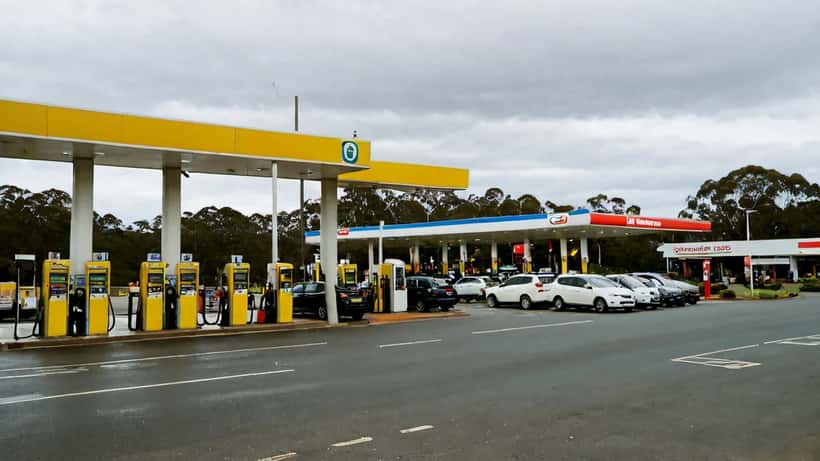
Petrol prices: Australia imports refined petroleum products, and Australian fuel pricing closely tracks international oil benchmarks. According to the Australian Competition and Consumer Commission, petrol prices in capital cities follow a cyclical pricing pattern that incorporates wholesale import costs derived from global benchmarks including Brent crude. A sustained rise of 47 per cent year-on-year in Brent crude translates to meaningful increases in bowser prices over time.
Energy bills: While Australian electricity generation relies more heavily on domestic gas and renewables than crude oil, gas prices are correlated with global energy price movements. Households on gas heating or gas hot water systems, particularly in southern states, can expect upward pressure on winter energy bills as wholesale gas prices track the broader energy complex.
Food and consumer goods: Higher fuel costs increase the cost of transporting food from farms and ports to supermarkets. Diesel is the primary fuel for freight vehicles, and its price is directly tied to crude oil. The Australian Bureau of Statistics has previously identified transport costs as a significant contributor to food inflation in periods of elevated energy prices.
Mortgage repayments and inflation: If oil-driven inflation prompts the Reserve Bank of Australia to maintain or raise interest rates for longer than expected, Australian homeowners with variable-rate mortgages face sustained pressure on repayments.
Three Things Australians Can Do Now
The oil price environment is largely outside individual control. But how households prepare for and respond to sustained energy cost pressure can make a significant financial difference.
1. Review your household energy mix. If your home uses gas for heating or cooking, this is a practical time to explore whether electrification makes financial sense. Solar panels combined with battery storage are now cost-competitive in many parts of Australia, particularly with ongoing government rebates. A financial adviser or energy consultant can model the payback period given your usage patterns.
2. Audit transport costs. Higher petrol prices affect households very differently depending on commuting patterns and vehicle type. Households with two older petrol vehicles in outer suburbs are significantly more exposed than inner-city residents who use public transport. A budget review that explicitly models fuel cost increases — both current and projected — gives you a realistic picture of your exposure.
3. Get proactive about your overall financial position. Rising energy prices are one input into a broader inflationary picture that has implications for savings rates, investment returns, and insurance costs. Speaking with a wealth management professional is particularly valuable in environments like this, where multiple cost pressures are operating simultaneously. A financial adviser can identify whether your current superannuation allocation, insurance coverage, and cash reserves are appropriately calibrated for a sustained high-energy-cost environment.
The Timing Issue: Why Acting Now Matters
Financial decisions made during price surges often prove more costly than decisions made in anticipation of them. Households that locked in electricity contracts, increased emergency savings buffers, or refinanced mortgages to fixed rates during calmer periods are now in a meaningfully stronger position than those who delayed.
The forecasted $90-$100 per barrel range for the rest of 2026 gives a window — not certainty, but a reasonable planning horizon. Using that window to assess your household's exposure and speak with a financial professional is a practical response to a global situation you cannot control.
Expert Zoom connects Australians with qualified wealth management advisers who can provide personalised guidance on navigating rising costs and building financial resilience in your specific circumstances. A single conversation with the right adviser can shift your financial trajectory in ways that generic budgeting tips cannot.
This article contains general financial information only and does not constitute financial advice. You should consider seeking independent financial advice tailored to your own circumstances before making any financial decisions.
