 Isabelle Torres
Can Essendon Sack Brad Scott Mid-Season? What Australian Employment Law Actually Says
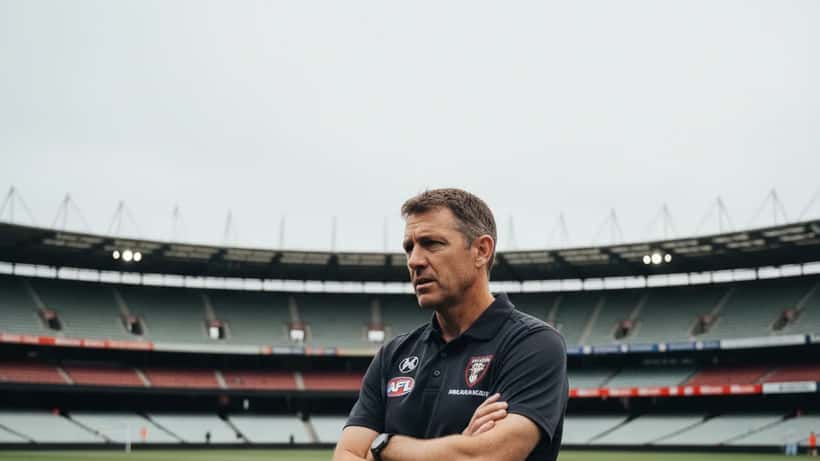
Brad Scott's 2026 AFL season has become one of the most scrutinised coaching tenures in Essendon's recent history. After a 1-9 start and a club-record-equalling 17 consecutive losses stretching back to late 2025, the Bombers sit near the foot of the AFL ladder. Yet Scott has remained publicly defiant, telling reporters that mounting pressure "just doesn't faze me."
That composure may be well-founded — not just psychologically, but legally. Under Australian employment law and the AFL's own contractual framework, dismissing a head coach is rarely as simple as boards and commentators might assume.
What Is in a Head Coach's Contract?
AFL head coaches are senior executives operating under fixed-term employment contracts, typically spanning three to five years. Essendon extended Scott's deal on the eve of the 2025 season, locking him in through the end of 2026.
A fixed-term contract creates legal obligations on both sides. The club cannot simply terminate the arrangement because the team is losing games. Grounds for early termination — sometimes called "termination for cause" provisions — are usually confined to serious misconduct, a fundamental breach of duties, or specific performance clauses tied to measurable criteria (such as finishing below a defined ladder position by a set round).
Poor on-field results alone rarely constitute valid grounds for summary dismissal under the Fair Work Act 2009. If an employer ends a fixed-term contract early without proper grounds, the employee may be entitled to claim the full remaining salary, damages for loss of bargain, and additional entitlements set out in the original agreement.
The Financial Cost of Getting It Wrong
If Essendon were to terminate Scott's contract without legitimate cause, the financial exposure could be substantial. With a season and a half remaining on his deal, a payout could run into the millions. Historical AFL coaching exits — including the Carlton case outlined in our earlier report on AFL coaching contract payouts — illustrate how expensive and reputationally damaging these separations can become when managed poorly.
This is one reason clubs typically prefer a mutual agreement over outright dismissal. A negotiated exit can cap financial exposure, protect confidentiality, and allow both parties to move on without costly litigation before the Fair Work Commission or in the Federal Court.
Performance Clauses: A Double-Edged Sword
Some modern AFL coaching contracts contain performance benchmarks — minimum wins per season, ladder finishing thresholds, or formal board review triggers. If Scott's agreement includes such a clause and the Bombers have failed to meet it, Essendon may hold a contractual right to terminate without paying out the remaining term.
However, performance clauses must be precisely drafted to be enforceable. A vague requirement to "meet reasonable performance expectations" is far weaker than a specific clause stating "if the club finishes below 16th on the ladder after Round 15 in any season." Employment lawyers specialising in sports contracts are routinely engaged — both by clubs drafting agreements and by coaches reviewing what they are signing — to ensure these terms are clear, fair, and legally sound.
Ambiguous clauses often favour the employee in a dispute, because Australian courts interpret uncertainty against the party who drafted the contract.
Constructive Dismissal: The Coach's Perspective
Employment law also protects against "constructive dismissal" — a scenario where an employer makes working conditions so hostile or untenable that the employee has no reasonable choice but to resign. For a coach facing intense public criticism, an uncooperative playing group, and board instability, understanding this protection is critical.
If a club systematically undermines a coach's authority — by publicly entertaining replacements, leaking confidential board discussions to the media, or withdrawing key resources — the coach may be able to argue constructive dismissal. This allows them to claim the same financial remedies as if they had been wrongfully terminated.
Scott's very public statements of confidence may in part reflect an awareness that pressure campaigns, if they cross certain lines, can actually strengthen an employee's legal position rather than weaken it.
What Any Coach Under Pressure Should Do Now
Employment lawyers advise senior executives — including sporting coaches — to take several proactive steps when scrutiny intensifies:
- Document all communications — Keep detailed records of board meetings, performance reviews, and any written or verbal representations about job security.
- Review the contract immediately — Understand exactly what triggers early termination, what notice periods apply, and how disputes are to be resolved (arbitration versus court proceedings).
- Seek independent legal advice early — Waiting until a termination is announced makes it harder to negotiate favourable outcomes. Engaging a specialist employment lawyer during the pressure phase often secures significantly better terms.
- Know the AFL's dispute mechanisms — The AFL operates its own industrial relations framework. Coaches may have recourse through formal arbitration processes before any matter reaches the Fair Work Commission.
The Broader Picture for Australian Sports Professionals
Brad Scott's situation is a high-profile version of a challenge that plays out at every level of Australian sport — from NRL assistant coaches to Super Netball head coaches and beyond. Sporting employees hold the same entitlements under Australian employment law as any professional in finance, law, or medicine.
The assumption that a board can "clean out the coaching box" whenever results disappoint is not legally accurate. Clubs that act without proper process risk expensive settlements, reputational harm, and precedents that complicate future appointments for years to come.
For coaches at any level, from elite AFL down to semi-professional competitions, understanding what your contract actually says and what the law affords you is not optional. It is essential professional knowledge.
Whether Brad Scott survives at Essendon or not, his composure in the face of extraordinary scrutiny may reflect more than personal resilience. It may reflect a coach who has read his contract — and knows exactly what it costs to break it.
This article is for general informational purposes and does not constitute legal advice. Readers facing employment concerns should consult a qualified employment lawyer.
