 Mark Campbell
A man in his early 20s was fatally shot on the 11th floor of a high-rise apartment building on Whitehorse Road, Box Hill, in the early hours of Thursday, 9 April 2026. Victoria Police launched a homicide investigation, evacuated all residents from the building, and issued a public call for witnesses. The shooting, occurring in a densely populated residential tower in Melbourne's inner east, raises urgent questions about security standards in multi-storey apartment buildings across Australia.
What Happened in Box Hill
Emergency services responded to reports of gunfire at approximately 1:50 AM on Thursday morning. Police found a man with critical injuries on level 11 of the Whitehorse Road building; he was pronounced dead at the scene. Homicide detectives swept all floors while residents stood on the street in the middle of the night, many still in pyjamas.
A manhunt was launched immediately. As of Thursday morning, no arrests had been made and detectives were appealing for anyone with information — including CCTV footage from surrounding streets — to come forward.
The incident has rattled residents not only in Box Hill but across inner Melbourne, where similar high-rise residential buildings house tens of thousands of people.
Why Apartment Security Is Harder Than It Looks
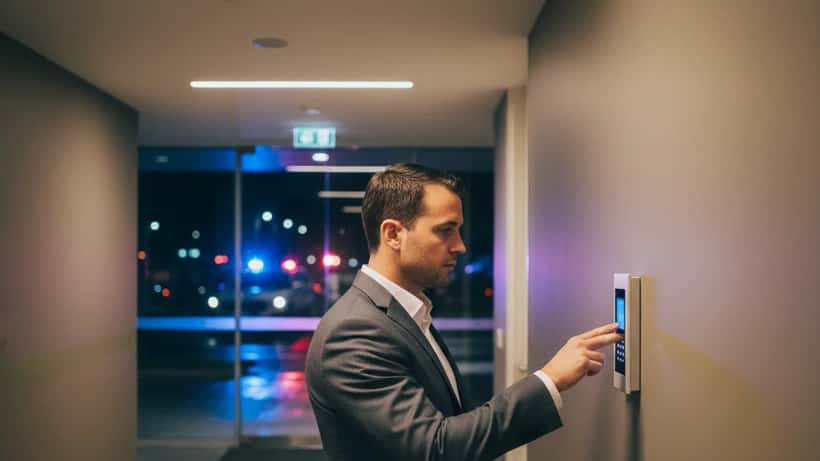
High-rise apartment buildings create a specific security paradox: residents feel protected by locked lobby doors and intercom systems, but those same systems often conceal serious vulnerabilities.
According to security consultants, the most common failure points in residential towers include:
Tailgating at entry points. Even in buildings with key-card or fob access, residents frequently hold doors open for strangers. Studies consistently find that up to 80% of residents will let an unknown person into the building if asked politely. No electronic system prevents this.
Lift access controls. Many buildings require a key card to call the lift from the lobby, but once a person is inside — whether they entered legitimately or by tailgating — they can reach any floor. Unless individual floors also have access control, residents on upper levels are no more protected than those on the ground.
CCTV gaps. Cameras in lobbies and car parks are standard, but camera placement in corridors, stairwells, and lift interiors varies widely between buildings. Dead zones — areas not covered by any camera — are more common than residents realise.
Unmanned entry at night. Buildings with concierge services during business hours typically switch to unmonitored intercom-only systems after hours. If a visitor buzzes the wrong apartment by mistake or deliberately, a sleepy or distracted resident may simply buzz them through.
Emergency exit abuse. Fire exits are legally required to open outward from inside the building without a key, meaning anyone who reaches a fire door — from a stairwell or roof — can enter the building at multiple points without any access credential.
What Residents Can Do Right Now
The Victoria Police remind residents that personal safety in shared residential buildings is a shared responsibility. Individuals cannot fully control building-wide security, but they can significantly reduce their own vulnerability.
Know your building's security report. Under the Owners Corporations Act 2006 in Victoria, owners corporations are required to maintain common property and can be compelled to address safety deficiencies identified in formal reports. Request the most recent building security audit from your owners corporation; if none exists, formally request that one be commissioned.
Understand your intercom habits. Never buzz in someone you do not know, even if they say they are a delivery person or visiting a neighbour. Legitimate deliveries can be left at reception or a secured parcel area; legitimate visitors can be met in the lobby.
Check if your floor has independent access control. If your floor can be reached by anyone who enters the lift, consider raising this at the next owners corporation meeting. Retrofit floor-level access control is available for most modern lift systems and is increasingly required in new developments.
Secure your own front door independently. A high-quality deadbolt, door reinforcer, or smart lock with an alarm adds a critical layer of protection even if building entry is breached. A door that takes more than 60 seconds to force open deters the vast majority of opportunistic intruders.
Report suspicious behaviour immediately. Victoria Police ask residents to call triple zero (000) if they observe anything concerning, rather than waiting to see if a situation develops. In high-density buildings, earlier intervention almost always prevents escalation.
When to Call a Professional Security Assessor
If you own an apartment or manage a strata building, an independent security assessment provides a formal baseline and legal documentation of due diligence. Assessors examine:
- Physical access control at all entry points, including fire exits and car parks
- CCTV coverage mapping and blind zone identification
- Lighting adequacy in stairwells, corridors, and car parks
- Intercom system integrity and resident education
- Emergency procedures and communication systems
According to the Australian Building Codes Board, the National Construction Code sets minimum standards for security hardware in new residential buildings, but existing stock — including many high-rise towers built in the 1990s and 2000s — often falls well below current standards. Retrofitting is not mandatory unless a building undergoes significant renovation, meaning gaps can persist for decades.
Owners corporations that invest in formal security reviews and act on findings reduce both their liability exposure and the actual risk to residents. An expert security consultant who specialises in residential buildings can identify vulnerabilities that are invisible to untrained eyes and provide a prioritised, costed improvement plan.
A Broader Pattern Across Melbourne
The Box Hill incident follows a series of events in Melbourne's inner-east and CBD over the past 12 months that have focused attention on residential security in high-density areas. In each case, investigators noted that basic physical security measures — adequate CCTV coverage, controlled floor access, and resident awareness — would have meaningfully changed the outcome.
This is not a reason to panic. Melbourne remains one of the world's safest major cities. But high-rise apartment living creates shared risk: your security is partly a function of your neighbours' habits and your building's infrastructure. Understanding that dynamic — and taking practical, evidence-based steps in response — is the best available protection.
If you are concerned about the security of your apartment building, a qualified home improvement or security specialist on ExpertZoom can conduct an independent assessment and recommend targeted improvements appropriate to your building's layout and budget.
Note: This article is intended as general safety information and does not constitute legal or security advice. Contact Victoria Police on 000 in an emergency, or 131 444 for general enquiries.
