 Sophie Thompson
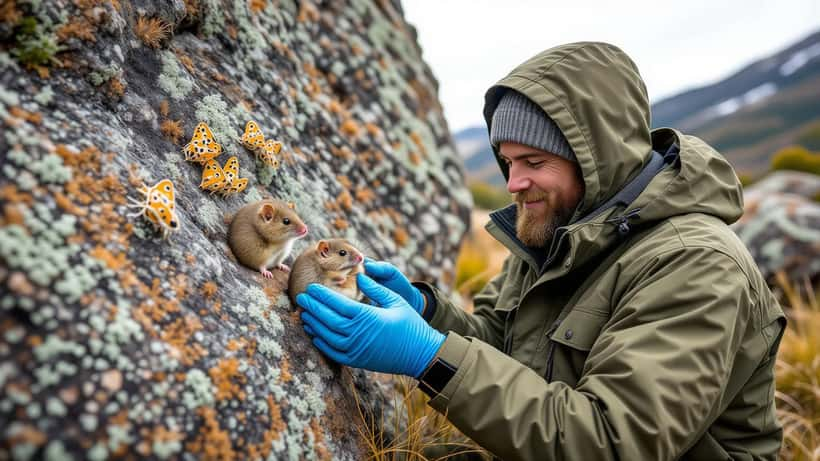
The bogong moth (Agrotis infusa) has returned to the Australian Alps in early October 2026, with Western Sydney University's Bogong Watch project confirming one of the strongest migrations in several years — welcome news for the critically endangered mountain pygmy possum, whose entire post-hibernation recovery depends on this ancient insect. Yet despite the promising season, scientists and wildlife vets are urging Australians in alpine communities to stay alert: moth numbers remain roughly 50 per cent below their 1980s peak, and the possum is still one of Australia's most at-risk mammals.
Australia's Most Remarkable Annual Migration
Every spring, billions of bogong moths leave their breeding grounds across inland Queensland, New South Wales, and Victoria and travel hundreds of kilometres to the cool granite caves of the Australian Alps. They navigate, researchers now believe, using the stars — including the Milky Way — combined with Earth's magnetic field. A 2025 study published in Biological Conservation found that some moths can complete the journey to the high country in a single night, riding strong westerly airstreams.
The scale of the migration is extraordinary. At their 1980s peak, an estimated several billion moths made this journey annually. Each adult bogong moth is roughly 60 per cent fat by body weight, making them a dense, high-calorie food source that sustains an entire alpine food web. Eagles, ravens, currawongs, and the mountain pygmy possum all feed on them from October through January. Zoos Victoria wildlife researcher Marissa Parrott has described bogong moths as "the Alps' second largest influx of nutrients every year, beaten only by the sun."
In 2026, strong westerly winds disrupted many moths' flight paths in mid-September, pushing large swarms toward coastal Sydney, the Illawarra, and the Central Coast — thousands of Australians woke up to moths covering their windows and outdoor furniture. By early October, the bulk of the migration had corrected course toward the high country.
When Moths Vanish, Possums Starve
The 2026 migration arrives after a decade of ecological crisis. Bogong moth populations had been declining since at least the 1980s, according to research published in CSIRO's Pacific Conservation Biology, but in 2017 — coinciding with severe drought across southeastern Australia — they collapsed catastrophically.
The effect on mountain pygmy possums (Burramys parvus) was devastating. In monitored colonies, more than 50 per cent of female possums lost their entire litters during the 2017-2018 seasons. Without sufficient moth protein, breeding females could not produce enough milk, and joeys died before weaning. The IUCN classified the bogong moth as endangered in 2021 — the first insect in Australia to receive that designation. The mountain pygmy possum is listed as critically endangered under Australia's Environment Protection and Biodiversity Conservation Act 1999 (EPBC Act).
This year's migration offers real grounds for cautious optimism. Western Sydney University confirmed in early October 2026 that moths are moving in good numbers, and citizen science sightings logged via Bogong Watch are consistent with a healthy season. Researchers estimate the current population at approximately 2.2 billion individuals — still well below historic levels, but markedly better than the collapse years of 2017-2019. One good season, however, does not reverse a multi-decade trend: modelling shows that a single future drought year could reset populations by 40 to 60 per cent within one season.
When an Endangered Possum Appears Under Your Deck: A Realistic Scenario
This is where the migration's story becomes directly relevant to anyone hiking, camping, or staying near alpine lodges in October and November 2026.
Consider this scenario. You are staying near Thredbo Village on the weekend of 18-19 October 2026. On Saturday morning, you find a small, lethargic marsupial sheltering beneath your cabin's deck. It weighs less than 50 grams, has a distinctively round body and a thick tail, and barely responds to your approach. It is almost certainly a mountain pygmy possum that has emerged from seven months of winter hibernation — and has not yet found sufficient moths to begin recovery.
A healthy possum at this stage of October should already have consumed the equivalent of 50 to 80 bogong moths per night for several days, regaining at least 20 to 30 per cent of its pre-hibernation body weight. A lethargic individual weighing under 40 grams is in acute metabolic distress. If the migration has been delayed or patchy in the specific valley where that animal hibernated, it may be experiencing the early stages of starvation. Research shows mountain pygmy possums can lose up to 40 per cent of their body weight during hibernation; without rapid refuelling, core body temperature drops to dangerous levels even when daytime temperatures reach 12°C.
If this is you: contain the animal gently in a dark, warm, breathable container — a cardboard box with ventilation holes and a soft cloth is ideal. Contact WIRES on 1300 094 737 or a licensed wildlife vet within the first hour. Do not offer water via a syringe; aspiration is a leading cause of death in stressed small marsupials. Do not offer food unless a vet directs you to do so.
Under NSW law, the mountain pygmy possum is a protected species under the Biodiversity Conservation Act 2016. You are legally permitted to render immediate first aid to an injured or distressed native animal, but you cannot keep it in your care for more than 24 hours without authorisation from a licensed wildlife carer or WIRES-affiliated veterinarian. The cost of an initial emergency wildlife consultation typically ranges from $85 to $180 — after which approved wildlife carers manage ongoing treatment at no cost to the finder. If you are uncertain whether the animal is a mountain pygmy possum rather than a more common species, a vet can confirm identification remotely via a clear photograph in minutes.
For a broader overview of legal obligations when native animals are injured in national park settings, the advice in When Hikers Die in Australia's Bush: Legal Rights and Park Authority Responsibilities provides useful context on how park authority regulations intersect with wildlife protection duties.
What Wildlife Vets Want You to Know Before You Touch Anything
Wildlife veterinarians working in alpine and subalpine zones report a predictable surge in calls every October and November — not only for possums, but for birds, reptiles, and small mammals whose food chains have been disrupted by migration disruptions or weather events. The consistent message from practitioners: resist the instinct to handle without guidance first.
Well-meaning handling can cause secondary stress injuries in small marsupials with fragile skeletal structures. Even holding a possum incorrectly can fracture a limb. A five-minute call to a wildlife vet before picking up the animal can be the difference between a successful rehabilitation and a fatality. For people who own rural properties on the migration flight path or who visit alpine areas regularly, saving the WIRES number and the contact details of a local accredited wildlife vet before the season starts is basic preparation — not unlike keeping a first aid kit in the car.
Wildlife vets can also advise on property lighting. Research confirms that bogong moths navigating by starlight are acutely disoriented by artificial point-source lights, which ground them prematurely and expose them to dehydration and predators. Specific bulb types and placement adjustments can reduce moth mortality significantly on private properties — a practical, low-cost intervention that benefits the entire alpine food chain.
What You Can Do in October 2026
Three steps make a real difference during the migration season:
Turn off unnecessary outdoor lighting between dusk and 10 pm from October through January, particularly in foothill and alpine regions. Keep blinds or curtains closed where indoor light spills outside.
Log your sightings. Western Sydney University's Bogong Watch platform and iNaturalist are actively requesting citizen scientist observations through the 2026-27 summer. Every verified sighting helps researchers map migration routes and identify gaps where population pressure is highest.
Know your wildlife vet before you need one. Locate your nearest WIRES-affiliated vet now, before you reach the mountains. The mountain pygmy possum's survival margin is narrow — expert-guided responses from the public are part of how the species pulls through each season.
For authoritative guidance on the mountain pygmy possum's legal protections and approved handler requirements, the Australian Department of Climate Change, Energy, the Environment and Water's threatened species page provides the current EPBC Act listing and species recovery plan.
Note: This article relates to wildlife health and native animal conservation. If you encounter an injured or distressed animal, always contact a licensed wildlife vet or WIRES (1300 094 737) before handling. Information here is general and does not replace professional veterinary advice.
