 Jess Johnson
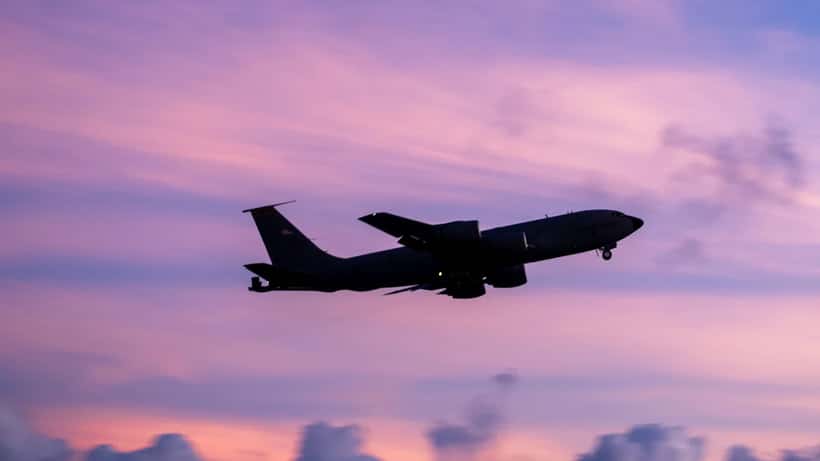
Six US Air Force airmen were killed on 12 March 2026 when a Boeing KC-135R Stratotanker crashed in western Iraq during Operation Epic Fury — the large-scale US-Israeli air campaign against Iran that began on 28 February 2026. A second KC-135 was damaged in what appeared to be a mid-air collision but managed to land safely in Israel. The crash is the deadliest single tanker loss in recent memory, and it has raised urgent questions about aircrew safety, compensation entitlements, and the legal rights of military families — questions that are directly relevant to Australians with relatives serving alongside US forces in the Middle East.
What Happened Over Iraq
The KC-135R that crashed bore tail number 63-8017 and was operating aerial refuelling support during combat operations. Pentagon officials later confirmed the six fatalities, identifying them as active-duty US Air Force airmen. Defence One reported shortly after the crash that the crew likely lacked parachutes — escape systems removed from KC-135 aircraft nearly two decades ago as a cost and weight-saving measure — a revelation that sparked immediate debate in US military policy circles.
In response to combat attrition, the US Air Force has since begun pulling retired KC-135 aircraft from long-term storage at Davis-Monthan Air Force Base in Arizona — the so-called Boneyard — and shipping them to Tinker Air Force Base in Oklahoma for reactivation. A shrapnel-damaged KC-135 also arrived at Tinker in mid-April 2026 for combat repairs. The unretirement of stored aircraft underscores how the air campaign against Iran has stretched US aerial refuelling capacity in ways that were not fully anticipated.
Australia's Exposure to the Iran Conflict
Australia has longstanding defence arrangements with the United States, including intelligence sharing under the Five Eyes network and cooperation agreements that have historically resulted in Australian personnel being embedded with or deployed alongside US forces in Middle Eastern operations.
While the Australian government has not publicly confirmed the presence of Australian Defence Force (ADF) personnel in the Operation Epic Fury area of operations, Australian families with relatives serving in joint or exchange roles may have legitimate concerns about their rights and entitlements in the event of a combat incident.
Additionally, thousands of Australians hold dual citizenship or have family members serving in allied military forces, including the United States, the United Kingdom, and Canada. For these families, understanding what compensation frameworks apply — and where to seek legal advice — is not a theoretical exercise.
What Compensation Rights Apply to Military Families?
The legal landscape for military death and injury compensation differs significantly from civilian workplace law, and the relevant frameworks vary depending on the nation of service.
For US military fatalities, families of active-duty personnel killed in service are typically entitled to the Servicemembers' Group Life Insurance (SGLI), which provides up to $400,000 USD in coverage, as well as Dependency and Indemnity Compensation (DIC) through the Department of Veterans Affairs. A Death Gratuity payment of $100,000 USD is also standard.
For Australian Defence Force personnel, the Military Rehabilitation and Compensation Act 2004 (MRCA) governs compensation for injury, disease, or death sustained during service. The Safety, Rehabilitation and Compensation (Defence-related Claims) Act 1988 may also apply depending on when and how the injury or death occurred. Families of ADF members who die in service are entitled to a lump-sum payment and ongoing pension support through the Department of Veterans' Affairs (DVA).
For dual citizens or Australians serving in a foreign military, the situation is more complex. You may need to navigate the legal frameworks of both Australia and the country of service to understand your full entitlements. This is particularly important where pension rights, superannuation benefits, and bilateral treaty arrangements come into play.
When a Lawyer Can Make a Critical Difference
Military compensation law is highly specialised. Errors in lodging claims — including missed deadlines, incorrect forms, or failure to document causation — can result in significant benefit reductions or outright denial of legitimate entitlements. A lawyer with experience in veterans' law or military compensation can:
- Help you identify all applicable compensation streams (not just the most obvious)
- Ensure claims are lodged within statutory timeframes
- Represent you if a claim is disputed by the relevant authority
- Advise on the interaction between military compensation and other entitlements such as superannuation death benefits or civilian life insurance
For Australian families dealing with the aftermath of a combat casualty involving a foreign military, a lawyer with international experience can help you understand what treaties or reciprocal arrangements may apply.
The Parachute Controversy and Its Legal Implications
The revelation that KC-135 aircrew operate without parachutes raises a separate but important legal issue: whether the removal of safety equipment from military aircraft constitutes a dereliction of duty-of-care obligations, and whether families of deceased crew members have any legal basis for a negligence claim against the government or contractor.
In the civilian context, an employer who removed a critical safety device from a workplace — resulting in a worker's death — would face serious liability. Military law is different: the Feres Doctrine in the United States generally bars active-duty military members from suing the federal government for injuries arising from their service. However, the Feres Doctrine has faced increasing legal challenge, and some exceptions have been carved out in recent years.
For Australians with relatives in affected US units, consulting a lawyer who understands both US military law and Australian veterans' law is the appropriate first step before drawing any conclusions about legal exposure.
The Bigger Picture: Operation Epic Fury and Prolonged Conflict
The KC-135 crash is not an isolated incident. Operation Epic Fury has resulted in significant equipment losses across the coalition, and the pace of operations suggests the conflict may be prolonged. For military families, that means sustained periods of risk and uncertainty — and an increased likelihood that legal and compensation questions will arise.
According to the Australian Government Department of Veterans' Affairs, families of serving ADF members who have concerns about their entitlements during active operations can access free legal referral services through the DVA. Specialist lawyers experienced in military compensation are also accessible through community legal centres and private firms specialising in veterans' law.
If you have a loved one serving in coalition operations in the Middle East, now — not after an incident — is the right time to understand your legal position and ensure estate planning documents are current and reflective of the risks involved.
