 Jess Johnson
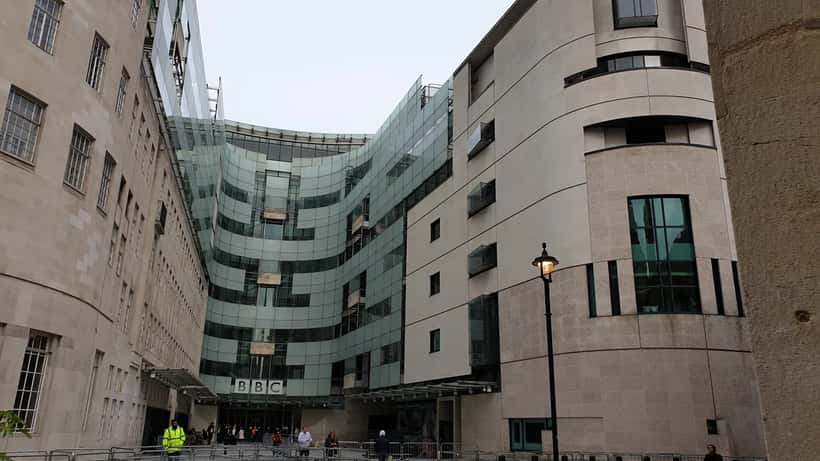
The BBC is axing up to 2,000 jobs — one in ten of its entire workforce — in the most sweeping round of layoffs the British public broadcaster has faced since 2011. Announced in April 2026 with voluntary redundancy schemes already underway, the formal restructuring timeline was confirmed in September 2026. For Australian freelancers and contractors working in broadcast media — whether directly for BBC Studios Australia or for local networks following the same cost-cutting script — this is not abstract news from the other side of the world. It is a signal to review your legal standing now, before restructuring decisions land in your inbox.
Inside the BBC's 2026 Restructuring
The BBC's director-general confirmed in April 2026 that the broadcaster would eliminate roughly 2,000 positions over the next two years as part of a £500 million (approximately AUD $975 million) savings drive — its most aggressive cost reduction in more than a decade. The news division faces the sharpest contraction: a 15% workforce reduction, according to People Matters, representing one of the steepest cuts to BBC News in its history.
Among the measures outlined to staff was something quietly significant: "restrictions on commissioning freelancers," flagged by the National Union of Journalists. In practical terms, this means a tightening of the broadcaster's external workforce — not just the salaried staff facing redundancy, but the wider ecosystem of contractors, short-term contributors, and production freelancers who keep the schedule running.
The union Bectu described the announcement as "devastating" — not just for BBC employees, but for the broader creative sector that depends on BBC commissioning. A voluntary redundancy scheme launched as a first step before any compulsory redundancies, but the detailed implementation framework was still rolling out as of September 2026.
Why Australian Media Workers Are Watching Closely
The BBC's cost-cutting model rarely stops at Heathrow. When major English-language broadcasters slash their contractor budgets, the pressure ripples outward to affiliated productions, co-productions, and the wider content ecosystem connected by distribution relationships.
There are two direct exposure points for Australian media workers. First, BBC Studios Australia — the broadcaster's local production and distribution arm — which engages staff and contractors under Australian employment law, not UK law. This distinction matters enormously, because Australian law now offers protections that the BBC's UK-style contracts did not anticipate.
Second, the broader cohort of Australian media freelancers at Nine, Seven, ABC, and SBS who may face similar "contractor rationalisation" drives inspired by the BBC model, as broadcasters review costs ahead of the 2027 upfront season. Channel 10 News+ axed its weeknight bulletin earlier this year — and when Triple J's Breakfast team faced a sudden reshuffle, the employment classification questions that followed showed just how murky contractor status can be in the media industry. The BBC's September timeline arrives as Australian broadcasters are actively reviewing their flexible workforce arrangements.
Australia's New Employment Test: When "Contractor" Isn't the Final Answer
Here is where Australian law diverges sharply from its UK counterpart — and where local media workers may hold rights they do not realise they possess.
The Fair Work Legislation Amendment (Closing Loopholes No. 2) Act 2024 received Royal Assent in February 2024, with the critical employee/contractor provisions commencing in August 2024. Under this framework, whether you are legally an employee or a contractor is no longer determined simply by what your contract document says. The Fair Work Commission and courts now apply a "whole of relationship" test — examining the practical reality of how work is actually performed.
According to the Fair Work Ombudsman, the factors assessed include:
- Control — Who decides how, when and where the work is done?
- Integration — Is the work integral to the core operations of the business?
- Commercial risk — Does the worker bear genuine financial risk for a result, or are they simply paid a rate for time?
- Independence — Does the worker operate as a genuine independent business, with multiple clients and real commercial autonomy?
For many media freelancers, the honest answer to several of these questions points toward employment, not contracting. If you show up to the same studio five days a week, use the broadcaster's equipment, take editorial direction from a supervising producer, and your work is central to the daily broadcast schedule — your arrangement may satisfy the legal definition of employment regardless of your ABN and your invoicing arrangements.
The Australian Taxation Office and the Fair Work Ombudsman are both actively warning businesses: misclassification is not a technical oversight. It is unlawful, and it exposes businesses to back-payments of superannuation, leave entitlements, and potential penalties. For the worker, the flip side is access to entitlements that could amount to thousands of dollars owed — and a much stronger position if restructuring comes knocking.
What Reclassification Actually Means in Dollars: A Concrete Scenario
Consider a Brisbane-based production coordinator who has worked for the same broadcaster on rolling 12-month contracts since 2022. Their paperwork says "independent contractor." They have an ABN. They invoice fortnightly at a negotiated day rate of approximately $550 — equating to around $120,000 annually before tax.
The reality of their arrangement: they work exclusively for this broadcaster (no other clients in three years), they use the broadcaster's production systems and equipment, their schedule is set by a supervising producer, they attend mandatory weekly all-hands meetings, and their work passes through the broadcaster's editorial approval chain before transmission.
Under the whole-of-relationship test in force since August 2024, this arrangement carries the practical hallmarks of employment. Here is what that means in concrete numbers:
If a Fair Work review reclassifies this arrangement as employment from August 2024:
- Superannuation gap: At the current Superannuation Guarantee rate of 11.5%, the broadcaster owes $13,800 per year in unpaid contributions. Over two years (August 2024 to September 2026), that is approximately $27,600 in compulsory contributions not made to the worker's super fund.
- Annual leave entitlement: Under the National Employment Standards, employees accrue 4 weeks of paid annual leave. On $120,000, that is $9,200 per year — leave the contractor was never compensated for.
- Redundancy pay upon termination: A contractor with no employment relationship receives no statutory redundancy pay when their contract is not renewed. An employee with four years' service is entitled to approximately 7 weeks' redundancy payment under the NES — roughly $16,200 at this income level.
The total financial gap between a correctly classified employee and a misclassified contractor in this profile exceeds $50,000 over two years. That figure does not include potential penalties the employer may face. It is also the number a legal expert will present during a single consultation — and the number worth knowing before signing any termination or non-renewal paperwork.
What to Do Before the Next Restructuring Wave
Whether the disruption comes through BBC Studios Australia directly or through a local broadcaster following the BBC's lead, the steps are the same:
If you receive a termination or "contract non-renewal":
- Do not sign a deed of release immediately. These documents typically waive all future claims in exchange for a payment, and once signed, they are binding.
- Request the written basis for the termination, including any redundancy calculation and the period of notice offered.
- Apply the whole-of-relationship test to your actual working arrangement — not the contract document. If the practical reality of control, integration, risk, and independence points toward employment, you may have grounds for an unfair dismissal claim or a wage-and-entitlements claim through the Fair Work Commission.
If you are a continuing contractor in the current environment: Have an employment lawyer review your arrangement now — before any restructuring decision is made. A single consultation can establish whether your status is compliant with the 2024 amendments. If reclassification is warranted, acting proactively puts you in a far stronger position than reacting after a termination offer.
The BBC's September 2026 restructuring is now underway. Australian media freelancers have a window — before the next round of contract non-renewals — to understand exactly where they stand under Australian law.
Disclaimer: This article contains general information only and does not constitute legal advice. Employment classification depends on the specific facts of each individual working arrangement. Consult a qualified employment lawyer before making decisions about your employment status or accepting any termination offer.
