 Andrew Thompson
One Nation MP Barnaby Joyce reignited Australia's tobacco tax debate in July 2026, warning that repeated excise increases have become a "fool's errand" that pushes smokers toward a booming illegal market. Speaking to Sky News Australia, Joyce argued that every rise in the legal price of cigarettes hands another customer to organised crime. Whatever the politics, his intervention has put a spotlight on a fast-moving area of law where ordinary retailers and consumers now face some of the harshest penalties in the country.
What Barnaby Joyce actually said
Joyce, a former Deputy Prime Minister now sitting for One Nation, used the excise debate to attack the federal government's core anti-smoking strategy. His point is blunt: when a legal packet of cigarettes costs more than an equivalent illicit one, price-sensitive smokers move to the black market, and the tax revenue vanishes.
The numbers give the argument weight. According to the Australian Taxation Office, the net tobacco tax gap for 2022–23 was estimated at 14.3 per cent, equal to roughly $2.7 billion in lost excise that flowed instead into organised criminal activity. That is money the Commonwealth expected to collect and did not.
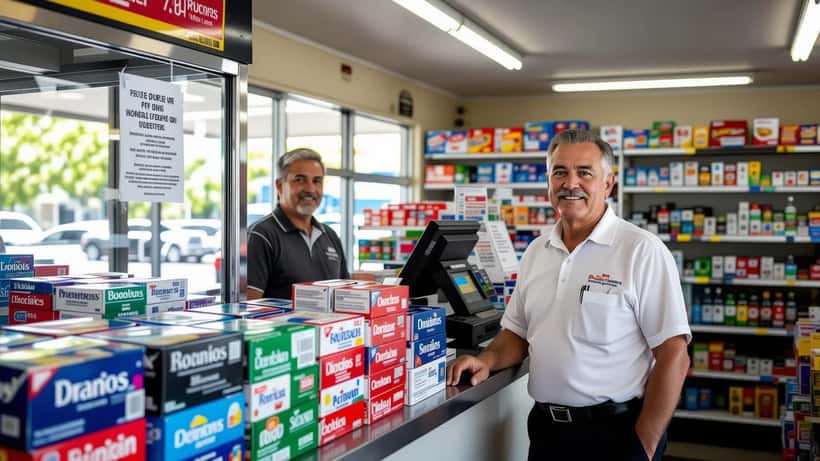
The debate matters because it is no longer confined to Canberra. In suburbs across Australia, "tobacco wars" between rival syndicates have produced firebombings of shops and a wave of enforcement action. For the small business owners caught in the middle, and for the customers who buy cheap cigarettes without asking questions, the legal exposure is real and growing.
Why this is a legal issue, not just a political one
Behind the headline is a hardening legal regime. The maximum penalty for selling illicit tobacco, and for possessing commercial quantities of it, is now seven years imprisonment, a fine of up to $1.54 million, or both. Those penalties were substantially increased on 3 November 2025.
The pressure is still building. The Combatting Illicit Tobacco Bill 2026 lifts penalties further, attracting up to 15 years imprisonment for some offences. For infringements occurring on or after 1 July 2026, the penalty unit amount used to calculate many fines rose to $364, so headline fine figures climb automatically as the number of penalty units grows.
Enforcement has teeth beyond the courtroom. NSW Health can now issue a short-term closure order of up to 90 days, or apply to the Local Court for a long-term closure order of up to 12 months, against businesses caught selling illicit tobacco and illegal vapes. A closure order can end a corner store's trading in a single afternoon, long before any criminal charge is tested at trial.
This is where a political talking point becomes a personal legal problem. A newsagent who accepts stock from an unfamiliar wholesaler, a service station manager who trusts a supplier's paperwork, or a milk bar owner who never checks an import declaration can all find themselves exposed to penalties designed for organised crime.
Where an expert lawyer makes the difference
For any retailer who sells tobacco, the practical question is no longer "is my price competitive" but "can I prove every carton on my shelf is legal". A lawyer who works in regulatory and criminal compliance can help a business owner in several concrete ways.
The first is supply-chain due diligence. An expert can review supplier contracts, excise documentation and invoices to confirm that duty has genuinely been paid, and can set up record-keeping that stands up if inspectors arrive. Prevention here is far cheaper than defence later.
The second is responding to enforcement. If a closure order lands, timing is critical. A short-term order can be challenged, and a long-term order is decided in the Local Court, where a business owner is far better placed with representation than without it. A lawyer can also advise on whether to contest an infringement or negotiate, and on the difference between an administrative penalty and a criminal charge.
The third is protecting individuals. Directors and managers can face personal liability, not just the company. Understanding who is exposed, and how to limit that exposure, is precisely the kind of advice that is worth getting before a problem escalates rather than after.
Consumers are not the primary target of these laws, and the search record shows enforcement is aimed squarely at suppliers and sellers rather than individual buyers. But anyone who has been offered "cheap" cigarettes from an unbranded box should understand that the discount is subsidising a criminal supply chain, and that possession of commercial quantities carries the same severe penalties as selling.
What Australians should do now
If you run a business that sells tobacco, treat the current climate as a compliance emergency rather than a passing news story. Audit your suppliers, keep every excise and customs document, and know exactly what a closure order would mean for your lease, your staff and your income. If anything about a supplier feels wrong, get advice before you accept the stock, not after inspectors have photographed it.
If you are a consumer tempted by black-market prices, weigh the saving against the reality: you are buying from an industry linked to firebombings and organised crime, with no consumer protections and no guarantee of what is in the product.
The excise argument that Barnaby Joyce raised will run for months, and reasonable people will disagree about whether higher taxes reduce smoking or simply grow the illegal trade. What is not in dispute is the law as it stands right now. The penalties are severe, the enforcement powers are broad, and the safest position for any retailer is to be able to prove, on demand, that everything they sell is legal. A specialist lawyer is the person who can help you get there.
This article is general information about Australian tobacco and excise law as of July 2026 and is not legal advice. Penalties and enforcement powers vary between the Commonwealth and individual states and territories. For advice about your specific situation, consult a qualified lawyer. Official guidance on tobacco penalties and enforcement is available from NSW Health.
