 Andrew Thompson
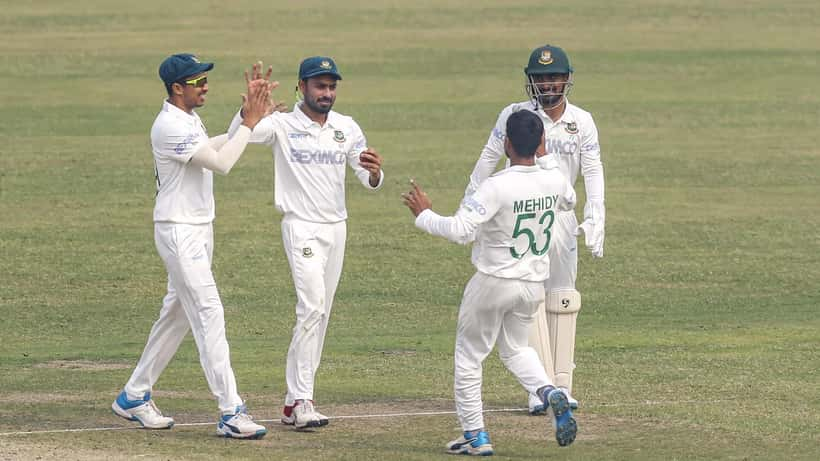
The Bangladesh vs Afghanistan one-off Test match in Abu Dhabi's Sheikh Zayed Stadium opened on 9 October 2026 with Bangladesh posting 317 for 8 on day one. Opener Tanzid Hasan blazed 83 off 71 balls, and Shadman Islam contributed 67 before Afghanistan's bowlers fought back in the final session. By day two, Afghanistan were bundled out for 146, trailing Bangladesh by 171 runs heading into a third day. For Australian cricket fans watching from afar, this Test has an unexpected resonance: it is taking place just months after Cricket Australia formally scrapped its own planned home series against Afghanistan — and raised a question that fans who bought tickets or travel packages are still trying to answer.
Afghanistan's Cricket Crisis and Australia's Response
In July 2026, Cricket Australia announced it was cancelling its scheduled bilateral series against Afghanistan, citing the Taliban government's continued and total ban on women and girls playing sport in Afghanistan. The decision was not a surprise — CA had already withdrawn from a 2023 bilateral series — but the July 2026 cancellation was more significant because it involved a home series that Australian fans had purchased tickets and travel packages for.
The International Cricket Council has so far declined to suspend Afghanistan's membership, despite repeated calls from human rights organisations. Human Rights Watch formally petitioned the ICC in March 2025 to suspend Afghanistan until the Taliban's ban on women's sport is reversed, noting that the Taliban banned all sports for women and girls after seizing power in August 2021. As of October 2026, the ICC has maintained Afghanistan's right to participate in men's international cricket, creating a two-track situation: the ICC fields Afghanistan in tournaments, while individual boards like Cricket Australia refuse to host or play them bilaterally.
That gap between ICC policy and board-level decisions is exactly where Australian fans get caught. Tickets purchased in good faith for a Cricket Australia-hosted series against Afghanistan, or for international matches held at neutral venues in the UAE, can be cancelled at short notice — and fans who have also booked flights and hotels face a patchwork of legal remedies that most do not know how to navigate.
What Australian Consumer Law Actually Protects
Under the Australian Consumer Law (Schedule 2 of the Competition and Consumer Act 2010), consumers who buy tickets to a sporting event are purchasing a service. When the service provider — the event organiser, Cricket Australia, or an authorised ticketing agency — fails to deliver that service, consumers are entitled to seek remedies under Sections 267 and 268.
The key protection is this: a supplier cannot contract out of ACL guarantees. Even if a ticket's terms and conditions state that refunds are not available, or that the organiser can cancel at their discretion, those clauses cannot override statutory consumer guarantees. If the event does not proceed as described at the time of purchase, consumers have the right to seek a refund for the face value of the ticket.
The critical legal question is whether a politically motivated cancellation — Cricket Australia choosing not to play Afghanistan for ethical reasons — qualifies as "force majeure." Legal professionals in Australian consumer law note that force majeure clauses apply to events genuinely beyond the organiser's control: natural disasters, government-mandated lockdowns, or venue unavailability. A cricket board's voluntary decision to cancel a series on human rights grounds does not meet that standard under Australian law. The organiser made a commercial and ethical choice; the consumer bears no responsibility for it.
Where things become more complicated is for fans who independently booked flights and accommodation — purchases made not with the event organiser, but with third-party airlines and hotels.
Concrete Case: What a Melbourne Booking Actually Costs You
Consider the situation of a Melbourne-based couple — passionate cricket fans with Bangladeshi heritage — who purchased two grandstand tickets to a planned Bangladesh vs Afghanistan T20 match at the MCG in February 2027, priced at $185 per ticket ($370 total). Excited about the prospect of seeing both teams, they also booked two nights at a CBD hotel ($220 per night, $440 total) and bought two return flights from Sydney to Melbourne ($160 per person, $320 total). Their total financial exposure: $1,130.
Cricket Australia cancels the series two months before the match date, in December 2026, citing the same grounds as the July 2026 bilateral cancellation.
If they act within 14 days of the cancellation announcement: Ticketek (CA's authorised agent) is legally required under the ACL to refund the $370 ticket price. No voucher substitution, no credit — a full cash refund to the original payment method.
If they paid the full $1,130 by credit card: under Mastercard and Visa chargeback rules, they can dispute all charges for "services not received" within 120 days of the original transaction date. This means they could recover the entire $1,130 — not just the ticket price — from their card issuer, even if the airline and hotel individually refuse refunds.
If the hotel was booked on a non-refundable rate: they face a potential loss of $440. However, lodging a free complaint with Consumer Affairs Victoria within 30 days can prompt the hotel to reconsider, especially if the cancellation was publicly announced and they can demonstrate the booking was event-dependent. Resolution rates are above 60 per cent for event-linked non-refundable accommodation disputes.
Net realistic outcome with timely action: recovery of $690 to $1,130, compared to a default loss of $760 in non-ticket costs if they do nothing.
ICC Governance, Australian Fans, and the Law's Limits
The underlying issue — and the one that a legal expert can help Australian fans navigate — is that international cricket's governance structure creates liability uncertainty. When the ICC insists Afghanistan can play but Cricket Australia refuses to host them, the resulting cancellation is neither pure organiser fault nor pure force majeure. It sits in a legal grey zone that most standard ticket terms and conditions do not anticipate.
Australian consumer lawyers who specialise in sports and entertainment contracts note that courts have consistently prioritised the ACL's consumer guarantee provisions over boilerplate ticket terms. In the 2020 COVID-19 round of concert and sporting event cancellations, Australian courts and tribunals consistently ruled that consumers were entitled to refunds rather than credits, even where contracts specified otherwise.
The principle established by those cases applies directly to politically motivated cancellations: if the event does not take place as contracted, the consumer's right to a refund is not extinguished by the reason for cancellation.
For Afghan-Australian fans specifically — a community that has watched Afghanistan's men's team as a source of pride while the women's team trains in exile in Australia — the cancellations carry a particular sting. The Afghan women's national cricket team, unable to play at home under Taliban rule, has continued training and competing from Australia. Many in the community find themselves caught between supporting women's rights in cricket and losing money on match tickets when those principles lead to cancellations. The broader question of fan rights around Afghanistan cricket matches in Australia has become a recurring legal issue as bilateral series continue to be disrupted.
Steps to Take If Your Cricket Booking Is Cancelled
Document everything immediately. Screenshot the official cancellation announcement from Cricket Australia or the event organiser, including the date and time. This timestamp is the starting point for both chargeback windows and insurance claim deadlines.
Contact the ticketing agent in writing within 14 days. A written request — email is sufficient — creates a paper trail and starts the organiser's obligation to respond within a reasonable timeframe under Australian Consumer Law.
Check your credit card's chargeback policy. Commonwealth Bank, ANZ, Westpac, and NAB all offer Section 10.6 chargeback rights on Visa and Mastercard products for cancelled events. The standard window is 120 days from the original charge date. For tickets purchased months in advance, check the date on your receipt — not the event date — to calculate your deadline.
Review travel insurance policy terms. Policies that include "event cancellation" or "travel disruption" cover may apply. Read the exclusion clauses for "voluntary cancellation by the event organiser" — some policies exclude organiser-initiated cancellations, while others cover them. An insurance lawyer can assess your specific policy wording.
Consult a consumer rights solicitor for amounts above $1,500. A one-hour consultation — typically $150 to $250 at community legal centres — can determine whether your specific booking terms override ACL protections. In almost all cases involving ticket sales, they cannot: ACL guarantees are non-waivable. For accommodation and flights, the analysis depends on the booking terms and the payment method.
The Bangladesh vs Afghanistan Test in Abu Dhabi this October is a reminder that international cricket is now inseparable from geopolitics. For Australian fans, the Bangladesh match proceeds without incident — but the July 2026 Cricket Australia cancellation has left real financial wounds. Australia's consumer protection framework provides real remedies, but only for those who act quickly and know where to look.
This article contains general legal information only and does not constitute legal advice. For advice specific to your circumstances, consult a qualified Australian legal practitioner.
