 Lachlan Mitchell
Australian Idol 2026 is down to its final three contestants, with 18-year-old Harlan Goode from Brisbane emerging as the clear crowd favourite ahead of the grand finale expected in mid-April. The competition has captivated audiences nationally, but behind every polished performance is a story most viewers never see — the role of voice coaches, music tutors, and performance mentors in shaping raw talent into competition-ready artists.
For the millions of Australians watching at home — many of whom dream of performing themselves or are raising children who love to sing — the Idol season raises a question worth asking: what does it actually take to develop a singing voice, and when should you seek professional guidance?
What Makes Australian Idol 2026 Different
Season 11 of Australian Idol has introduced a more mentorship-focused format, with judges spending more time on coaching moments rather than purely evaluative feedback. Harlan Goode, alongside finalists Kalani Artis and Jacinta Guirguis, has spoken openly about the role that consistent vocal training played in their development — training that started years before the audition room.
This public conversation about mentorship matters. It demystifies what was once considered a mysterious "gift" — the singing voice — and reveals it for what it actually is: a trainable instrument that benefits enormously from systematic professional instruction.
The Anatomy of Vocal Training: What a Coach Actually Does
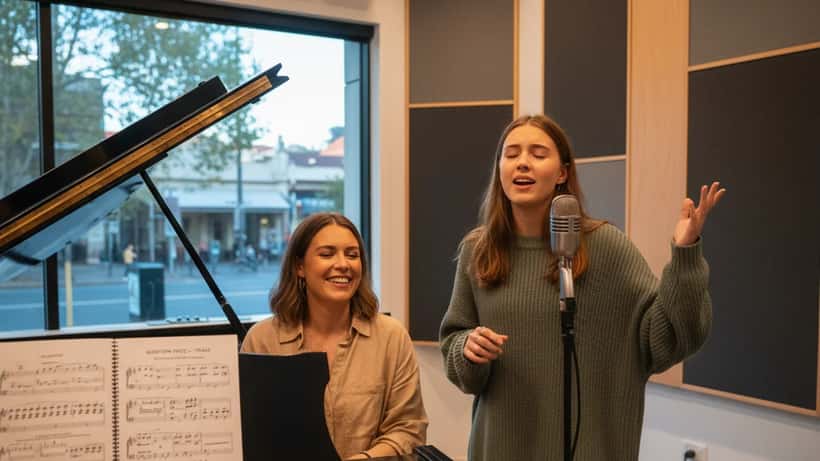
A qualified vocal coach does far more than teach you to hit notes. Working with the singing voice involves:
Breath control and support. Most untrained singers use breath inefficiently, leading to strain, limited range, and vocal fatigue. A coach teaches diaphragmatic breathing techniques that allow sustained, powerful notes without damaging the vocal cords.
Vocal health and prevention. The human voice is a delicate instrument. Overuse, incorrect technique, and environmental factors (including allergies, dehydration, and acid reflux) can cause nodules, polyps, or chronic inflammation. Voice coaches trained in vocal health can identify early warning signs before they become serious injuries requiring medical intervention.
Range development. Contrary to popular belief, vocal range is not fixed. Through targeted exercises, most singers can extend their usable range by one to two octaves over months of consistent practice.
Performance confidence. Technical skill alone doesn't win competitions or audiences. Coaches help students develop stage presence, microphone technique, emotional authenticity, and the ability to deliver under pressure — all skills that are trained, not innate.
At What Age Should Children Start Vocal Training?
Parents watching Australian Idol often wonder whether they should enrol their child in singing lessons. The answer depends on the child, but general guidelines from vocal educators suggest:
- Ages 7–10: Basic singing games, ear training, and breath awareness are appropriate. Formal technique is limited.
- Ages 10–13: Structured lessons can begin, focusing on breath support and basic technique. This period is critical because it precedes the voice change in adolescence.
- Adolescence (13–18): The voice changes significantly during this period, especially in boys. A skilled coach helps navigate this transition safely, preventing bad habits that can cause lasting damage.
- Adults: It is never too late to start. Adults typically progress faster than children because they can understand and apply instructions more analytically.
The key in all age groups is finding a coach who understands vocal anatomy and adapts technique to the student's developmental stage.
Signs You Need a Vocal Coach — Not Just YouTube Tutorials
Self-teaching from online resources is a valid starting point for casual singers. But there are clear signals that you or your child has outgrown self-directed learning:
- Persistent vocal fatigue or soreness after singing — indicates incorrect technique
- A "ceiling" that won't move despite practice — you need targeted intervention
- Nervousness or tension when performing — anxiety-based vocal issues require specific coaching approaches
- Wanting to audition professionally — the competitive landscape demands trained technique
- Any hoarseness lasting more than two weeks — this warrants both a medical check (ENT specialist) and a coaching review
In Australia, Speech Pathology Australia and the Australian Voice Association both maintain directories of qualified vocal professionals. Voice disorders causing hoarseness are well-documented in Better Health Victoria's guidance, and persistent vocal problems should always be assessed medically first.
The Business Side of Talent: What Idol Finalists Teach Us About Creative Careers
Watching Harlan Goode and his fellow finalists progress through Australian Idol also illuminates the broader reality of creative careers in 2026. Beyond raw talent and technical skill, building a sustainable career in music or performance arts requires knowledge of contracts, copyright, intellectual property, and self-promotion in the digital era.
Many young artists — and their parents — are unprepared for the legal and financial dimensions of signing with labels, licensing original compositions, or managing the proceeds of content on streaming platforms. A single hit moment, like a viral performance on national television, can generate opportunities that require immediate professional legal and financial guidance.
Expert Zoom connects aspiring performers, parents of talented children, and emerging creative professionals with tutors, vocal coaches, legal advisors, and career specialists across Australia. Whether you are looking for a qualified singing tutor for your child, seeking advice on navigating the music industry, or simply want to develop your own voice for personal pleasure, the right expert can accelerate your progress significantly.
Australian Idol 2026 has reminded the country that extraordinary voices are developed, not merely discovered. The question is whether you give your talent — or your child's — the support it deserves.
