 Emily Turner
Arsenal's emphatic 3-1 victory over Leeds United at the Emirates Stadium on October 11, 2026, delivered the kind of relentlessly physical Premier League football that newly promoted Leeds have made their trademark this season. Beyond the scoreline, the match produced something that resonates far beyond North London: three separate soft-tissue injury assessments — two involving Leeds midfielders and one Arsenal defender — all sustained in the high-speed, contact-heavy situations that Australians replay every Sunday morning in community football competitions from Cairns to Hobart.
With spring soccer competitions in full swing across New South Wales, Queensland, Victoria, and South Australia, the Arsenal-Leeds fixture is a timely prompt for the question thousands of recreational players quietly avoid: when does a match-day knock actually warrant seeing a professional?
What Happened at the Emirates — and Why It Matters in Australia
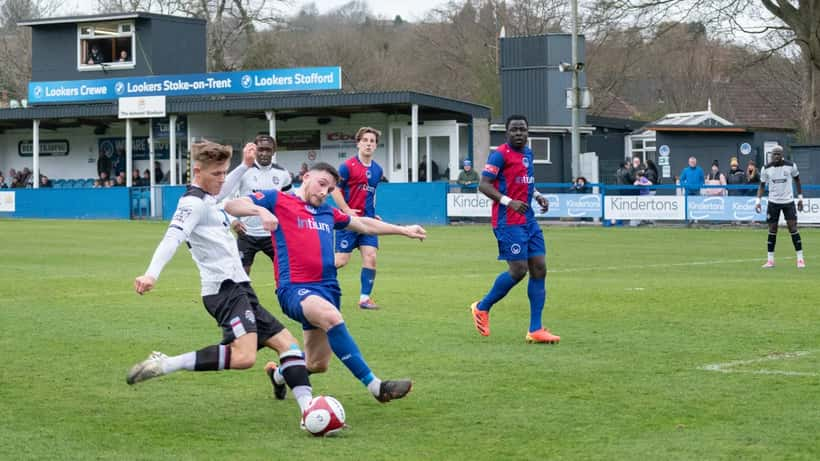
The physical narrative of Arsenal-Leeds ran through the midfield line. Leeds United's pressing game — a hallmark of their Championship-winning approach — produced high-intensity duels from the opening minutes. By the 67th minute, two separate contact incidents had generated the characteristic presentation every sports physiotherapist recognises: the brief limp, the wave to the bench, the substitution that communicates more than the commentary.
For Australian recreational footballers, this matters because the biomechanics of a high-intensity tackle at elite level are functionally identical to those in an over-35 suburban competition. The speeds differ; the joints involved do not. An inversion ankle sprain sustained by a 28-year-old Premier League midfielder operates through exactly the same ligament stress response as the one a 42-year-old weekend player experiences sliding in for a tackle on a Sunday morning.
According to the Australian Institute of Health and Welfare, sport and recreation injuries account for around 660,000 emergency department presentations in Australia each year, with lower-limb soft-tissue injuries — particularly ankle and knee sprains — representing the largest single category. Soccer is the second most common sport involved, behind Australian rules football. Leeds have featured in these same injury conversations before: an August 2026 Premier League fixture between Leeds and Brentford produced a near-identical pattern of soft-tissue exits that physios across Australia used as a teaching moment.
The Question Recreational Footballers Are Actually Asking
I took a knock to the ankle / felt something in my knee / pulled up with hamstring tightness — do I really need to see someone, or can I just ice it and rest?
This is what sports physiotherapists across Australia hear more often than any other question at a first consultation with recreational footballers. The evidence-based answer is precise: it depends on the grade of the injury — and grade can only be determined by a trained clinician.
Here is the mechanism that determines why timing matters so much:
Grade I injuries involve micro-tears in the soft tissue with the structural integrity of the ligament or muscle largely intact. They typically resolve in 7-14 days with correct early management: rest, ice, compression, elevation, and guided proprioceptive exercises. An initial assessment with a sports physiotherapist costs between AUD $90 and $150. Most patients leave with a home plan and return to play within two weeks.
Grade II injuries are partial tears — the structure is disrupted but not severed. These require 4-8 weeks of structured rehabilitation. The critical variable is early versus late treatment. A 2023 meta-analysis of 4,800 lateral ankle sprain patients published in the British Journal of Sports Medicine found that Grade II sprains treated within 72 hours of injury had a 12-month re-injury rate of approximately 22%. The same injuries presenting after three or more weeks without formal rehabilitation showed re-injury rates of 47-55%. Delayed presentation also increases average total rehabilitation cost by AUD $600-1,200 compared with early intervention.
Grade III injuries involve complete structural rupture and require specialist review regardless of presentation timing. But early diagnosis shortens the pathway to appropriate management. A torn anterior cruciate ligament left undiagnosed beyond 90 days frequently develops secondary meniscal damage — converting a single-structure problem into a multi-structure one requiring more complex and costly intervention.
Three Signals That Should Not Wait Until After the Weekend
Most recreational footballers seek help for an audible bone fracture or a joint that collapses under weight. The harder calls are the "borderline" injuries — those that feel manageable immediately but compound silently over the following days. Three presentations warrant professional assessment within 48 hours, not "after the next training session":
1. Swelling that persists after 24 hours of elevation and icing. Persistent swelling indicates either a haemarthrosis (bleeding within the joint cavity) or significant structural disruption. Neither resolves with rest alone. Unmanaged haemarthrosis can accelerate cartilage degradation over time — an outcome that no amount of subsequent icing reverses.
2. A "pop" sensation during the tackle or landing, followed by instability. A pop is not a diagnostic certainty for a complete rupture, but it is the classic presentation of Grade II-III ligament involvement, ACL disruption, or significant muscle avulsion. Self-managed approaches to "pop + instability" carry the highest published re-injury rates of any recreational football injury category.
3. Pain that migrates or changes character over 3-5 days. A lateral knee contusion on Sunday that presents as medial knee pain by Wednesday suggests ongoing joint micromovement — adjacent structures loading compensatorily for a primary injury. Left uncorrected, this compensation pattern frequently produces a second discrete injury within the same rehabilitation period.
Concrete Case: The Cost Difference Between 48 Hours and Six Weeks
Consider Daniel, a 38-year-old central midfielder playing in a Saturday afternoon competition in the western suburbs of Sydney. During the second round of October 2026 finals, he receives a challenge from behind, his right ankle inverts sharply, and he limps through the final 15 minutes to avoid letting his team down.
Scenario A — Daniel waits six weeks: He ices for three days, returns to training at week two, re-sprains during a pre-match warm-up drill at week four, and re-sprains again at week six. He presents to a physiotherapist only after the second re-sprain. Assessment reveals a Grade II lateral ligament complex injury with early chronic ankle instability — indicating the original sprain was never properly managed. Treatment at this stage: 10-12 physiotherapy sessions at AUD $130 each plus a stabilising brace ($80-$130), totalling AUD $1,380-$1,690 in rehabilitation costs. Full return-to-play timeline: 16-20 weeks. 12-month re-injury risk: over 55% given the instability pattern already established.
Scenario B — Daniel presents within 48 hours: He attends a sports physiotherapy clinic on the Monday morning. Ottawa Ankle Rules assessment confirms no fracture. Clinical examination grades the injury as Grade II lateral ligament complex with no meniscal involvement. Daniel receives a 4-week structured protocol: taping guidance, progressive proprioception training, and a graduated return-to-play program. Total cost: 4 sessions at AUD $130 = AUD $520. Full return-to-play: 5-6 weeks. 12-month re-injury risk: under 22%.
The arithmetic: AUD $860-$1,170 less in treatment costs, and more than 10 additional weeks on the pitch — from the same initial injury, separated solely by a 48-hour decision window.
What to Do Before Your Next Match
If you have sustained a knock, a roll, or a muscle pull in the last two to three weeks and have not had it professionally assessed, the Arsenal-Leeds fixture is a useful reminder that even athletes operating at the highest level cannot reliably self-manage significant soft-tissue injuries.
In Australia, sports physiotherapists and sports medicine GPs are accessible without a GP referral, and many clinics across major metropolitan areas offer same-week appointments. If you are uncertain whether your injury reaches the threshold for an in-person consultation, a telehealth triage with a qualified sports health practitioner can provide an initial assessment in 15-20 minutes and direct you to the right level of care.
The window between a five-week recovery and a five-month one is frequently just 48 hours. Connecting with a qualified sports health expert through a platform like Expert Zoom can match you to a practitioner by injury type and location — before your next Sunday session kicks off.
This article provides general health information only. For diagnosis, treatment, or advice specific to your injury, consult a qualified sports health professional.
