 Emie Wang
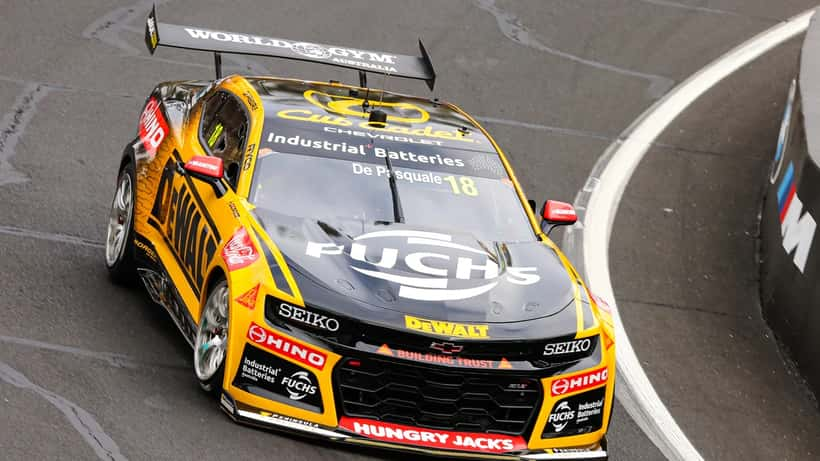
The 2026 Repco Bathurst 1000 is underway at Mount Panorama this Sunday, 11 October, with Team 18's Anton de Pasquale and co-driver Luke Holdsworth among the favourites after qualifying second in the #18 Chevrolet Camaro. But while 200,000 fans watch the Great Race unfold across six-and-a-quarter hours, a less-glamorous legal reality sits buried in the co-driver agreements signed weeks earlier — and most Australian motorsport participants have never read the indemnity clauses that could expose them to hundreds of thousands of dollars in liability if a stint goes wrong.
What Co-Driver Agreements Actually Cover
Australia's premier touring car endurance events — including the Repco Bathurst 1000 and the AirTouch 500 at The Bend — require each team's primary driver to nominate a co-driver under Motorsport Australia's National Competition Rules. What that means in practice is a legally binding arrangement between the team principal, the primary driver, and the co-driver, governing who takes the car on track and when — and critically, what happens if the car is damaged during the co-driver's stint.
At the professional level — where experienced full-timers like Luke Holdsworth and James Courtney are paired with Team 18's two Camaros — these agreements are negotiated by agents and sports lawyers. But across the hundreds of privateer, clubman, and Supercars Dunlop Series entries that use endurance co-drivers each year, the agreement is often a one-page document signed on pit lane the morning of the race. The legal consequences of that shortcut can be severe.
Motorsport Australia's NCR requires all competition participants to hold a current Competition Licence and mandates that each entrant carry a minimum level of third-party liability insurance. However, the NCR says nothing about how liability is allocated between a team and its co-driver — that is entirely a matter of private contract, left to whatever the team's standard agreement says.
The Legal Exposure Hidden in Indemnity Clauses
Most co-driver agreements in Australian motorsport include an indemnity provision requiring the co-driver to indemnify the team against damage to the vehicle caused during their time in the car. In plain English: if you crash the car while driving, you may be personally liable for the cost of repairs — up to the cap specified in the agreement, or in the absence of any cap, up to the full cost of the damage.
A current-specification Supercars Chevrolet Camaro costs between $450,000 and $600,000 to build and campaign at championship level. A serious impact — the kind Bathurst delivers reliably, from the flat-out approach to Skyline to the unforgiving barrier at Turn 2 at The Cutting — can write off the entire vehicle. Team insurance typically covers most of this loss, but many racing policies include a co-driver excess, meaning the named secondary driver carries a deductible of $20,000 to $75,000.
More critically, if the co-driver's actions are found to constitute gross negligence — overdriving in conditions that triggered a yellow flag warning, or ignoring team radio instructions during a Safety Car period — some insurers can void the policy payout and pursue the driver directly for the full amount. Under Australian common law principles of indemnity and contract, a driver who has signed a broad indemnity clause without any monetary limit has no automatic protection from that pursuit.
Australian contract law under the Competition and Consumer Act 2010 does impose some restrictions on unfair terms in standard-form consumer contracts, but co-driver arrangements between a team and a professional licensee typically fall outside those consumer protections and are treated as commercial agreements enforceable in full.
Concrete Case: When a Privateer Co-Drive Turns Expensive
Consider the situation of Alex, a 28-year-old motorsport enthusiast from Perth who competes regularly in state-level circuit racing. In September 2026, Alex is offered a co-drive in a privateer Supercars entry at the Bathurst 1000 — a dream opportunity he has worked toward for six years. The team sends him a three-page co-driver agreement. Alex signs it the same day without reading the indemnity clause.
During his opening stint at lap 47, Alex misjudges the braking zone into Turn 2 at The Cutting and makes contact with the outer barrier. The car sustains $180,000 in damage to the front quarter and roll cage. The team's event insurance pays $130,000 under the policy, but a co-driver excess clause in the policy requires the named secondary driver to cover the remaining $50,000.
Scenario A — without legal review before signing: Alex assumed that his Motorsport Australia competition licence automatically limits his financial liability. He is now facing a $50,000 claim from the team, with no contractual cap on further legal costs if the matter escalates to the New South Wales District Court. His existing private car insurance and motorsport club membership do not cover co-driver indemnity claims. After four months of dispute correspondence, he settles for $35,000 out of pocket — plus $5,000 in legal fees defending the claim.
Scenario B — with a legal review before signing: A Melbourne sports law specialist reviews the agreement for $1,500 and identifies that the indemnity clause contains no monetary cap and no carve-out for incidents attributable to unforeseeable mechanical failure. The lawyer negotiates two amendments with the team: a $15,000 co-driver liability cap, and a clause excluding incidents where driver error was triggered by brake or tyre failure. When the same accident occurs, Alex's maximum out-of-pocket exposure is $15,000 — a $35,000 saving achieved for a $1,500 legal review.
The if/then logic is straightforward: if you co-drive at Bathurst 1000 without a reviewed agreement, then a single incident can result in $35,000–$75,000+ in personal liability. If you have a solicitor review the agreement before signing, then you can cap, restructure, or exclude that exposure for a fraction of the cost.
What the National Competition Rules Actually Say
Under Motorsport Australia's 2026 NCR General Requirements, all competition participants must hold a valid Competition Licence of the applicable grade, and all entrants must carry public liability insurance of at least $20 million per event. However, this public liability requirement protects spectators, officials, and third parties — not the contractual relationship between the team and its co-driver.
The NCR is deliberately silent on co-driver liability caps, leaving teams free to structure indemnity obligations as they see fit. In the professional Supercars Championship, teams operating under the category's commercial and sporting rules follow a more standardised framework, and full-time co-drivers typically have their agreements drafted by the same lawyers who handle the primary driver's contract. But for any entrant below the main championship level — the Dunlop Super2 Series, state championship, or club endurance events — there is no mandated standard agreement and no regulatory floor on co-driver liability.
According to Motorsport Australia's 2026 Motorsport Manual, participants racing at category-licensed events must comply with the General Conditions of Competition, which include confirmation that the entrant carries appropriate insurance. The Manual does not require that insurance to cover co-driver contractual indemnity liability, and most standard motorsport policies offered in Australia explicitly exclude this category of claim unless a co-driver rider is added.
What to Do Before Accepting Any Co-Drive
If you are considering a co-driver arrangement — whether for the Bathurst 1000, the Sandown 500, Phillip Island, or a regional endurance championship — three steps before signing will protect you:
1. Have a sports solicitor review the indemnity clause. A two-hour review by an Australian sports law specialist typically costs $1,200–$2,500 and will identify whether the indemnity is capped, whether there are carve-outs for mechanical failure, and whether the team's insurance covers your exposure as a co-driver.
2. Check your existing motorsport insurance for co-driver cover. Most standard motorsport club policies cover the primary driver only. Confirm whether you need a co-driver liability rider — typically $500–$1,500 per year for club-level cover — and add it before the event, not after.
3. Request the team's insurance summary. Before signing, ask the team for a one-page insurance certificate confirming that you are a named insured on the event policy, the policy's co-driver excess amount, and whether gross negligence is excluded from the payout.
The 2026 Bathurst 1000 is the most watched motorsport event in Australia. For Anton de Pasquale and Luke Holdsworth, the challenge is winning one of the most demanding races in the world. For the thousands of Australian motorsport enthusiasts who accept co-driver roles each season — from Mount Panorama to Phillip Island — the challenge starts much earlier, in the legal fine print of an agreement that most never stop to read.
This article contains general legal information only and does not constitute legal advice. Readers with specific co-driver agreement queries should consult a qualified Australian solicitor.
