 Isla Henderson
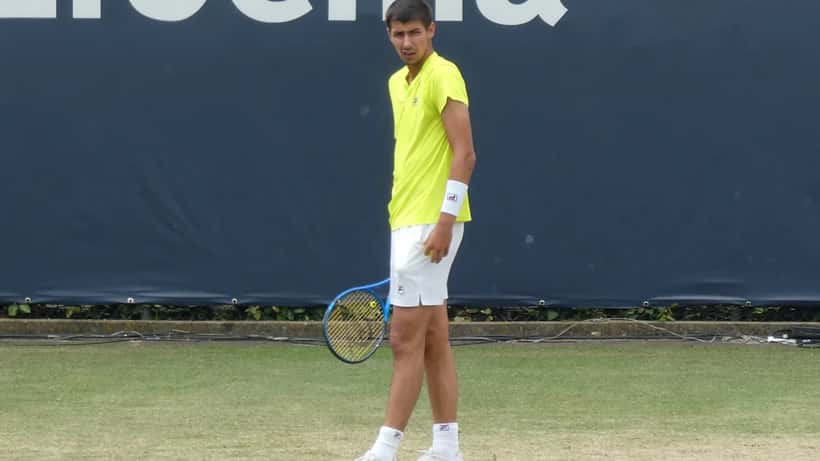
Alexei Popyrin walked onto Court Central at the Tennis Club de Geneve this week and knocked out the world's top seed. His straight-sets dismissal of Taylor Fritz — 6-4, 6-4 — sent the tournament bracket into chaos and set the Australian qualifier up for a quarterfinal clash with Casper Ruud, the three-time Geneva champion. The result is Popyrin's biggest scalp on clay in 2026 and a genuine signal that Australia's ATP generation is growing up.
But beyond the tennis story is a financial one. At stake at the 2026 Gonet Geneva Open is a total prize purse of €612,620. The winner takes €93,175. Quarterfinalists earn €18,515. Semifinalists collect €31,955. These are not hypothetical numbers — they land in a player's account in the weeks following the tournament, often from a Swiss tournament to an Australian bank account, which creates a set of tax and financial planning obligations that many young athletes are underprepared for.
What ATP Prize Money Actually Looks Like After Tax
Australian professional tennis players competing on the ATP Tour earn income across multiple jurisdictions in a single calendar year. A player who competes in Melbourne (AUS), Geneva (Switzerland), Paris (France), and New York (USA) in one year has generated income in four tax jurisdictions — each with its own rules on withholding, residency thresholds, and treaty provisions.
Switzerland withholds tax on prize money at source for non-residents, typically at 20%. Australia's Double Taxation Agreement with Switzerland may allow a credit for that withholding against Australian tax obligations — but only if properly claimed. According to the Australian Taxation Office, Australian residents are taxed on worldwide income, and foreign income tax offsets must be calculated and reported correctly to avoid double taxation.
For a player like Popyrin — who, at his career trajectory, may earn €150,000–€400,000 in prize money across a European clay season — the difference between structured and unstructured financial advice can be tens of thousands of dollars per year.
The Three Layers Athletes Need
ATP-level tennis earnings sit at the intersection of three professional domains that most players initially navigate alone:
1. Tax compliance across jurisdictions. An accountant with international sports income experience is not optional for players competing in Europe, Asia, and North America. A standard Australian tax accountant may not have the specific expertise to handle Swiss withholding credits, US non-resident alien withholding (30% applies unless a treaty override is applied), or the French flat tax on prize income.
2. Foreign currency management. Prize money in euros and US dollars arriving into Australian accounts creates exchange rate exposure. A financial adviser can structure currency conversion in ways that reduce loss from adverse movements during the weeks between earning and receiving.
3. Long-term wealth building. The average professional tennis career at ATP 250 level spans eight to twelve active years. Career earnings of $1–4M AUD are meaningful, but without superannuation contributions, investment structures, and post-career planning — started during the peak earning years — many athletes reach retirement age without the financial security their career should have enabled.
What Weekend Athletes Need to Know Too
Popyrin's story matters beyond professional sport. Australia has one of the highest rates of amateur sports tournament participation globally, and prize money at amateur and semi-professional levels — golf club competitions, regional tennis events, surf contests, cycling criteriums — carries tax implications that most participants don't know about.
The ATO's position is clear: prize money is assessable income if earned as part of a profit-making activity or business. For a semi-professional athlete competing regularly and earning prize money, even occasional tournament winnings may need to be declared. For a genuine recreational competitor who occasionally wins a club prize, the treatment differs — but the boundary is not always obvious and the ATO audits this area.
A tax accountant or financial planner can clarify which side of the line your earnings fall on — and help structure ongoing activity in the most tax-efficient way available.
Why Geneva Matters Beyond the Scoreboard
The Geneva Open runs in the final week before Roland Garros. For players like Popyrin, a deep run here provides ranking points, momentum, and prize money that funds the Paris preparation. But it also signals something for Australian tennis: a generation of male players — Popyrin, de Minaur, Thompson, Purcell — who are competing at the sharp end of ATP draw sheets on the hardest surfaces in the world.
As these careers progress, the financial decisions made in 2026 will compound across the next decade. The players who build professional structures around their earnings — rather than responding to tax obligations retrospectively — will have meaningfully different outcomes than those who don't. As explored in our look at what elite golfers' major earnings teach Australian high earners about wealth management, the principles apply across every sport where tournament earnings accumulate across jurisdictions and seasons. The forehand is only half the game.
Australians at any income level with earnings from multiple sources, foreign income, or prize money can connect with a qualified financial adviser or tax expert through ExpertZoom.
