 Olivia Miller
Alexandra Eala at Roland Garros 2026: The Health Advice Young Athletes Need Before a Grand Slam
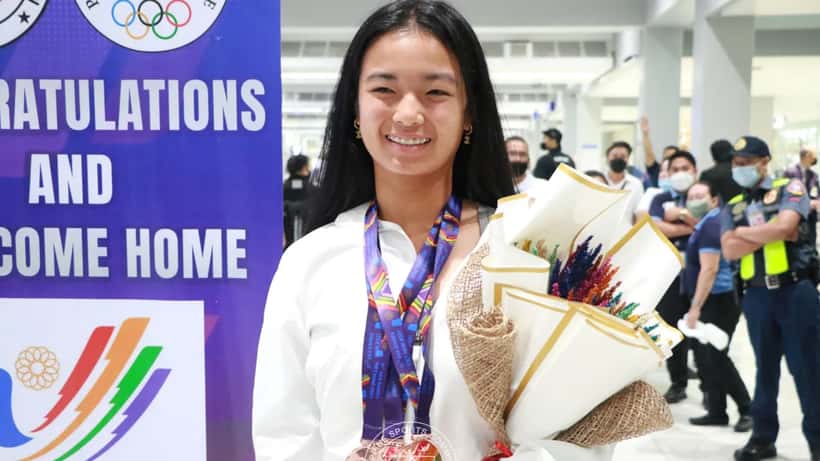
Alexandra Eala, 20, lost her first-round match at the Strasbourg Open on 18 May 2026, falling to Ukrainian qualifier Oleksandra Oliynykova 6-3, 5-7, 3-6. The defeat is a setback, but it will not define her week — the French Open main draw begins on 24 May, and the Filipino world number 38 is preparing for her most anticipated clay court campaign to date. What the Strasbourg loss does highlight, however, is a question sports medicine specialists raise constantly with elite players at this stage of the season: how does a young athlete maintain physical and mental health through the relentless grind of the clay court swing?
A Career at an Inflection Point
Eala reached a career-high ranking of world number 29 on 16 March 2026 — the highest any Filipino player has ever ranked on the WTA Tour. Her 2026 season record of 18 wins and 12 losses reflects someone who belongs at the top level but is still consolidating her place there.
The Italian Open in Rome earlier this month offered a glimpse of what she is capable of. On 6 May, she defeated Magdalena Frech 6-0, 3-6, 6-4 in her first career win in Rome. She followed it with a straight-sets victory over Wang Xinyu on 8 May before losing to world number 2 Elena Rybakina in the third round on 10 May. Competing against the world's best on one of Europe's most demanding clay venues, Eala held her own.
Now, heading into Roland Garros, she will partner Canadian Victoria Mboko in women's doubles alongside her singles campaign — a combined workload that puts particular demands on a young body already navigating a long European clay swing.
The Physical Demands of the Clay Court Swing
Sports medicine specialists who work with professional tennis players consistently identify the clay court season as one of the highest injury-risk periods of the year. Clay slows the ball down and produces longer rallies, which means more strokes per point and significantly more time on court per match. The surface is also more forgiving on joints than hardcourt but creates different biomechanical stresses that can accumulate over weeks.
For players aged 18 to 22, the clay swing presents a particular challenge. Young athletes often have higher pain thresholds, are less attuned to early warning signs of overuse injury, and are under competitive and financial pressure to continue playing through discomfort that would cause an older professional to withdraw.
The injuries most associated with clay court play include:
- Adductor and hip flexor strains from the lateral sliding movement clay requires
- Patellar tendinopathy from repeated knee loading across long rallies
- Lumbar stress fractures in young players whose spinal growth plates have not fully consolidated
- Rotator cuff impingement from the high-arc topspin groundstrokes that clay tactics demand
What the Best Young Players Do Differently
Eala's longevity at the top level will depend in large part on the health protocols surrounding her schedule. Sports medicine practitioners who advise elite players identify several practices that distinguish athletes who sustain long careers from those who burn out early.
Load monitoring is everything. The best professional teams track training load, match load, and travel fatigue using objective metrics — not just how a player says they feel. The clay swing compounds load invisibly: players often feel fine while inflammation and micro-damage accumulate in tendons and muscle fibres.
Recovery between tournaments is non-negotiable. The gap between Strasbourg (ending this week) and Roland Garros (starting 24 May) is less than one week. Athletes who use that gap for rest and light maintenance work — rather than heavy training — arrive at the Grand Slam fresher. Players who panic after a first-round loss and over-train in the gap often arrive carrying fatigue.
Mental health is a physical health issue. At 20, competing with national expectations as the best Filipino player in history while preparing for a Grand Slam is a significant psychological load. Sleep quality, appetite, and concentration are all clinical indicators that sports psychologists and sports medicine practitioners monitor together.
When Should a Young Athlete Seek Professional Help?
The professional tour has physiotherapists, doctors, and sports psychologists on site at Grand Slams. But for the vast majority of young athletes — those competing at amateur, club, or national junior level — access to this level of support requires actively seeking it out.
The Australian Institute of Sport's guidelines on youth athlete health and national sports medicine bodies recommend that any young athlete experiencing recurring pain at the same site across multiple training sessions should be assessed by a sports physiotherapist before continuing at full load. The concern is not the acute injury — it is the overuse injury that develops slowly and presents as an acute crisis when it finally breaks through the athlete's pain threshold.
For young Australians involved in competitive sport at any level, the Eala model is instructive: structured scheduling, professional support around recovery, and a willingness to accept defeats as data points rather than catastrophes. She lost in Strasbourg but is healthy and ready for Roland Garros. That is the outcome good sports medicine practice is designed to produce.
The Doubles Consideration
Eala's decision to partner Mboko in doubles at Roland Garros adds load at a moment when most singles players are managing their bodies carefully. Doubles play adds match time, different movement patterns, and the psychological demands of partnership — but it also develops different tactical skills and is often a source of confidence for players navigating a difficult singles draw.
From a sports medicine perspective, the key question for a player combining singles and doubles at a Grand Slam is hydration, sleep, and recovery window management. Doubles matches often run late and can leave players with insufficient recovery time before a singles match the following morning.
What Australian Young Athletes Can Take From Eala's Season
For Australian families with children or teenagers in competitive sport, Eala's 2026 season offers a practical lesson: elite performance and long-term health are not in competition — they require each other. A young athlete who understands load management, builds a relationship with a sports physiotherapist, and has psychological support around competitive pressure is far more likely to reach their potential than one who trains harder and rests less.
Sports medicine specialists who understand the physical demands of your child's specific sport can design health and training frameworks that support performance rather than undermine it. If your young athlete is experiencing recurring pain, disrupted sleep, or loss of motivation, those are signals worth investigating early. For related reading, see our coverage of young Australian tennis player Millie Elliott's injury prevention approach and clay court injury risks for professional players.
This article provides general health information only and is not a substitute for advice from a qualified health professional. Consult your doctor or a registered sports physiotherapist for guidance specific to your situation.
