 David Kelly
Prime Minister Anthony Albanese announced new fuel security powers on Saturday, pledging that the federal government will underwrite fuel cargo purchases by private companies to stabilise Australia's fuel supply amid escalating Middle East tensions. The move comes after petrol prices across Australia spiked to multi-year highs — and it raises an urgent question for the country's 15 million registered vehicle owners: what does fuel instability actually cost you, and how do you reduce it?
Why Albanese Stepped In: A Fuel Supply Crisis Explained
Australia imports approximately 90 percent of its refined fuel. Unlike countries with large domestic refining capacity, Australia is highly exposed to global disruptions — and the US-Israel conflict with Iran has created exactly that kind of disruption. The government's new powers allow it to underwrite fuel cargoes so private companies can bid confidently on international markets without fear of being outbid or cut off.
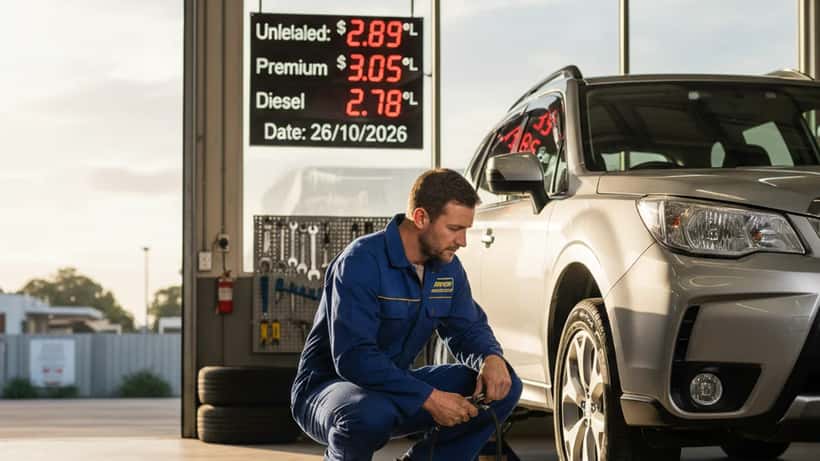
Albanese described the move as being "over-prepared rather than responding to an immediate crisis." But for everyday Australians, the impact is already being felt at the pump. Average regular unleaded petrol prices in capital cities have risen significantly through March 2026, with Perth motorists tracking fuel via FuelWatch reporting prices near recent cycle highs.
The Australian Government's FuelWatch service allows Western Australian drivers to find the cheapest fuel within a suburb-by-suburb search — and it reflects just how volatile fuel pricing has become in 2026.
What Rising Petrol Costs Mean for Your Vehicle Budget
For Australian households, fuel costs represent one of the top three recurring expenses after housing and groceries. When fuel prices spike, the ripple effects go beyond what you spend at the bowser. They affect:
Driving behaviour: Many drivers delay services and maintenance when money is tight, accelerating long-term vehicle deterioration. A car running on degraded engine oil or with poorly inflated tyres burns significantly more fuel — creating a feedback loop of increased costs.
Vehicle value: A poorly maintained vehicle depreciates faster. In a fuel-cost-sensitive market, buyers pay attention to service history. A clean, stamped service book directly supports resale value.
Insurance exposure: Vehicles with deferred maintenance are more likely to experience mechanical failure, which can affect liability in accident scenarios. Some comprehensive insurance policies include exclusions for wear-and-tear failures.
Five Ways to Cut Fuel Costs That Your Mechanic Already Knows
A qualified mechanic can identify changes that will directly reduce your fuel consumption without requiring you to buy a new vehicle. These are the most impactful:
1. Correct tyre pressure: Under-inflated tyres increase rolling resistance, costing up to 3 percent more fuel per tank. Checking and adjusting tyre pressure takes less than five minutes and costs nothing if you use a petrol station gauge.
2. Engine air filter replacement: A clogged air filter forces the engine to work harder, increasing fuel consumption by up to 10 percent. Most mechanics replace filters at every second service — but many Australians skip interim checks.
3. Spark plug condition: Worn spark plugs cause incomplete combustion, wasting fuel. Replacing them at the manufacturer's recommended interval (typically every 30,000 km for standard plugs) pays for itself in improved economy within months.
4. Fuel system cleaning: Carbon deposits in fuel injectors reduce spray efficiency. A professional fuel system clean every 50,000 km optimises combustion and is particularly valuable for older vehicles.
5. Wheel alignment: Misaligned wheels create drag, increasing tyre wear and fuel consumption simultaneously. If your vehicle pulls to one side, a wheel alignment — typically $80–$120 at a reputable workshop — is one of the most cost-effective maintenance investments you can make.
What the Government's Fuel Powers Won't Fix
Albanese's fuel security measures are designed to protect supply availability — not to lower pump prices. The government has made clear it is not introducing price caps or fuel subsidies. That means the burden of managing fuel costs ultimately falls on individual drivers.
Australia's Fair Work Commission and consumer protection framework do not currently provide mechanisms for workers to claim fuel cost offsets — although some enterprise agreements include allowances for employees using personal vehicles for work purposes. If you drive for work, a tax accountant or financial adviser can help you structure legitimate vehicle expense deductions correctly.
Find a Trusted Mechanic Before Costs Rise Further
As Australia's fuel situation evolves through 2026, having a trusted, qualified mechanic is more valuable than ever. A mechanic who knows your vehicle's history can identify which maintenance tasks are genuinely urgent and which can be deferred — giving you financial control without compromising safety.
Expert Zoom connects Australian drivers with verified, reviewed mechanics and automotive specialists across the country. Whether you need a fuel efficiency audit, a pre-purchase inspection, or a regular service from someone you can trust, the right expert is listed.
This article provides general information only. For specific advice on vehicle maintenance costs, insurance implications, or tax deductions related to vehicle use, consult a qualified mechanic, financial adviser, or tax professional.
