 Emily Turner
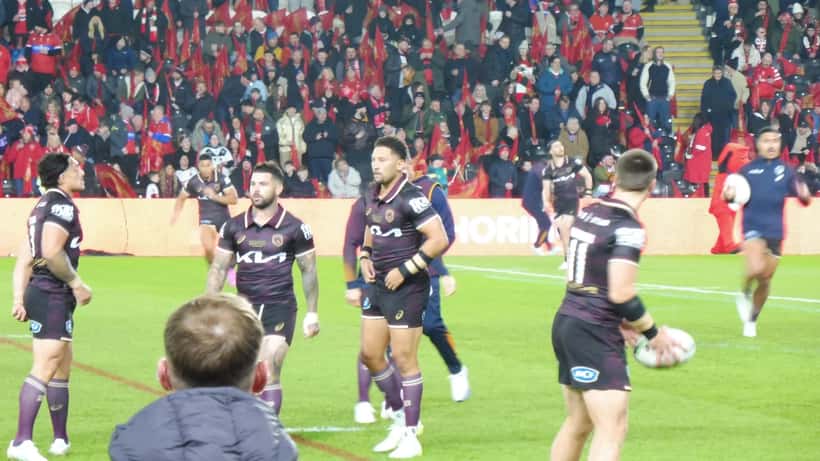
Adam Reynolds confirmed on 9 February 2026 that the current NRL season will be his last, after captaining the Brisbane Broncos to their first premiership in 19 years in 2025. He plans to transition into a coaching role at the club from 2027. Then, in Round 10 on 5 May 2026, the veteran halfback suffered a head knock in a match against the Sydney Roosters and was ruled out for the Broncos' clash against the Manly Sea Eagles. For one of the NRL's most decorated players entering his final weeks on the field, a head injury in a retirement season raises serious questions about concussion management, return-to-play protocols, and when a sporting career should end.
Reynolds' Head Knock and the Retirement Calculus
Reynolds is not the first NRL veteran to suffer a head injury in his final season. The intersection of age, accumulated career impact, and the desire to finish strongly creates a complex medical and personal picture. For Reynolds, already planning his coaching career, the decision to sit out Round 10 was straightforward. For many other players — especially those without a confirmed next chapter — the calculation is far harder.
The Australian NRL follows strict Head Injury Assessment (HIA) protocols, which require players who show signs of concussion to undergo an immediate assessment by team medical staff. A player who fails the HIA is removed from the field and cannot return in the same game. Under the NRL's graduated return-to-play (GRTP) framework, a player must pass a series of progressive stages before being cleared for full-contact training and match play.
Understanding Concussion in NRL Players
Concussion is a form of traumatic brain injury caused by a direct or indirect blow to the head that causes the brain to move rapidly inside the skull. Symptoms include headache, dizziness, memory problems, slowed reaction time, and in some cases loss of consciousness.
What makes concussion management particularly complex in elite sport is the phenomenon of post-concussion syndrome — where symptoms persist for weeks or months after the initial incident — and the emerging research on Chronic Traumatic Encephalopathy (CTE), a neurodegenerative condition found in the brains of former contact-sport athletes who sustained repeated head injuries.
In Australia, CTE research has received increasing attention following the deaths of former NRL and AFL players whose post-mortem brain examinations revealed the condition. The Australian Sports Brain Bank, established in 2018, has been a key research centre, with studies confirming CTE findings in Australian Rules and rugby league players.
For current players, the key implication is this: each concussion episode increases the statistical risk of further concussions and longer recovery times. A veteran player entering a retirement season with accumulated career impacts faces a different risk profile than a 21-year-old at the beginning of their career.
What the Evidence Says About Later-Career Head Injuries
Research published in the British Journal of Sports Medicine has found that the risk of prolonged concussion symptoms increases with age and with the number of previous concussions. Players over 30 — the bracket in which most NRL veterans fall at the end of their careers — tend to have slower recovery times than younger athletes.
The practical implication: when a veteran player like Reynolds suffers a head knock in a farewell season, the decision to return to play is not merely about symptom resolution. It should also factor in the cumulative burden of a long career in contact sport and the potential long-term neurological consequences.
This is not an argument against Reynolds playing on. The NRL's protocols, if followed correctly, are designed to manage exactly this risk. It is an argument for the importance of proper medical oversight — and for athletes, regardless of career stage, to take head injuries seriously rather than treating them as minor setbacks to push through.
When Should an Australian See a Doctor After a Head Injury?
Outside professional sport, head injuries are common and often undertreated. In Australia, approximately 160,000 people are hospitalised with traumatic brain injury each year, according to the Australian Institute of Health and Welfare. Many more experience mild concussions that are never assessed by a medical professional.
The signs that warrant immediate medical attention include:
- Loss of consciousness, even briefly
- Confusion, disorientation, or memory gaps around the time of the injury
- Persistent or worsening headache
- Nausea or vomiting
- Sensitivity to light or noise
- Difficulty concentrating or feeling "foggy" in the hours after injury
- In children: irritability, difficulty feeding, and unusual crying
Symptoms that appear hours after a head injury, rather than immediately, can be a sign of a more serious underlying injury and should never be ignored. The rule for any head injury sustained during sport — whether NRL, suburban rugby league, AFL, or weekend football — is that symptoms justify medical assessment. There is no safe threshold below which symptoms can be dismissed.
The Bigger Picture for Australian Recreational Athletes
Reynolds' case illustrates a principle that applies far beyond elite sport. Australians play contact sports at every level — NRL, AFL, rugby union, soccer, boxing, and martial arts — and head injuries occur regularly at community, school, and amateur levels, often with far less medical support than a professional NRL club provides.
A general practitioner or sports medicine doctor can assess a concussion, advise on the appropriate recovery period, and refer for specialist neurological assessment when needed. The critical error — common at all levels of sport — is returning to contact activity before symptoms have fully resolved. A second impact syndrome, where a second concussion occurs before full recovery from the first, can cause catastrophic neurological damage.
If you or someone you know has sustained a head injury during sport and is experiencing any persistent symptoms, a consultation with a general practitioner or sports medicine specialist is the appropriate first step. A medical expert on Expert Zoom can guide you through the right steps for assessment and safe return-to-sport planning.
Reynolds' Legacy and the Concussion Conversation
Adam Reynolds will retire as one of the finest halfbacks of his generation. His farewell season at the Broncos, injury notwithstanding, is a chance for Australian sport to celebrate a remarkable career. It is also a moment to acknowledge the risks that players at every level carry — and the importance of taking those risks seriously.
Head injury management in Australian rugby league has improved substantially over the past decade. But the research on long-term outcomes is still developing, and the obligation to protect players — professional and amateur alike — remains as pressing as ever.
