 David Kelly
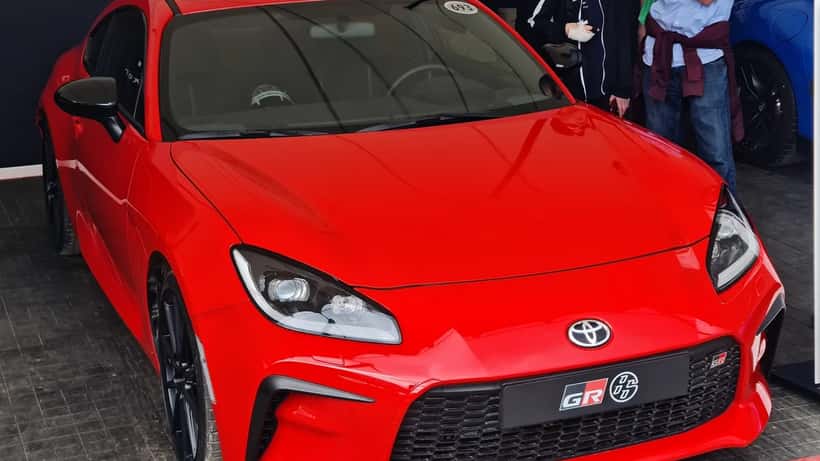
2028 Toyota GR86 Goes Mild Hybrid: What Australian Drivers and Mechanics Should Prepare For
Toyota confirmed in April 2026 that the next-generation GR86 sports car will adopt a 48-volt mild hybrid powertrain when it arrives in 2026-28, marking the end of the model's collaboration with Subaru and introducing Mazda as a new engineering partner. The announcement sent shockwaves through the sports car community — but it also raised a practical question that matters just as much as the horsepower figures: are Australian mechanics ready to service a new generation of lightweight hybrid sports cars?
What Toyota Has Announced About the 2028 GR86
The next-generation GR86 will be built around a 2.0-litre naturally aspirated four-cylinder engine paired with a 48-volt mild hybrid system. Power output is expected to sit at around 162 kW and 216 Nm — a step down from the current model's 174 kW — but the mild hybrid system is designed to improve throttle response and fuel efficiency rather than provide a raw power boost.
Key confirmed changes include:
- 48-volt mild hybrid architecture: The 48V system adds an electric motor-generator to assist the petrol engine, primarily recovering braking energy and reducing fuel consumption.
- End of the Subaru BRZ twin: Toyota and Subaru's co-development arrangement will not continue into the new generation. The BRZ name may not survive.
- Mazda involvement: Mazda is expected to play a role in platform or powertrain development, a first for the GR86 lineage.
- Manual transmission retained: Toyota has confirmed the 6-speed manual will remain an option, alongside a new 8-speed automatic.
- Rear-wheel drive confirmed: The sports car's fundamental character — lightweight, RWD, driver-focused — will be preserved.
The current GR86 has two to three years left on sale before the new generation arrives, giving owners and mechanics time to prepare.
Why Mild Hybrid Systems Change the Servicing Equation
Traditional petrol sports cars like the current GR86 are relatively straightforward to service. A 48-volt mild hybrid introduces several new elements that independent mechanics and dealership technicians across Australia will need to understand.
The 48V Battery System
Unlike full hybrid vehicles such as the Toyota Camry Hybrid or a plug-in electric vehicle, a 48-volt mild hybrid does not power the vehicle on electricity alone. However, it does add a lithium-ion or lead-carbon auxiliary battery pack that operates at higher voltage than a standard 12V car battery. This battery requires specialised handling during servicing, particularly during brake system work, air conditioning maintenance, and any electrical diagnostics.
Key considerations for Australian mechanics:
- Voltage awareness: 48V systems can deliver a mild but unpleasant electric shock. Technicians must follow manufacturer safety protocols before disconnecting any high-voltage components.
- Regenerative braking components: The motor-generator integrated into the drivetrain changes how braking energy is handled. Brake fluid service intervals and pad wear patterns may differ from conventional petrol models.
- Software-driven diagnostics: Mild hybrid systems rely heavily on engine management software. Fault codes for 48V systems require manufacturer-specific diagnostic tools — generic OBD-II scanners may not access all relevant data.
Cooling and Thermal Management
Mild hybrid systems add complexity to the vehicle's thermal management. The 48V battery has its own cooling loop in many configurations, meaning mechanics need to understand a secondary cooling circuit alongside the main engine coolant system. Flushing or topping up the wrong circuit is a mistake that could be costly.
Warranty and Approved Parts
Toyota's dealer network will handle warranty servicing, but independent mechanics who want to work on the 2028 GR86 after the warranty period expires will need to invest in updated diagnostic software and potentially new tooling. Australian consumer law under the Competition and Consumer Act 2010 (Cth) protects the right of vehicle owners to use independent repairers without voiding their warranty — provided genuine or equivalent-specification parts and correct procedures are used. According to the Australian Competition and Consumer Commission (ACCC), manufacturers cannot require consumers to use dealer servicing to maintain warranty coverage.
What GR86 Owners Should Ask Their Mechanic
If you are a current GR86 owner or planning to buy the new model when it arrives, these are the right questions to ask any mechanic before booking a service:
- Are you trained on 48V mild hybrid systems? Not all mechanics will be familiar with the safety protocols specific to 48-volt architectures.
- Do you have manufacturer-specific diagnostic software? Access to Toyota's technical data stream is important for accurate fault diagnosis.
- Have you serviced other Toyota hybrid models? Experience with the Corolla Hybrid or C-HR hybrid powertrains is a reasonable proxy.
- Do you stock or have access to OEM-spec 48V battery components? Aftermarket options will emerge, but quality and compatibility must be verified.
A qualified mechanic who has invested in hybrid technology training will save you significant money and headaches compared to one attempting to service the vehicle without the right tools or knowledge.
The Bigger Picture for Australian Automotive Servicing
The GR86 is not the only sports car moving toward electrification. Honda's new Prelude Hybrid has already arrived in Australia, and the broader trend toward 48V mild hybrid systems in performance and everyday vehicles is accelerating rapidly. Infrastructure Australia's 2024 Infrastructure Plan has acknowledged the growing need for EV and hybrid-capable servicing infrastructure, particularly in regional areas where fewer specialist mechanics are currently available.
For Australian drivers, this creates a clear call to action: find a mechanic who is genuinely upskilled in hybrid technology before your next vehicle needs service, not after a fault light has appeared. Expert Zoom connects Australians with experienced automotive specialists who can assess hybrid servicing needs — whether you drive a GR86, a BYD, or any increasingly electrified vehicle on Australian roads.
The 2028 Toyota GR86 mild hybrid is a sign of where performance motoring is headed. The mechanics who prepare now will be the ones trusted to keep them running at their best.
For further information on hybrid vehicle safety and consumer rights when choosing a mechanic, visit the ACCC's official vehicle servicing guidance at accc.gov.au.
Related reading:
