 Jonas
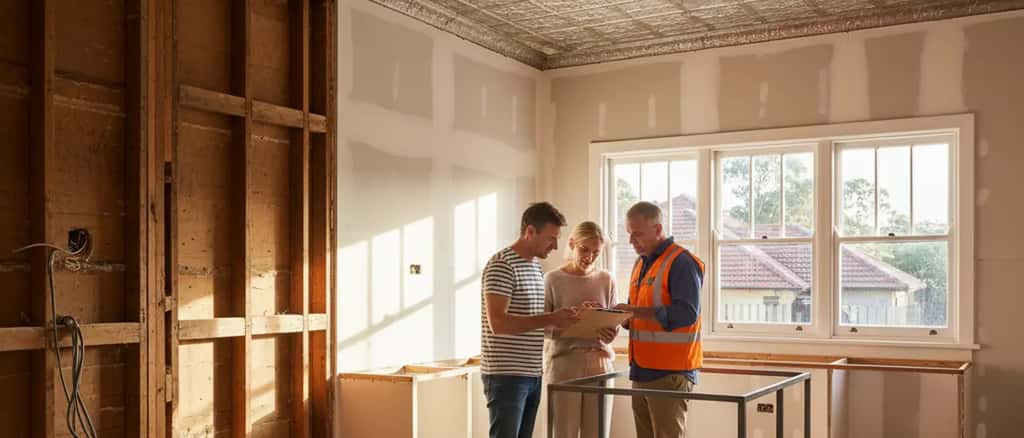
Jonas Australians spent over $12.3 billion on home renovations in 2023, yet nearly one in three renovation projects experiences cost blowouts or delays [Housing Industry Association, 2023]. Finding the right home renovation contractor makes the difference between a smooth upgrade and a stressful ordeal. Here are seven criteria that separate reliable contractors from the rest — and how to vet each one before you sign.
1. Verify Licensing and Insurance Coverage
Every state and territory in Australia requires home renovation contractors to hold a valid building licence. In New South Wales, this means a licence issued by NSW Fair Trading; in Victoria, by the Victorian Building Authority (VBA). Operating without one is illegal for work valued above $5,000 in most jurisdictions [Australian Building Codes Board, 2024].
Before signing any contract, request the contractor's licence number and verify it through your state's online registry. Confirm they carry both public liability insurance (minimum $10 million is standard for residential work) and workers' compensation cover. If a contractor cannot produce these documents on request, walk away — you could be personally liable for injuries on your property.
Key point: A valid licence and current insurance are non-negotiable. Check your state's online licence verification tool before any discussion about quotes or timelines.
2. Check a Portfolio of Completed Projects
Reputable home renovation contractors maintain a portfolio of past work, ideally with before-and-after photos, project scope descriptions, and completion timelines. Ask for at least three projects similar in scale to yours — a bathroom refit contractor may not have experience with structural extensions.
What to Look For in a Portfolio
Consistency matters more than flashy photos. Look for evidence of:
- Clean finishes on joinery, tiling, and paintwork
- Logical layout changes that improve natural light or flow
- Projects completed within the stated timeframe
Request permission to visit a recently completed site. A contractor confident in their work will agree without hesitation. If every reference is "unavailable," treat it as a warning sign.

3. Compare Itemised Quotes From Multiple Contractors
The Housing Industry Association (HIA) recommends obtaining a minimum of three detailed quotes for any renovation exceeding $20,000 [HIA, 2024]. Each quote should break costs into labour, materials, permits, and contingency — not just a single lump sum.
A quote significantly lower than the others often signals corner-cutting on materials or unlicensed subcontractors. The cheapest option rarely delivers the best outcome — focus on value and transparency instead.
4. Understand the Contract Before You Sign
Australian consumer law requires a written contract for residential building work over $5,000 in most states [Australian Consumer Law, Schedule 2]. The contract must include the total price (or a method for calculating it), a description of the work, start and completion dates, and a process for variations.
Pay close attention to the variations clause. Renovation projects routinely encounter hidden issues — asbestos behind walls, termite damage in framing, or outdated wiring. A well-drafted contract specifies how variations are quoted, approved, and billed. Without this clause, disputes become expensive.
Consider the scenario of Tom and Sarah in Melbourne, who commissioned a $45,000 kitchen renovation. Midway through demolition, the contractor discovered non-compliant plumbing behind the existing cabinetry. Because their contract included a written variations process, the additional $3,200 in replumbing was quoted, approved via email, and documented before work continued. Without that clause, they would have faced a verbal estimate and no recourse if the price inflated further.
5. Evaluate Communication and Project Management Style
Home renovation contractors who communicate clearly before the project starts tend to maintain that standard throughout. During the quoting phase, assess how quickly they respond to emails, whether they explain technical decisions in plain language, and if they provide a realistic timeline rather than an optimistic promise.
Red Flags in Early Communication
- Takes more than five business days to return a call or email
- Avoids putting commitments in writing
- Cannot name specific subcontractors they work with regularly
- Pressures you to sign quickly with "limited-time" pricing
Strong contractors use project management tools or at least weekly progress updates with photos. Ask how they handle schedule changes and who your day-to-day contact will be on site. A dedicated project manager is standard for renovations above $50,000.

6. Read Reviews and Contact Past Clients Directly
Online reviews on Google, ProductReview, and HiPages provide useful signals, but direct conversations with past clients reveal what reviews cannot. Ask the contractor for two or three recent clients willing to take a five-minute phone call.
When speaking to references, focus on specific questions:
- Did the project finish on or near the original timeline?
- Were there unexpected costs, and how were they handled?
- How did the contractor manage defects or punch-list items after handover?
- Would you hire them again for a different project?
A contractor with five-star reviews but no willingness to share client contacts may be managing their online reputation more carefully than their build quality. Direct references remain the most reliable indicator of workmanship and professionalism in the Australian renovation market.
7. Confirm Warranty Terms and Defect Liability Period
Under Australian state legislation, home renovation contractors must honour a defect liability period — typically six to twelve months after project completion — during which they are required to return and fix any defects at no charge. In Queensland, the statutory warranty for structural work extends to 6.5 years [Queensland Building and Construction Commission, 2024].
Key takeaway: Always confirm the warranty terms in writing before the final payment. Ask specifically about structural warranties, waterproofing guarantees, and the process for lodging a defect claim. A contractor who stands behind their work will provide this without resistance. State consumer affairs agencies such as Consumer Affairs Victoria publish detailed guides on your rights during and after a renovation.
The warranty should cover both materials and workmanship. If the contractor uses subcontractors for specialist trades (electrical, plumbing, waterproofing), confirm each subcontractor also provides their own warranty documentation. This layered approach ensures no gap in coverage.
Disclaimer: The information on this page is provided for general informational purposes only and does not constitute professional building, legal, or financial advice. Consult a licensed building consultant or solicitor for advice specific to your renovation project and jurisdiction.
Choosing the Right Contractor Starts With the Right Questions
The difference between a renovation that adds value and one that drains your savings comes down to preparation. Verify licences, compare itemised quotes, read the contract line by line, and speak to past clients directly. These seven steps do not guarantee a perfect build, but they remove the most common risks that cause Australian renovation projects to go over budget or stall mid-construction.
Start your search early — quality home renovation contractors book months in advance, especially during the spring and summer building season. The more time you invest in vetting upfront, the fewer surprises you face once the first wall comes down.
